On this page
A practical 2026 cost range
As of August 2026, budget roughly $500 to $2,600 for a typical localized repair to a cracked brick or masonry wall. The lower end usually means limited mortar-joint or crack work; the upper end allows for more damaged masonry, difficult access, or several repair areas.
That range is a planning figure, not a diagnosis. Two current national guides bracket it closely: HomeGuide reports a $500-to-$2,500 average range for brick and masonry repair, while HomeAdvisor reports $800 to $2,632 for brick-wall repair. The method required, wall type, and access are the variables most likely to change the price.
| Budget scenario | Rough range | Likely scope |
|---|---|---|
| Low | $300–$800 | Small, accessible mortar or crack repair |
| Typical | $500–$2,600 | Localized repair across one or several areas |
| High | $2,600+ | Extensive replacement, difficult access, or an underlying structural problem |
These bands overlap because contractors may use minimum charges, area-based pricing, or a project total. A bowing or displaced wall is not simply a larger crack job. HomeAdvisor’s published range for bowing brick-wall repair reaches $7,500 to $40,000 per 100 square feet, showing how quickly a structural scope can leave the typical band.
What a repair estimate may include
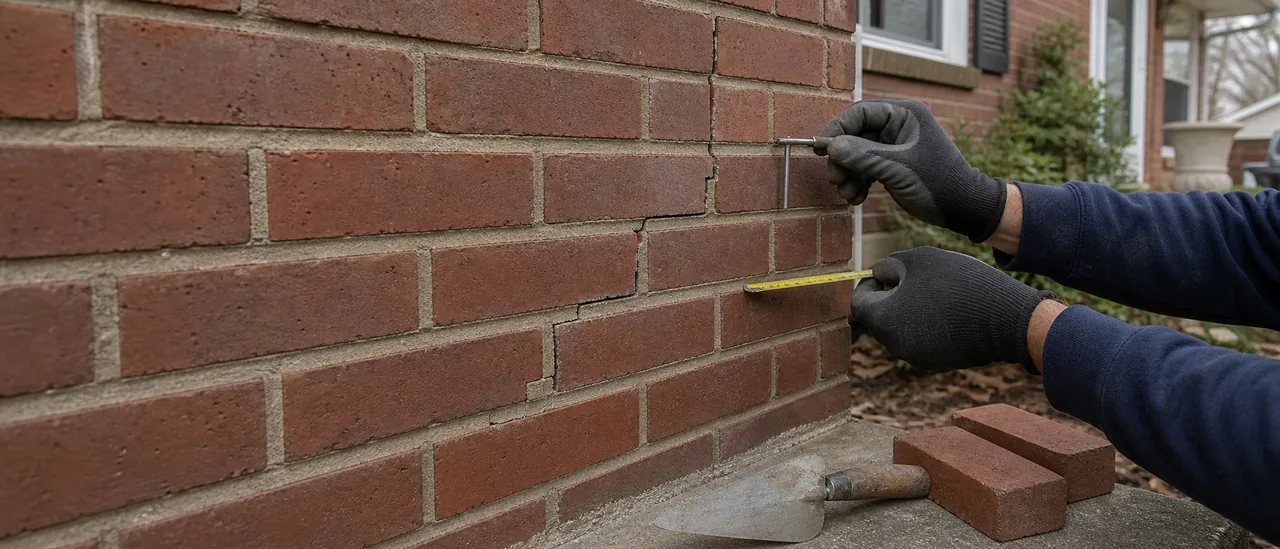
A straightforward estimate may cover removing loose or deteriorated mortar, preparing the joints, installing compatible new mortar, and cleaning the work area. Repointing is the removal and replacement of deteriorated mortar in masonry joints; it does not correct movement that continues beneath the repair.
Brick or block replacement adds demolition, matching materials, rebuilding, and disposal. Scaffolding or lift access can add setup time. Work on a foundation, retaining wall, loadbearing wall, or historic masonry may also require design, investigation, or carefully matched materials beyond basic pointing.
Ask whether the quote includes access equipment, material matching, cleanup, permit fees when applicable, and correction of the crack’s cause. A low bid that only fills the visible opening is not comparable with one that includes masonry removal or structural stabilization.
Price the cause before the finish
The National Park Service advises determining the nature and source of masonry cracks before repair, with structural work preceding cosmetic work. Repointing a moving wall can hide the symptom without defining the needed scope.
The factors that change the price most
The first factor is repair type. Mortar-only repointing usually costs less than replacing cracked units, installing reinforcement, rebuilding a section, or correcting foundation movement.
Next comes quantity and access. Crack length alone is not enough: wall height, corners, openings, landscaping, interior finishes, and safe equipment placement affect labor. Several scattered cracks may cost more than one continuous accessible area.
Finally, wall construction and location matter. The National Park Service distinguishes loadbearing masonry, cavity walls, and nonstructural veneer when assessing cracking. Regional labor availability and local requirements also affect quotes. Federal Reserve Bank of Philadelphia research notes that national repair estimates may miss local regulatory and market conditions, particularly where qualified contractors are scarce.
When specialist estimates make sense
Obtain an evaluation before seeking a repair price when the wall bows, leans, or shows displacement; when cracks keep changing or reopen after repair; or when the wall may be loadbearing or retain soil. Those conditions can change both the repair method and who must design it.
For apparently localized, stable mortar deterioration, compare written masonry estimates using the same scope. For possible structural movement, an independent structural evaluation can define the cause and repair requirements first. That prevents a cosmetic quote from being mistaken for the full cost.