On this page
The 2026 cost range
In 2026, expect about $85–$350 for a straightforward professional toilet-flange repair or replacement. That usually covers removing and resetting the toilet, repairing or replacing the flange, and installing a new seal. The repair method, access to the drain connection, and damaged flooring change the price most.
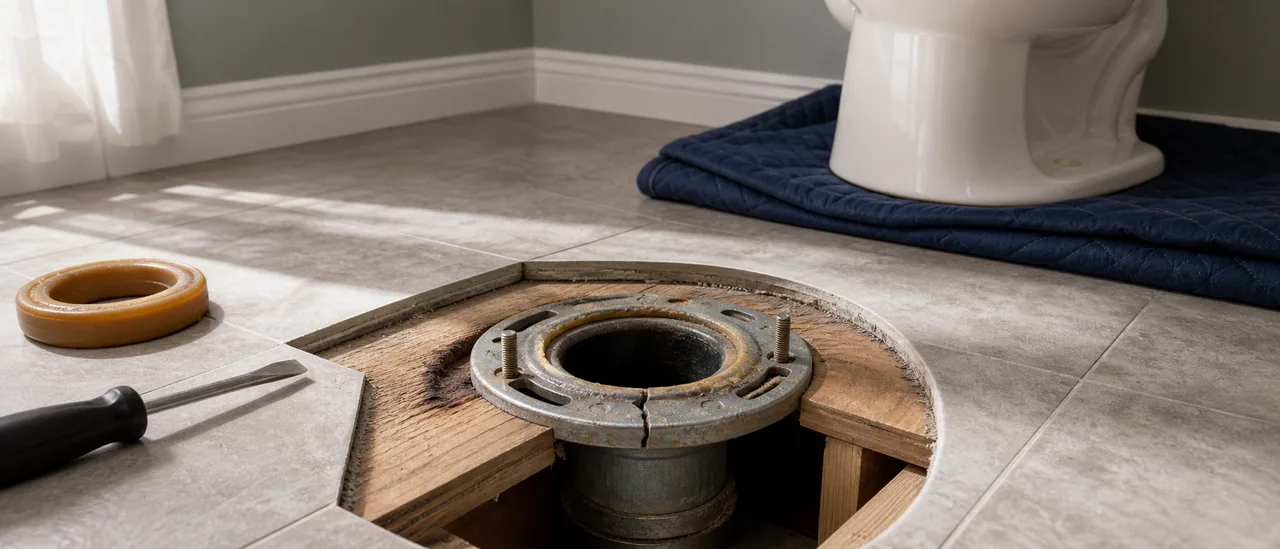
A cracked toilet flange is the damaged fitting that anchors the toilet at the floor and connects it to the drain. “Fixing” it may mean installing a repair ring over a sound flange body or removing and replacing the flange. Those are different scopes, so a quote based only on “a crack” has limited value.
Published estimates vary. One 2026 guide places professional flange repair at $145–$165 on average, while another market survey lists $85–$350 for replacement. A broader 2025 toilet-repair survey gives $60–$200 for flange work, labor included. These figures describe uncomplicated work, not reconstruction around the drain.
What the quoted price should include
A complete basic estimate normally includes shutting off and disconnecting the toilet, lifting it clear, evaluating the exposed flange, completing the agreed repair, fitting a new seal, resetting and securing the toilet, reconnecting the supply, and checking for leaks and movement.
Ask whether the service call, materials, disposal, and return visit are included. Also confirm whether the price is for a repair ring or full flange replacement. A low quote can be accurate for a narrow repair but misleading if toilet removal and resetting are separate charges.
| Scenario | Likely scope | Budget meaning |
|---|---|---|
| Low | Accessible flange; repair ring is suitable | Often near the lower end of published ranges |
| Typical | Toilet removal, flange replacement, new seal, and reset | Commonly within the $85–$350 range |
| High | Difficult removal, cast-iron connection, slab access, drain repair, or damaged floor | May exceed $350; separate trades can push the total much higher |
What raises the cost
Repair versus replacement. A repair ring can preserve an otherwise sound flange. A split flange body, failed connection, wrong height, or damaged drain may require more labor and materials.
Pipe material and access. An exposed plastic connection is generally simpler than corroded metal or a flange embedded in concrete. Work from below may require opening and later repairing a ceiling. Slab work can require cutting concrete.
Floor condition. The flange must be secured to a sound base. Soft subfloor, damaged tile, or a deteriorated opening can turn a plumbing repair into plumbing plus carpentry or flooring work. Those repairs should be itemized rather than hidden inside a vague allowance.
Local pricing and scheduling. Labor rates, minimum service charges, permit rules, travel, and emergency timing vary by region. One published survey notes minimum plumbing job fees of $100–$200, which can outweigh the inexpensive flange itself.
Why estimates can change after the toilet is lifted
The flange, drain connection, and floor edge are partly concealed until the toilet is removed. A written estimate should state the assumed condition and explain how added work will be authorized.
When to obtain a specialist estimate
Get an on-site plumbing estimate when the toilet rocks, leaks at the base, the floor feels soft, the flange is corroded, or the drain connection is not visible. Request separate prices for a repair ring, full replacement, and any known floor or ceiling restoration.
For a straightforward exposed repair, one qualified estimate may be enough if the scope is clear. For slab cutting, cast-iron work, drain replacement, or structural floor damage, compare written estimates that use the same scope. That is the most reliable way to turn a broad national range into a property-specific budget.