On this page
TPR discharge pipe cost in 2026
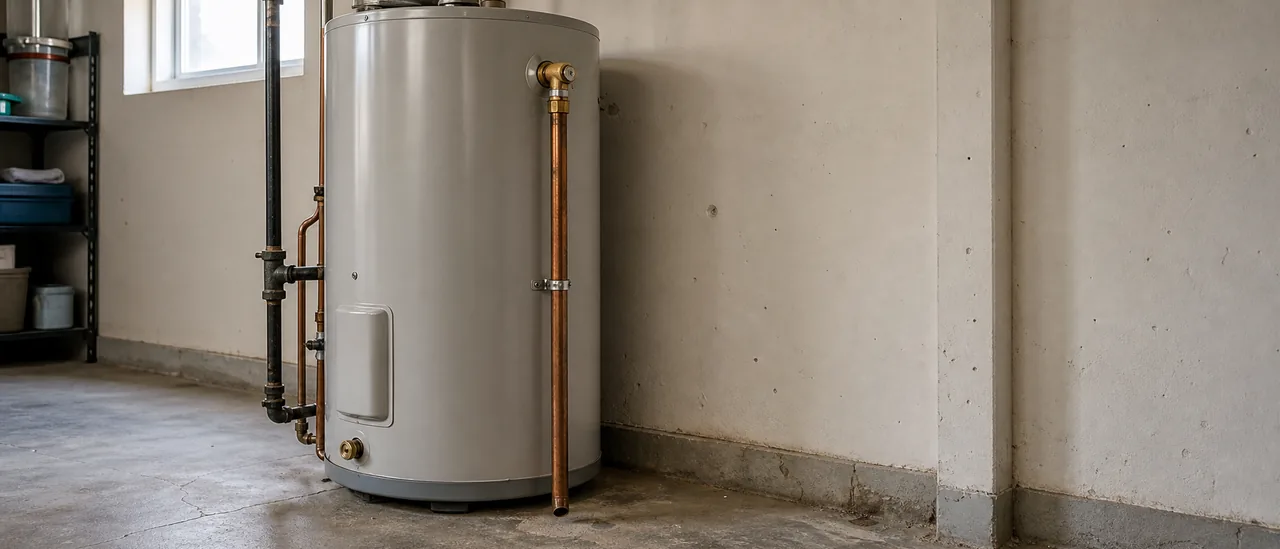
As of August 2026, budget about $150–$350 for a plumber to add a straightforward missing temperature-and-pressure relief (TPR or T&P) valve discharge pipe. That range generally includes an ordinary service visit, approved pipe and fittings, installation, and a basic visual and leak check.
Pipe length and routing, access around the water heater, and local termination requirements change the price most. A short, accessible drop may stay near the low end. A longer run, several fittings, difficult access, or permit and inspection costs can bring the total to $350–$600 or more.
These are national planning allowances, not a published flat rate. A 2026 construction estimator lists a one-plumber crew rate of $77.24 per hour with overhead and profit, while a current estimating database lists a short discharge pipe at $6–$15 before labor and service costs. Local minimum charges and job conditions can outweigh the inexpensive pipe itself.
Low, typical, and high scenarios
| Scenario | August 2026 planning range | Likely scope |
|---|---|---|
| Low | $150–$225 | Short approved pipe, open access, few fittings, ordinary weekday visit |
| Typical | $225–$350 | Additional fittings or supports, tighter workspace, more measuring and testing |
| High | $350–$600+ | Long or complex route, difficult termination, permit cost, or separate valve diagnosis |
The discharge pipe is not a general drain line. It carries hot water away if the safety valve opens. As one official example, Hawaii's regulation prohibits a shutoff on the discharge pipe and requires piping arranged to avoid scalding and drain properly. Local adopted rules can differ, so the required route cannot be priced accurately from pipe length alone.
What the estimate should include
A written estimate should identify the pipe material, diameter, route, fittings, supports, and termination point. It should also state whether the price includes the service call, permit, inspection, leak check, and cleanup.
Confirm whether the plumber is installing only the missing pipe or also evaluating the TPR valve. The valve itself, an expansion-control problem, excessive system pressure, corrosion, or a leaking water heater is separate work. Federal water-efficiency guidance recommends pressure controls and expansion tanks where appropriate to prevent TPR valves from discharging, illustrating why active discharge requires diagnosis rather than a pipe-only price.
Do not compare unlike estimates
One quote may cover only a short pipe. Another may include valve diagnosis, a longer code-compliant route, permits, or corrective plumbing. Ask each plumber to separate those items before comparing totals.
Why the price may rise
A water heater in an open garage or basement is usually easier to work around than one inside a cramped closet. Routing to an acceptable receptor or outdoor point may require more pipe, supports, wall penetrations, or freeze protection. Regional labor rates and contractor minimums also affect small jobs disproportionately.
Visible discharge or corrosion changes the assignment from simple installation to diagnosis. Likewise, a capped, valved, reduced, trapped, or upward-sloping line needs correction rather than extension. Do not cap the valve outlet or attach a hose as a substitute; those changes can obstruct the safety discharge path.
When to obtain a specialist estimate
Obtain an itemized plumber's estimate when the termination point is unclear, the route passes through finished construction, local permit rules are uncertain, or water is already leaving the valve. A qualified evaluation is also appropriate when the valve or tank is corroded or the proposed work includes more than the missing pipe.
For a simple visible installation, one written estimate may be enough. For a $350-plus scope, compare two estimates using the same route and included work. That makes the cost difference meaningful instead of comparing a pipe-only price with a broader water-heater repair.