On this page
The 2026 cost range
In 2026, budget about $500–$1,500 to professionally locate and repair a typical pool leak. A small, accessible patch may cost around $100–$500, while buried plumbing, liner replacement, or resurfacing can raise the total into the thousands. Leak location, pool material, and access change the price most.
“Pool leak repair” can describe anything from replacing a gasket to opening a deck and repairing buried pipe. The useful number is therefore a range, not a flat price.
A 2025 national estimate puts professional detection and repair of a moderate in-ground concrete-pool crack at about $1,000, within a $500–$1,500 average range. Use that published range as a 2026 planning baseline, not as a prediction of a particular contractor’s price.
What the price includes
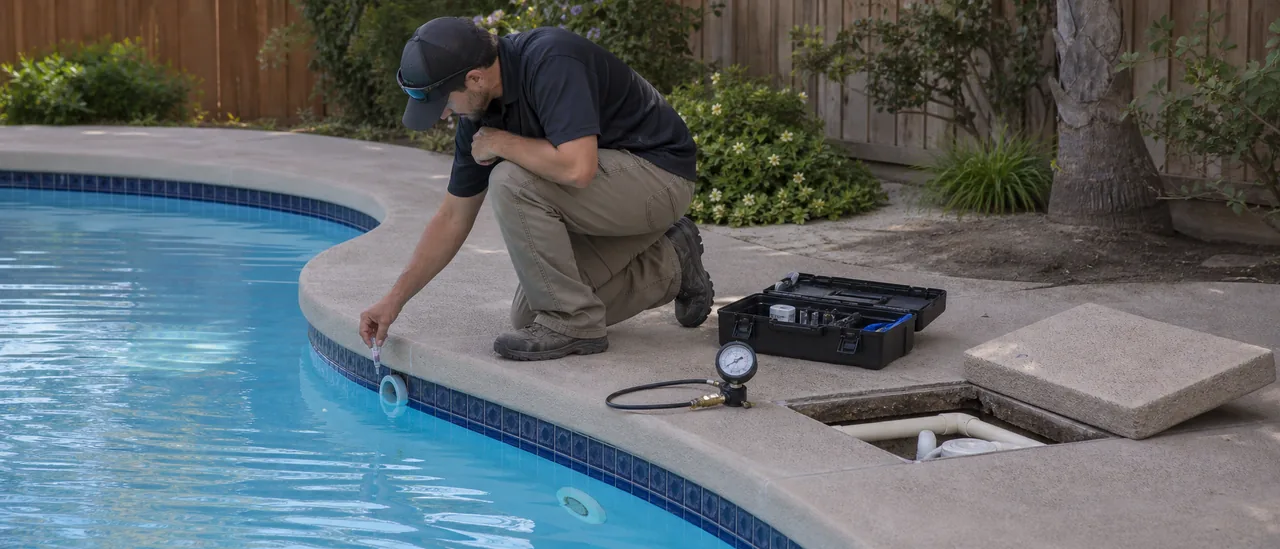
A complete quote should separate leak detection from the actual repair. Professional detection alone commonly runs $100–$1,000, depending on pool type and how difficult the leak is to locate. The visit may involve visual or dye testing, pressure testing, or electronic equipment.
The repair portion should identify labor, materials, and the exact component being fixed. Ask whether draining, refilling, chemical balancing, excavation, deck restoration, and a return visit are included. These items are often separate, especially when underground plumbing is involved.
| Scenario | Likely scope | 2026 budgeting guide |
|---|---|---|
| Low | Accessible gasket, fitting, or small liner patch | About $100–$500, plus detection if separate |
| Typical | Detection and a localized professional repair | About $500–$1,500 |
| High | Buried pipe, extensive liner work, or resurfacing | Several thousand dollars; written site-specific estimate needed |
These figures come from commercial market-cost guides, so the table is a planning tool, not a bid. For example, one published schedule lists skimmer repairs at $100–$250 and broken pool-pipe repairs at $500–$1,500. Full resurfacing is a different project and can move well beyond ordinary leak-repair pricing.
Main cost drivers
Location and access. A visible leak at equipment or a fitting takes less investigation than a leak under a deck. Pressure testing may locate buried-line failure, but excavation and surface restoration add labor.
Pool construction. Vinyl, fiberglass, and concrete require different repair methods. A patch may handle limited vinyl damage, while a large tear can require liner replacement. Concrete or fiberglass shell damage may require specialized surface work.
Repair versus replacement. A seal, gasket, or small damaged section may be repairable. A failed liner, corroded component, or inaccessible pipe can turn a narrow repair into replacement work.
Water and finish restoration. Ask whether draining, refilling, rebalancing water, repairing concrete, or restoring landscaping is included. These tasks can expand the scope beyond locating and fixing the leak itself.
Region and timing. Local labor rates, travel, permit requirements, pool season, and emergency scheduling affect the final number. National figures cannot capture a particular deck, plumbing layout, or local market.
Why the first estimate may change
Detection can identify the leak’s location without revealing every condition around it. A written estimate should state assumptions and require approval before excavation, replacement, or finish restoration begins.
When to obtain specialist estimates
An on-site pool specialist estimate is reasonable when the source is unknown, plumbing is buried, the deck must be opened, or shell or liner replacement is possible. Request the detection fee and repair allowance separately, then compare quotes using the same scope.
For a visible gasket or small accessible patch, a single clear written estimate may be enough. For excavation, resurfacing, or full liner replacement, itemized estimates are more useful than trying to apply a national average to the property.