On this page
The 2026 cost range
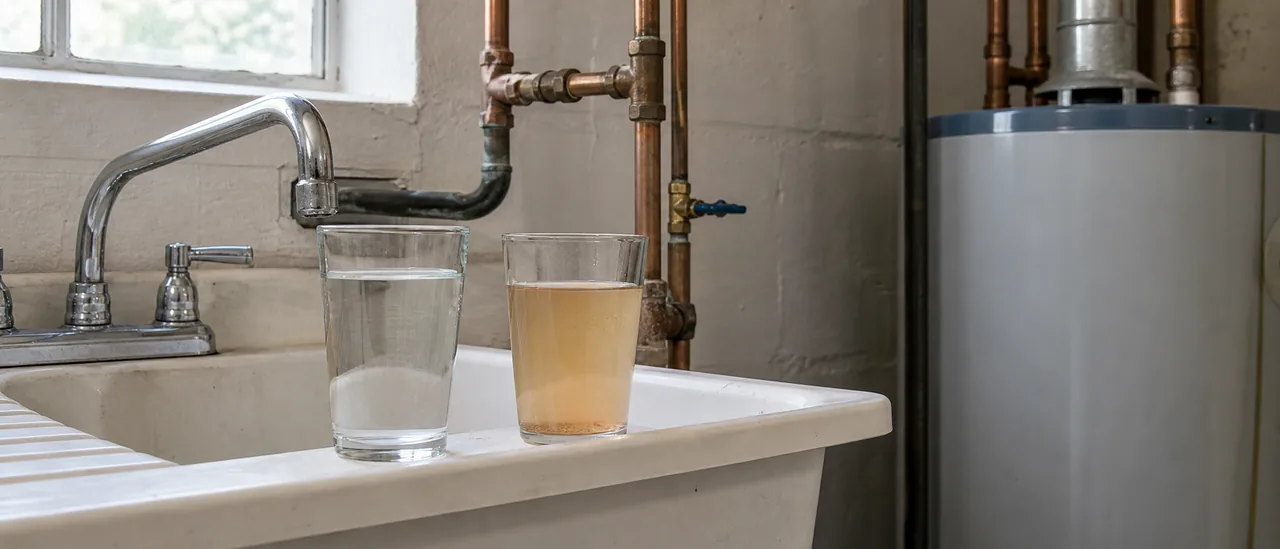
In 2026, fixing rust-colored water can cost nothing to about $4,600, depending on the cause. A utility-side disturbance may require no homeowner repair. Water-heater rust problems run about $200–$2,000, while whole-home well treatment is roughly $700–$3,400 installed. Replacing a water heater can cost $500–$4,600.
The biggest variables are whether the color appears in hot water, cold water, or both; whether the home uses a public supply or private well; and what testing finds. The color describes an appearance, not a diagnosis, so paying for treatment before locating the source can produce the wrong project.
What the price includes
A basic evaluation typically separates the problem by fixture and water temperature, reviews recent utility work, and checks accessible plumbing or the water heater. Private-well work may also require laboratory testing before a treatment system is selected.
Repair estimates should identify testing, equipment, labor, plumbing changes, permits, disposal, startup, and follow-up sampling. Water-treatment media and ongoing maintenance may be separate. A water-heater quote should say whether it covers a flush or repair, tank replacement, connections, permit work, and removal of the old unit.
Costs by likely source
| Likely source and scope | 2026 planning cost | What may be involved |
|---|---|---|
| Public-system disturbance | $0 homeowner repair | Utility confirmation and waiting for the event to clear |
| Water-heater rust problem | $200–$2,000 | Diagnosis, flushing, component work, or tank-related repair |
| Whole-home well treatment | $700–$3,400 | Treatment equipment plus typical installation |
| Water-heater replacement | $500–$4,600 | New unit and labor; type and site changes widen the range |
These figures are budgeting ranges, not interchangeable solutions. For example, the City of Columbus lists main breaks, hydrant flushing, routine maintenance, and corroding iron pipes among possible reasons for rusty water. A utility event and a corroded household component can look similar at the tap but create very different bills.
What changes the estimate most
The location of the discoloration comes first. Color in hot water only points the evaluation toward the water heater or hot-water piping. Color at both hot and cold taps broadens the investigation to the supply, service line, well, or household piping.
Water testing controls treatment scope. EPA lists iron at a secondary guideline of 0.3 milligrams per liter and associates it with rusty color, sediment, metallic taste, and orange staining. That guideline addresses aesthetic effects; visible color alone does not identify every substance present. Testing is what prevents an iron-focused system from becoming an expensive guess.
Access and system changes affect labor. A like-for-like heater replacement costs less than relocating equipment or changing fuel type. Whole-home treatment costs more when plumbing must be rerouted, electrical service is needed, flow demand is higher, or multiple water-quality issues require several treatment stages.
Diagnose before comparing prices
Note which fixtures are affected and compare hot and cold water. Public-water customers should also check for utility maintenance or nearby main work; private-well owners should obtain appropriate testing before choosing treatment.
When to obtain specialist estimates
Request property-specific estimates when discoloration persists, appears only in hot water, returns after periods of nonuse, or testing indicates a treatment need. Start with the water utility for a public-supply event. A qualified plumber can evaluate household piping and water heaters, while a certified laboratory and water-treatment specialist can define a private-well solution.
Give each bidder the same test results and ask for identical scope details. Comparing equipment, installation, permits, maintenance, exclusions, and follow-up testing is more reliable than comparing one headline total.