On this page
Typical cost in 2026
As of August 2026, budget $150 to $500 for a plumber to correct one accessible S-trap under a sink. That range generally covers removing the exposed trap, fitting a P-trap and trap arm, addressing the nearby vent arrangement, and testing the drain. The largest variables are the available vent route, access to the wall drain, and corroded or misaligned piping.
| Scenario | Planning range | Likely scope |
|---|---|---|
| Low | $100–$200 | Exposed trap replacement when a usable, compliant vent connection already exists |
| Typical | $150–$500 | New P-trap and trap arm, plus a nearby vent correction that local rules permit |
| High | $500+ | Wall or floor access, a longer vent connection, damaged drain piping, or permit-related work |
The range is a planning synthesis of current local price lists, not a national fixed price. One Phoenix plumber lists $150 to $200 for P-trap replacement and $250 to $375 for a full under-sink drain rebuild. A separate 2026 plumbing price book lists $415 for drain cabling with P-trap replacement. An S-trap correction may require more than either basic service because the venting layout must also be resolved.
What “fixing” an S-trap includes
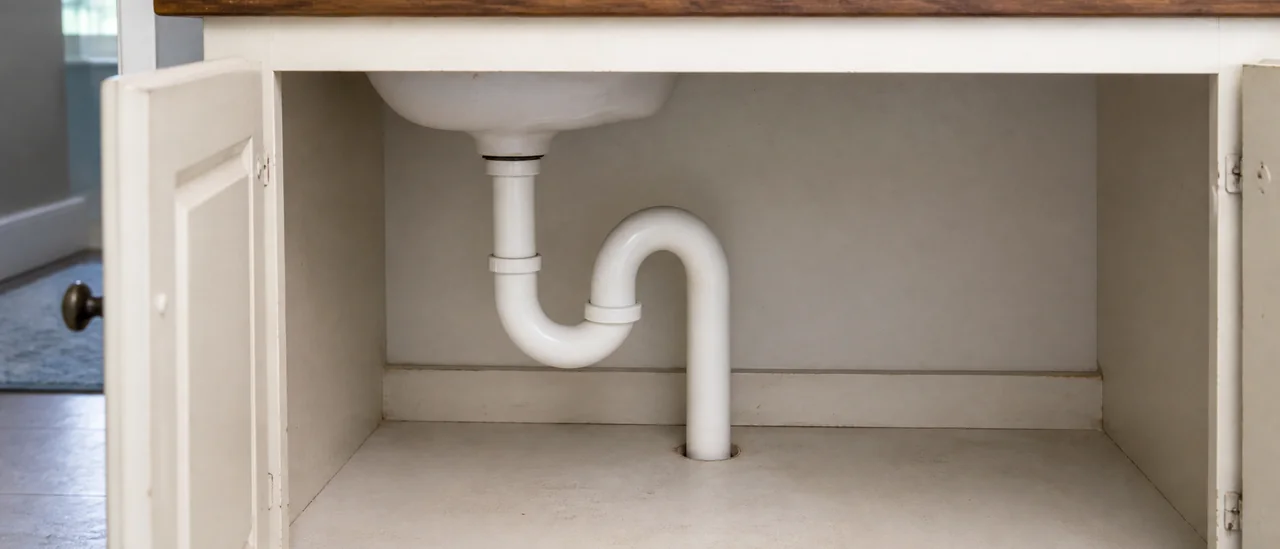
An S-trap is the sink drain arrangement that turns downward again after the trap instead of continuing through a properly vented trap arm. It should not be priced as a like-for-like trap swap. For example, Illinois plumbing rules specifically prohibit full S-traps, and adopted requirements vary by jurisdiction.
A complete estimate should identify the new trap, trap arm, fittings, vent method, labor, testing, and cleanup. It should also say whether permits, wall repair, cabinet alteration, or replacement of corroded piping are excluded.
A new curved trap alone may not be the correction
If the drain still drops vertically without an acceptable vent arrangement, changing only the removable bend may leave the same functional layout. Ask the estimate to show where the trap arm ends and how the fixture will be vented.
What changes the estimate most
Venting is the main cost driver. A plumber may be able to connect to an existing vent. In some jurisdictions, an air-admittance valve is allowed in a specified configuration; elsewhere it is restricted. Fine Homebuilding’s plumber-reviewed example added a sanitary tee and an air-admittance valve, while advising readers to check local restrictions.
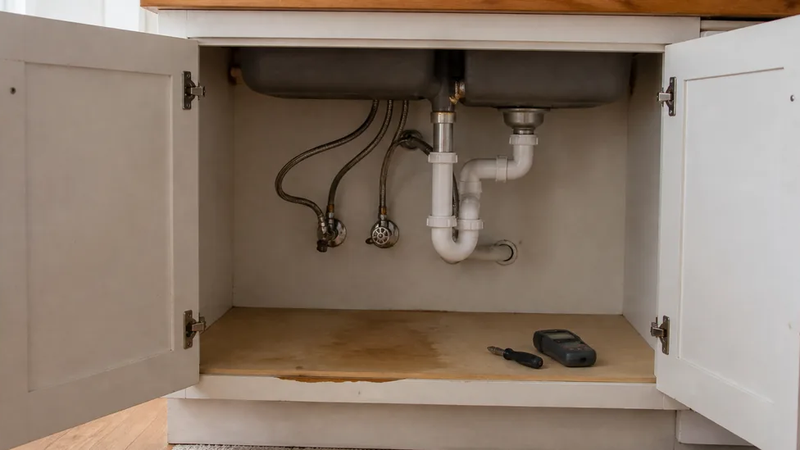
Access and pipe condition come next. An open sink cabinet with removable tubular fittings is cheaper to work in than a drain connection hidden behind tile, plaster, or cabinetry. Seized metal joints, a damaged wall stub-out, poor alignment, or multiple sink bowls can expand the job.
Location affects labor and administrative costs. Plumbing wages vary by state and metropolitan area, and local rules determine licensing, permit, and inspection requirements. A scheduled repair can also price differently from after-hours work.
When to obtain an on-site estimate
Photographs may support an initial range when the whole drain layout is visible. Obtain an on-site plumber’s estimate when the pipe disappears into the floor, no vent route is apparent, metal piping is corroded, the cabinet has little working room, or finished surfaces may need opening.
For a higher-cost correction, compare itemized estimates using the same scope. Each should identify the vent method, access work, permit allowance, finish repairs, testing, and exclusions. That comparison is more useful than choosing between totals that may describe different fixes.