On this page
A practical 2026 cost range
In 2026, fixing sagging floor joists typically costs $1,000 to $10,000, with about $5,000 as a national planning figure. Minor reinforcement can start near $200 to $500 for one joist, while extensive replacement may exceed $20,000. Those figures generally include professional labor, materials, equipment, and basic site preparation.
The biggest price variables are the number of affected joists, reinforcement versus replacement, and access. Costs also rise when the work requires opening finished flooring or ceilings, temporary shoring, subfloor repair, or correction of moisture or insect damage.
These are budgeting ranges, not a diagnosis or property-specific quote. Another 2026 market guide places joist work broadly at $300 to $12,000, illustrating how differently publishers define a “typical” project.
What each repair scenario may include
| Budget scenario | Illustrative 2026 cost | Likely scope |
|---|---|---|
| Low | $200–$500 | Sister one accessible joist; little finish disruption |
| Typical | $1,000–$5,000 | Reinforce or replace two to five joists |
| High | $5,000–$20,000+ | Multiple replacements, subfloor work, shoring, or difficult access |
Sistering means fastening new lumber alongside an existing joist to reinforce it. Published 2026 ranges vary from $100–$300 per joist in one guide to $200–$500 in another. The actual detail, fasteners, bearing, and length should follow a repair design suitable for the house; the online price does not establish that design.
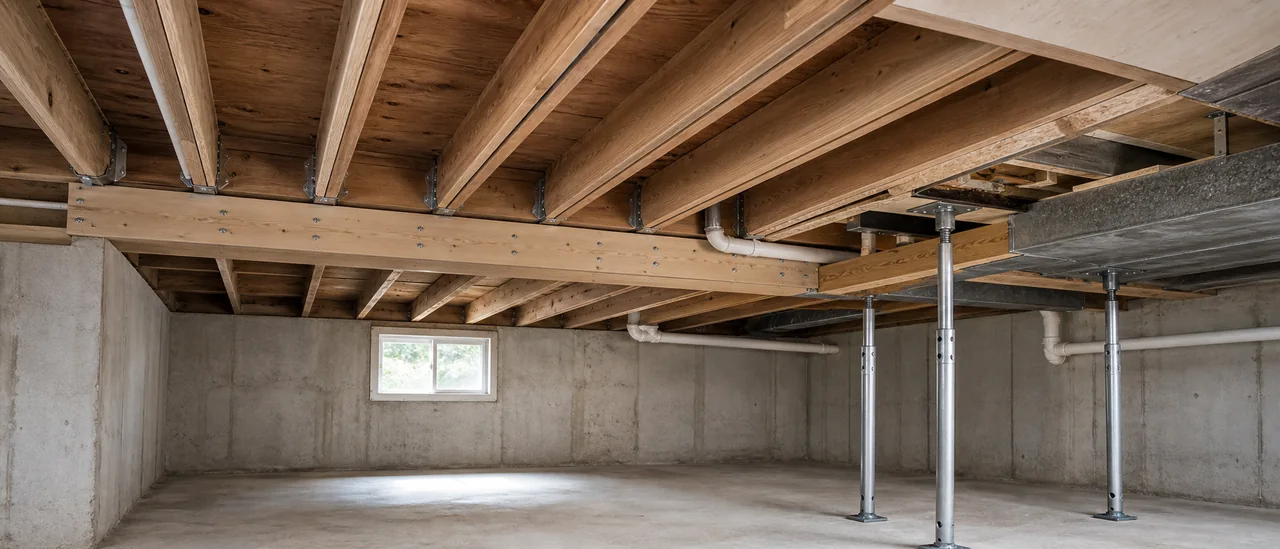
Full replacement costs more because the floor may need temporary support while workers remove and replace the damaged member. A current estimate places single-joist replacement at $500–$2,500 and multiple-joist replacement at $5,000–$20,000 or more.
What changes the final price
Access often separates a straightforward repair from an expensive one. An open basement may expose framing directly. A tight crawl space, finished ceiling, plumbing, wiring, ductwork, tile, cabinets, or built-ins can add demolition, protection, relocation, and restoration costs.
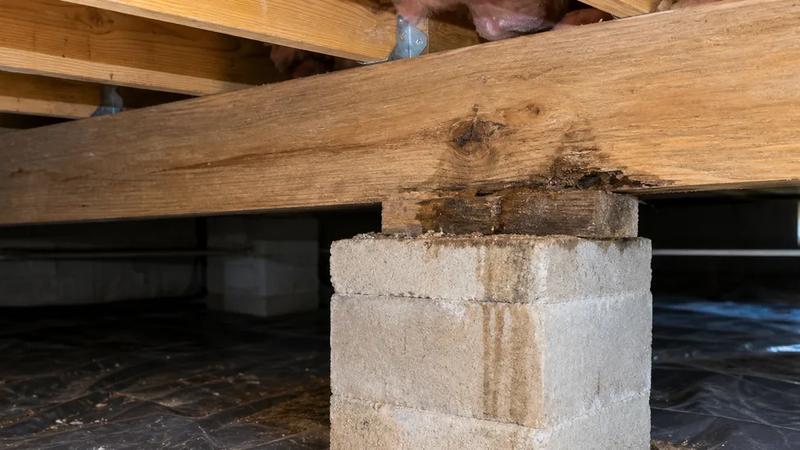
The cause matters too. A quote for framing alone may exclude leak repair, drying, pest treatment, damaged subfloor, new footings, or work on beams and posts. Regional labor rates, permit requirements, disposal, engineering, and contractor minimum charges also affect the total.
Ask each estimator to state:
- how many joists are included and whether they will be reinforced or replaced;
- whether access, shoring, permits, debris removal, and finish restoration are included;
- which underlying moisture, pest, beam, post, or foundation work is excluded; and
- how concealed damage or a changed repair scope will be priced.
A sagging floor is not automatically a joist-only repair
The visible low spot may involve joists, subfloor, supports, or foundation movement. Budgeting before the cause and repair boundary are defined can produce a precise-looking number for the wrong project.
When a specialist estimate is appropriate
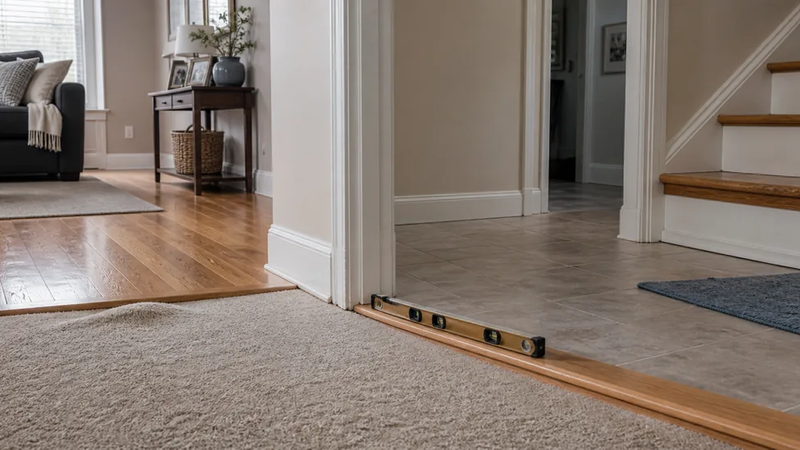
A home inspection can document visible, readily accessible structural components and unlevel floors. It is not an engineering analysis. InterNACHI’s standard says inspectors are not required to determine joist adequacy, provide engineering services, or estimate repair costs.
Obtain a structural engineer’s evaluation when the repair depends on load paths, joist capacity, beam or post changes, foundation movement, or a designed lifting and shoring sequence. Once the scope is defined, seek itemized local estimates from qualified contractors. This is especially important when sagging is worsening, several framing members are affected, or access limits what can be seen.