On this page
The practical answer
There is no dependable national price for framing-only termite repair. A defensible estimate requires enough access to identify the damaged members, determine whether they carry load, and specify treatment, temporary support, carpentry, engineering, and finish restoration separately.
A small damaged stud beside an accessible garage wall is a different project from deteriorated sill plates, joists, beams, or framing concealed behind finished rooms. Broad termite-repair averages cannot reliably price those different scopes. The useful number is an itemized local proposal prepared after the infestation and damaged wood have been evaluated.
What the repair estimate should separate
Termite work often contains three distinct costs:
- Pest inspection and treatment. Active termites must be identified and controlled. The U.S. Environmental Protection Agency notes that people often discover termites only after seeing a swarm or encountering damage during construction. A trained pest professional should determine the activity and treatment scope rather than relying on one visible spot.
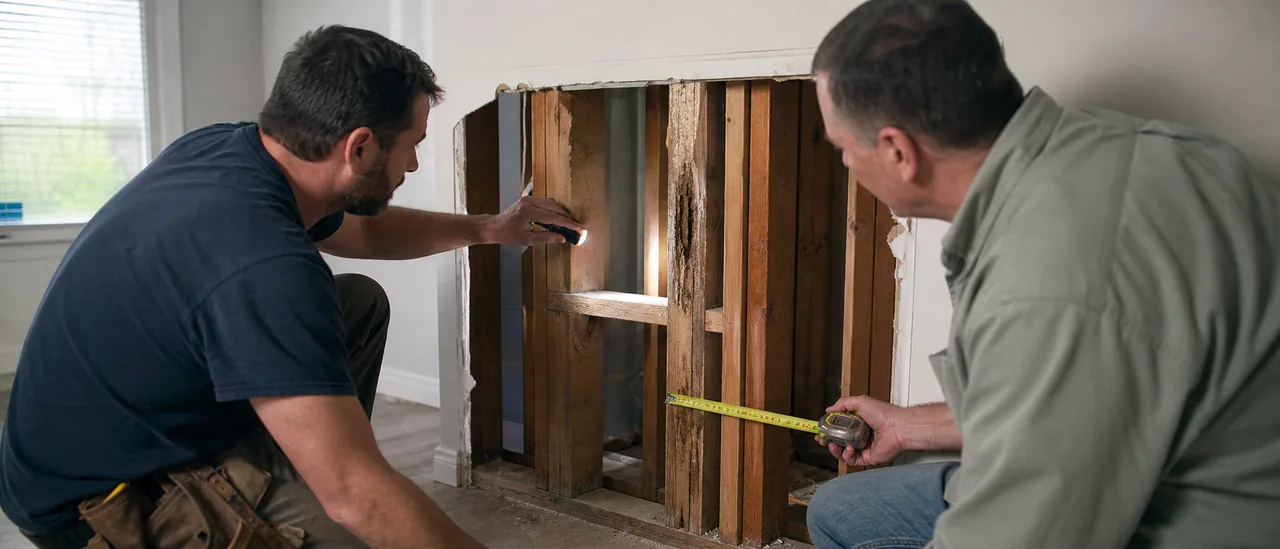
- Opening and evaluation. Drywall, insulation, flooring, or trim may need limited removal before the carpenter or structural professional can see sound wood and connections.
- Wood and finish repair. The damaged member may be reinforced, partially replaced, or fully replaced, followed by insulation, drywall, paint, flooring, or exterior finish work.
A proposal that combines everything into one vague number is difficult to compare. Separate scopes make it clearer who is treating the insects, who is judging structural adequacy, and who is restoring finishes.
The main cost drivers
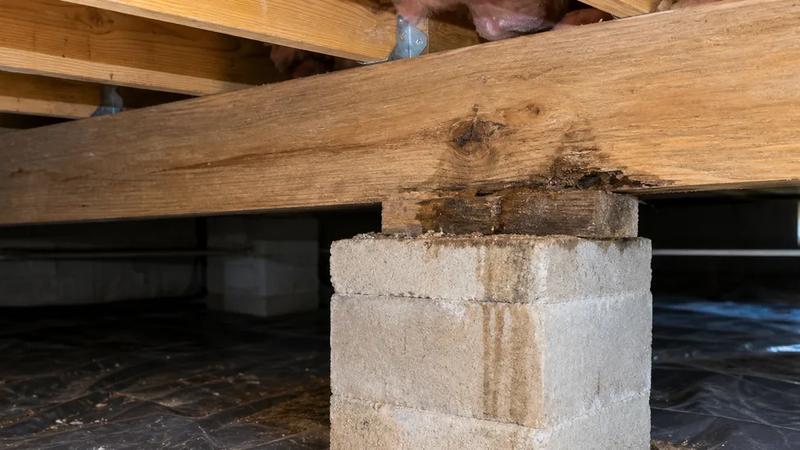
Structural role matters more than the visible size of the damaged spot. Repairing non-load-bearing blocking is usually simpler than supporting a floor or roof while a beam, joist, rafter, or bearing-wall member is replaced.
Access can dominate labor. Crawlspaces, tight attics, finished basements, plumbing, wiring, and built-in cabinets may slow the work or require other trades.
Extent of concealed damage is a major uncertainty. Finished surfaces may need limited opening before the repair team can identify every affected member and connection. That is why a firm structural-repair price based only on one photograph deserves caution.
Moisture and entry conditions should also be addressed. EPA guidance recommends correcting leaks, drainage problems, wood-to-soil contact, and other conditions that make a structure attractive to termites.
Pest treatment and structural repair should be written as separate operations. Treatment addresses termite activity; the repair scope addresses the condition and load-carrying role of the damaged wood.
The National Association of Insurance Commissioners says termite and other infestation damage is not typically covered by homeowners insurance. Coverage still depends on the individual policy and cause of loss, so ask the insurer about the written terms rather than assuming reimbursement.
When a structural opinion is appropriate
A pest professional can identify and treat termite activity, but treatment does not establish whether weakened framing still carries its intended loads. Isolated non-load-bearing members may need ordinary carpentry; sill plates, joists, beams, and bearing-wall framing can require temporary support, broader finish removal, and a designed load path. When major members, connections, long spans, or noticeable movement are involved, obtain an assessment from a qualified structural professional before carpentry begins.
For comparable bids, give each contractor the same written scope. It should identify the members being reinforced or replaced, temporary support, connectors, permits, engineering, pest treatment, finish removal and restoration, disposal, and allowances for concealed conditions. That comparison is more useful than a national average that does not describe the same work.