On this page
The 2026 cost range
As of August 2026, budget roughly $100 to $1,500 for a localized professional stair repair. Replacing unsafe stairs or railings commonly starts near $1,000 and can reach $10,000 or more. The biggest variables are how many components are damaged, the stair material and design, and access plus local labor costs.
The repair range includes work such as securing or replacing an isolated tread, riser, post, handrail, baluster, or stringer. It does not promise that every unsafe stair can be repaired. Widespread rot, movement, poor geometry, or damaged connections can turn a small-looking defect into a partial or complete rebuild.
These national figures are planning ranges, not bids. One 2025 cost guide places stair repairs at $100 to $1,000, with $1,500 as its extensive-repair example. A June 2026 guide reports $310 to $1,050 for repair or refinishing and $1,000 to $10,000 for stair-and-railing replacement.
| Scenario | Planning range | What may be included |
|---|---|---|
| Low | $100–$500 | One loose rail, post, tread, or other accessible correction |
| Typical | $500–$1,500 | Several components, limited replacement, fitting, and finish work |
| High | $1,000–$10,000+ | Partial or full stair-and-railing replacement; custom work can cost more |
What “unsafe stairs” can mean
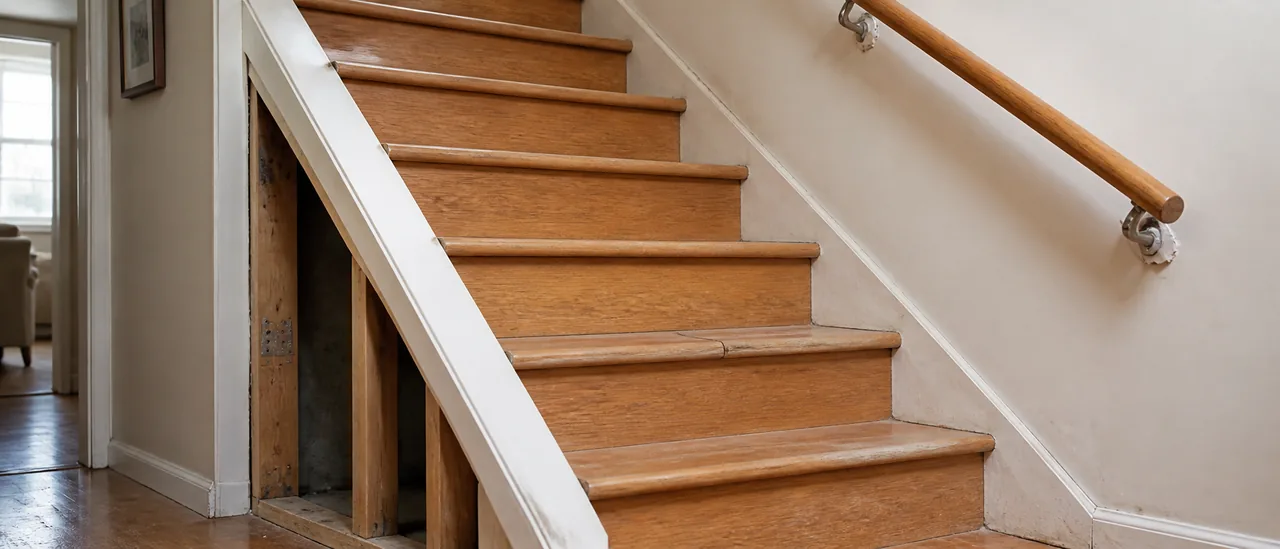
“Unsafe stairs” is a condition description, not a single repair. The problem may involve a loose handrail, broken tread, uneven rise, inadequate guarding, deteriorated stringers, a failing landing, or movement where the stair connects to the building.
That distinction controls the estimate. Tightening a sound connection is different from opening finishes, replacing concealed framing, or rebuilding a flight with unsuitable dimensions. Interior wood, exterior wood, concrete, masonry, metal, and custom curved stairs also require different labor and materials.
What changes the final price
The written scope should identify the affected components and separate repair from replacement. It should also state whether labor, materials, demolition, disposal, finish matching, temporary protection, permits, and final inspection are included.
Expect the price to move most with:
- Extent and cause: one loose part costs less than decay or movement across a flight.
- Access: finished walls beneath stairs, height, tight landings, and occupied areas add labor.
- Material and design: masonry, metal, curved stairs, and custom profiles may need specialists or fabrication.
- Related work: damaged landings, wall finishes, flooring, lighting, or structural connections expand the scope.
- Location: labor rates, material availability, permit rules, and code requirements vary by jurisdiction.
When to obtain specialist estimates
A home inspection can identify visible concerns, but it is not a repair design or contractor bid. InterNACHI’s standard includes stairs, steps, landings, railings, guards, and handrails within the visual inspection scope. Concealed stringers and connections may still require opening work or specialist evaluation.
Ask a qualified stair contractor or carpenter for an itemized estimate. Add a structural engineer when there is sagging, separation, widespread decay, damaged framing, or uncertainty about how the stair or landing transfers loads. Ask the local building department whether the planned scope requires a permit or inspection; requirements differ by location.
Limit access until the hazard is evaluated
If a tread shifts, a rail pulls loose, or the stair or landing visibly moves, use another route when one is available and keep others away. CDC fall-prevention guidance also calls for railings on both sides of stairs, fewer trip hazards, and adequate lighting.
Before authorizing work, obtain a written diagnosis and comparable scopes from qualified bidders. Until the unsafe condition is corrected, keep the stairs clear and well lit, use only a secure handrail, and prevent access when the stair cannot be used safely.