On this page
Well pressure tank repair costs in 2026
In 2026, budget about $100–$400 for a minor control repair and $300–$1,500 for an installed residential pressure tank replacement. A large tank, difficult access, emergency scheduling, or work extending to the pump can push the bill toward $2,500 or more.
Those ranges generally include the part, ordinary installation labor, system draining, reconnection, and basic operational testing. The failed component, tank capacity, and access to the equipment usually change the price most.
These are planning figures, not bids. A current Southern California well contractor, for example, publishes $100–$225 for a pressure-switch replacement and $300–$1,200 for pressure tanks of several sizes. A separate 2026 national cost guide places switches at $150–$400 and tanks as high as $2,500. That spread illustrates why location and scope matter.
What different fixes may cost
| Scenario | 2026 planning range | Usually reflects |
|---|---|---|
| Low | $100–$400 | Accessible pressure switch, gauge, small fitting, or diagnosis with a minor repair |
| Typical | $300–$1,500 | Standard tank replacement with ordinary labor and reconnection |
| High | $1,500–$2,500+ | Large tank, tight access, extensive piping or controls, emergency work, or broader system trouble |
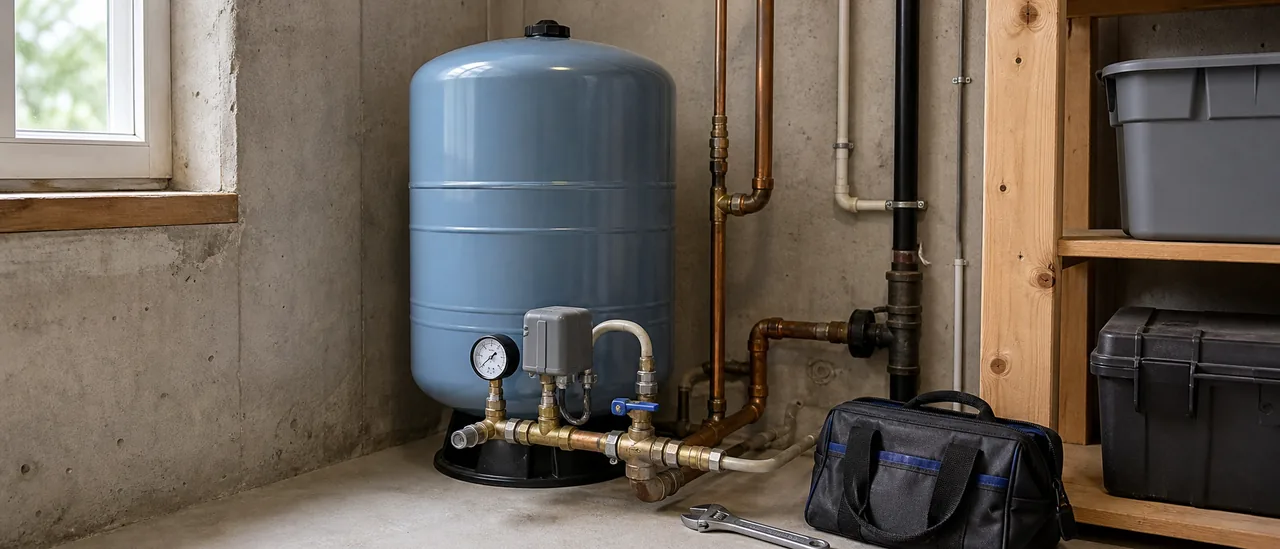
A pressure tank is not merely a water-storage container. It holds reserve water so small draws do not require the pump to start every time. A weak shower, rapid cycling, or pressure swings can also come from the switch, pump, restricted plumbing, or inadequate well yield. Paying for diagnosis before selecting a tank can therefore prevent the wrong repair.
What should be included in the estimate
An itemized estimate should identify the diagnosis or service-call charge, tank size, labor, fittings, and disposal of the old tank. It should also state whether the price includes a new switch, gauge, tank tee, shutoff, check valve, electrical work, permit, or after-hours fee.
Ask whether the diagnostic fee is separate or credited if work proceeds. Also confirm that the quote covers draining, installation, setting the air charge and controls as applicable, restoring service, leak checks, and an operating test.
Compare the same scope
A low quote may cover only the tank and basic labor. A higher quote may include controls, corroded piping, disposal, and testing. Compare tank capacity and every included line item before comparing totals.
Why the final price changes
Tank capacity directly affects material cost, while a cramped crawl space or obstructed utility area adds labor. Corroded connections can turn a straightforward swap into piping work. Local labor rates, travel distance, permits, and urgent scheduling create regional differences.
The largest jump occurs when testing shows that the pressure tank is not the only problem. Pulling or replacing a well pump is a different scope and may require specialized equipment. Likewise, electrical faults or low well yield need a different diagnosis; a larger tank cannot permanently overcome flow beyond the pump’s capacity.
When to obtain specialist estimates
For a non-emergency replacement, obtain two or three written estimates from qualified well or pump specialists. Give each contractor the same information: tank label capacity, pressure-switch setting if known, symptoms, access conditions, and photographs of the piping layout.
Professional evaluation is especially sensible when the pump rapidly cycles, the system cannot reach shutoff pressure, water appears at the tank’s air valve, wiring is damaged, or the cause remains unclear. National Ground Water Association guidance describes a well-system checkup as including pump performance, the pressure tank, and pressure-switch contact—not the tank in isolation.