On this page
Well pump repair costs in 2026
As of August 2026, budget $900–$2,500 when a diagnosed problem requires professional well pump replacement. A current national guide places replacement in that range, including installation, while the pump alone is typically $200–$500. Pump type, well depth, and installation complexity move the total most.
A surface-side control or pressure-tank correction may cost less because the downhole pump stays in place. A deep, difficult pull with damaged pipe, wiring, or well components can exceed the planning range. Diagnosis matters: weak pressure or no water does not prove that the pump itself has failed.
Low, typical, and high scenarios
| Scenario | 2026 planning amount | Likely scope |
|---|---|---|
| Low | Below $900 | Diagnosis finds an accessible control, pressure-switch, wiring, leak, or tank problem; no downhole pump replacement |
| Typical | $900–$2,500 | Professional pump replacement with ordinary removal and installation |
| High | Above $2,500 | Deep or obstructed access, specialized lifting, added pipe or wiring work, or a separate well-rehabilitation problem |
Only the middle row is a published national replacement range. The low and high rows are scope markers, not quoted market averages. Local estimates should separate the pump system from water treatment, well rehabilitation, plumbing repairs, and water-quality testing.
What a useful estimate includes
A useful estimate identifies the failed component and the tests behind that conclusion. It should itemize the service or diagnostic charge, pump or control parts, labor, removal equipment, pipe and wiring work, disposal, and operating checks. Ask whether travel, permits, disinfection, water testing, and restoration are included.
The National Ground Water Association describes a well checkup as more than a quick faucet test. Its guidance includes system output, water levels before and during pumping when possible, motor amperage, grounding, line voltage, the pressure tank, and pressure-switch contact.
A home inspection is not a pump diagnosis
InterNACHI’s general standard does not require inspecting well pumps, tanks, pressure pumps, or bladder tanks. It also excludes exact flow, pressure, supply adequacy, water quality, and reliability determinations. Review the inspection scope before treating its observations as a repair estimate.
Why local quotes differ
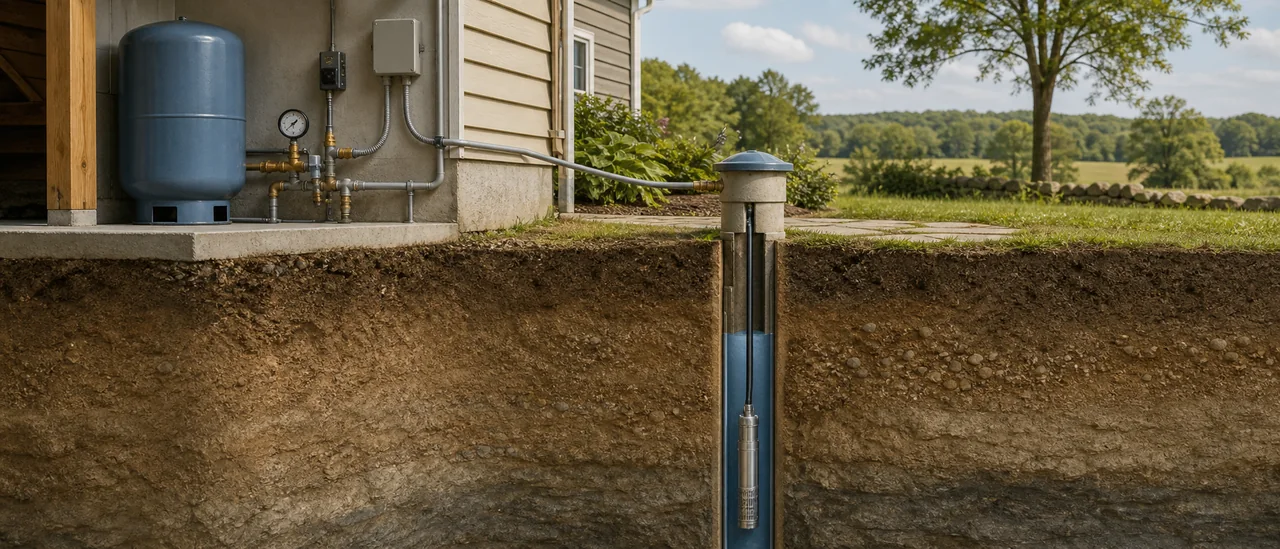
Submersible pumps sit inside the well, while accessible jet pumps sit above ground. Greater depth adds pipe and electrical cable to pull, more labor, and sometimes specialized lifting equipment. Pump horsepower, system demand, casing access, terrain, and the condition of existing wiring and drop pipe can also change the scope.
Regional labor rates, travel distances, permit requirements, and contractor licensing add local variation. Rules are jurisdiction-specific; for example, Minnesota distinguishes full well contractors from limited pump installers and defines the work each license may perform. A quote should therefore identify who will perform pump, electrical, plumbing, and well work.
When to obtain a specialist estimate
Obtain a qualified well-system evaluation when water stops, pressure swings, the pump cycles rapidly, sediment appears, or electrical protection trips. These symptoms can involve the pump, controls, pressure tank, piping, water level, or well condition, so replacing parts before testing can waste money.
For comparable bids, give each contractor the well log if available and request the same diagnostic scope. Ask for a written finding, the proposed correction, included tests, exclusions, and a separate price for discoveries that cannot be confirmed until the pump is pulled.