On this page
Typical drain-field repair and replacement costs
Published 2025 pricing puts repairable drain-field work at $1,000 to $5,000 and leach-field replacement at $2,000 to $20,000. The biggest price changes come from the required system design, field size, and whether soil, groundwater, slope, access, or setbacks rule out a conventional gravity field.
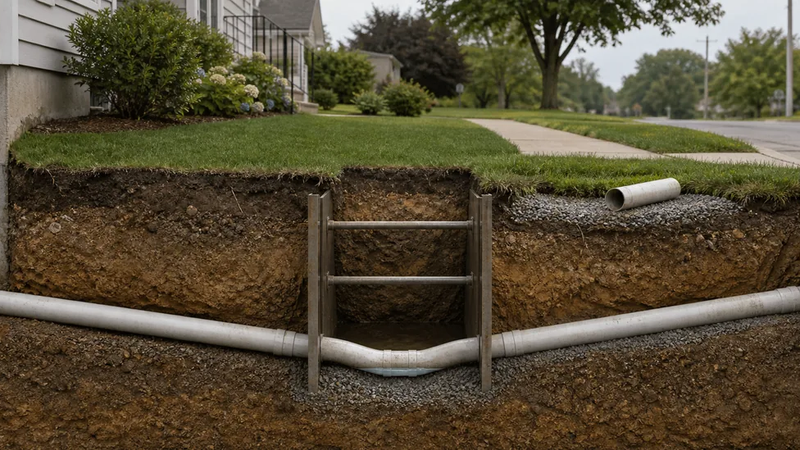
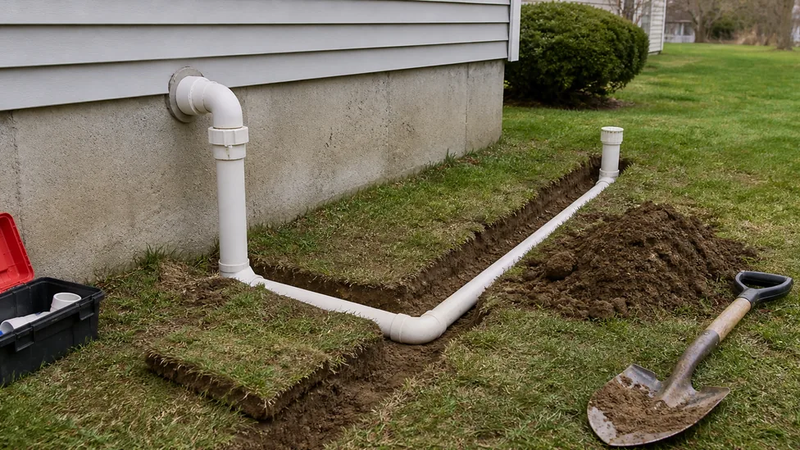
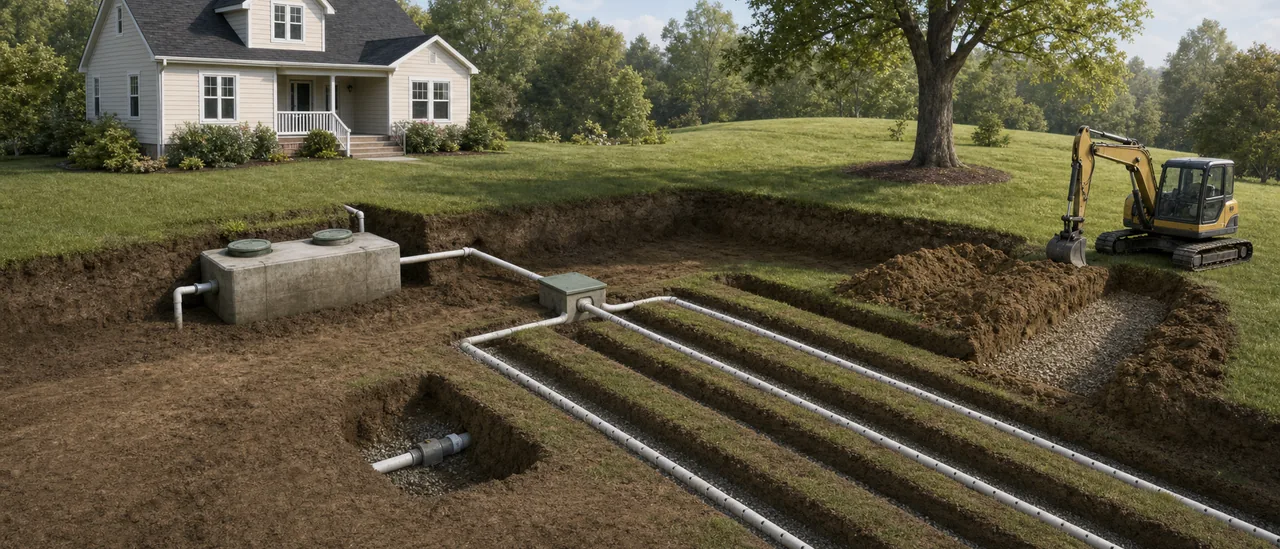
These figures apply to the drain field, also called a leach field or soil absorption field. It is the shallow, covered area where perforated piping distributes septic-tank effluent into soil for treatment and dispersal. A quote for an entire septic system may also include a tank, pump chamber, controls, or other treatment components and should not be compared directly with a field-only price.
| Published cost scope | Planning figure | What the figure covers |
|---|---|---|
| Repairable septic-field work | $1,000–$5,000 | A national market-guide range for field repairs |
| Leach-field replacement | $2,000–$20,000 | A national market-guide range for replacing the field |
| Regional whole-system replacement | $12,500 conventional; $16,500 with pump; $31,500 alternative | Virginia public-program averages that may include the tank and broader system work |
The table is a budgeting aid, not an estimate. Its first two rows are field-scoped market ranges. The Virginia figures in the final row are separate whole-system context; they illustrate how design changes cost and are not drain-field-only national prices.
What a drain-field estimate may include
A complete replacement estimate commonly combines more than pipe and aggregate. Ask whether the total covers:
- system evaluation, record review, and locating existing components;
- soil or site evaluation, design, permit, and required inspections;
- excavation, field materials, distribution components, and installation;
- a pump, controls, or treatment equipment when the design requires them; and
- abandonment of unusable components, hauling, grading, and basic site stabilization.
Finish landscaping, tree removal, driveway access work, or septic-tank replacement may be separate. Permit costs also vary sharply. For example, Cascade County, Montana, currently lists a replacement drain-field permit at $100 with a certified installer or $175 with a non-certified installer, plus a $100 site evaluation where required. That is a local fee example, not a national allowance.
Why one property costs more than another
Field size is tied to expected wastewater flow and site conditions. NC State Extension notes that bedroom count, soil, topography, and system type affect the required area; slowly permeable clay soil generally needs more field area than permeable sandy soil. Available space and required separation from wells, surface water, property features, and groundwater can also change the design.
Access matters because tight gates, steep grades, mature trees, buried utilities, or limited equipment staging increase labor. High groundwater, shallow bedrock, or an unsuitable reserve area can force a pumped, mound, or other alternative system. Any added tank or treatment work moves the project beyond a drain-field-only budget.
Confirm the failure before pricing a new field
Odor alone does not identify a failed drain field. EPA guidance notes that an inspection may assess surfacing water, drainage distribution, piping, the distribution box, groundwater effects, and permit records. The cause and approved remedy determine whether a limited repair is possible.
When to get site-specific estimates
Obtain a qualified septic evaluation before treating any online range as a project budget. Then request itemized estimates based on the same approved scope, showing design and permit fees, field type and size, included components, abandonment work, excavation, restoration, and exclusions. This makes a low quote easier to distinguish from one that simply leaves necessary work outside the price.