On this page
Typical replacement cost in 2026
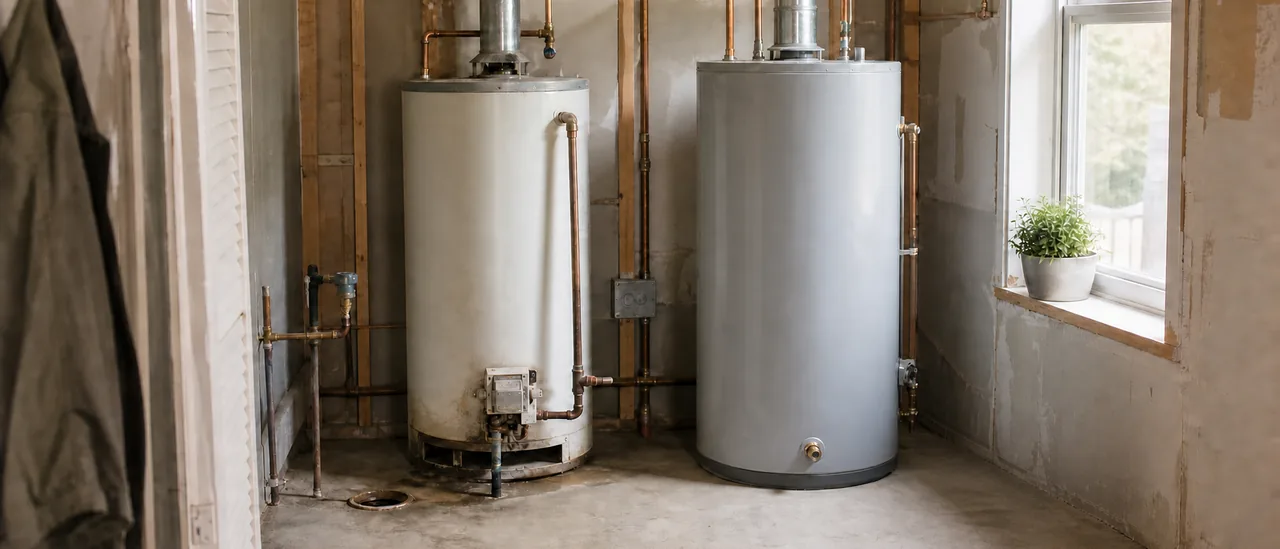
As of August 2026, budget about $900 to $1,900 for a common installed water-heater replacement. That planning range covers the new unit and professional installation; removal, permits, and required upgrades may be separate. Heater type, capacity, and changes to gas, electrical, venting, or plumbing systems move the price most.
Published national estimates are wider. One current survey places most replacements at $881 to $1,825, while another lists installed standard tank models at $600 to $3,100. Tankless installations span roughly $1,400 to $5,600, particularly when the home needs a retrofit rather than a direct swap.
| Scenario | Planning range | Likely scope |
|---|---|---|
| Low | $600–$900 | Basic tank unit, same location and fuel, straightforward connections |
| Typical | $900–$1,900 | Common tank replacement with ordinary installation labor |
| High | $1,900–$5,600+ | Larger or tankless unit, difficult access, relocation, or utility upgrades |
These are budgeting ranges, not bids. “Replacing an old water heater” here means removing an existing unit and installing another; it does not include repairing water damage or renovating the surrounding room.
What the price includes
A complete estimate should separate the heater, labor, and additional site work. Confirm whether it also covers delivery, draining and disconnecting the old unit, disposal, permit fees, inspection, taxes, and startup checks.
The lowest advertised figure may cover only a simple installation. One current guide reports that old-unit removal can add $75 to $500, although many installers include it. Another reports permit costs of $25 to $300, depending on local rules and the work required. Actual fees come from the authority with jurisdiction, so the local permit office is the better source for a property-specific number.
Make estimates comparable
Ask each installer to quote the same heater type and capacity. The scope should identify disposal, permits, venting, connection changes, and any work excluded from the total.
What changes the estimate most
Heater type and size create the first major difference. Current published ranges place installed tank models below many tankless systems, while larger-capacity units generally cost more than smaller ones.
A direct swap versus a conversion is equally important. Keeping the same location, fuel, and basic connections usually limits labor. Relocation or a change in fuel may require new piping, wiring, gas service, venting, or a dedicated circuit.
The property itself can change the job. Tight closets, stairs, attic locations, and limited working clearance can add labor. Official heat-pump water-heater guidance says an installer must evaluate electrical capacity, air supply, drainage, and noise; needed upgrades can add trips and time.
Local permit rules and after-hours scheduling also affect the total. A quote prepared from photos or a model number may change once the installer verifies access and existing connections on site.
When to obtain specialist estimates
Get itemized local estimates when the replacement changes heater type, fuel, location, capacity, or venting. A qualified installer should evaluate the existing utility connections and identify permit or code-related work before providing a firm total.
Two or three estimates are especially useful near the high end. Compare identical scopes rather than bottom-line prices, and ask how unforeseen connection changes will be authorized and priced. That turns a broad national range into a realistic property-specific budget.