On this page
A practical roof-inspection schedule
Inspect a residential roof at least twice a year, preferably in spring and fall. Add another inspection after severe weather, such as a hailstorm, tornado, hurricane, or damaging wind event. This cadence follows National Roofing Contractors Association guidance for residential roof systems.
Here, an inspection means a systematic visual review of the roof and the surfaces that meet it, including sidewalls and chimneys. The goal is to identify visible deterioration, displacement, debris, or drainage trouble. It is not automatically a destructive test or a guarantee that every concealed condition has been found.
Routine check or closer evaluation?
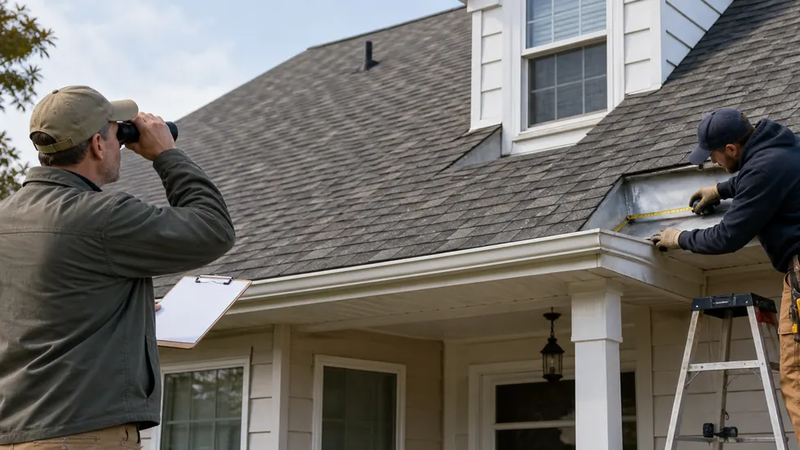
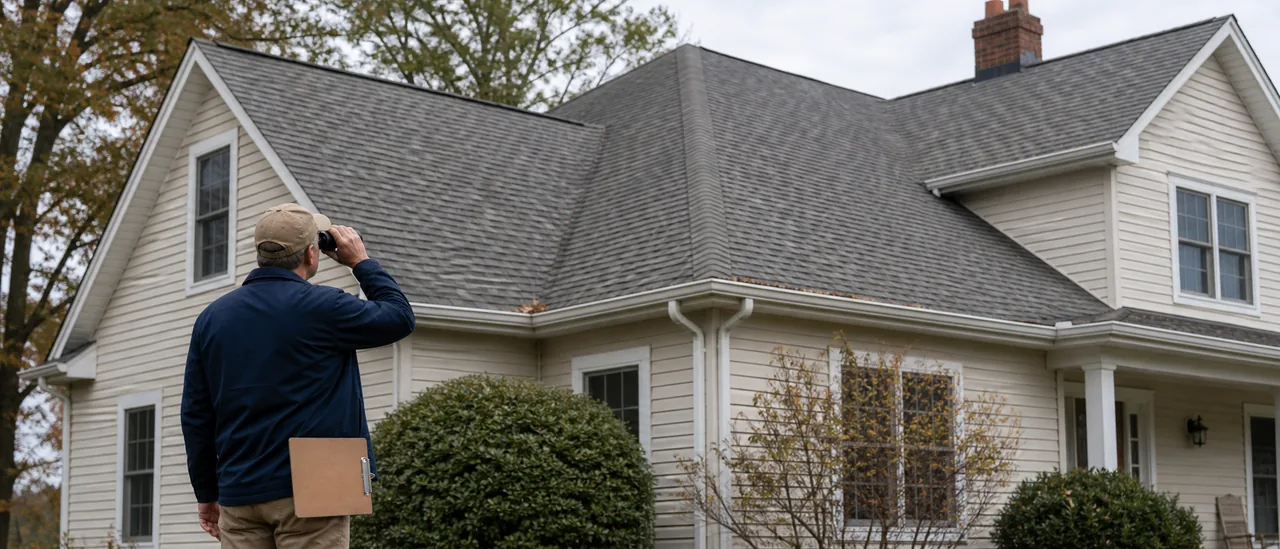
A spring or fall check can often begin from the ground or roof edge. Arrange a closer professional evaluation when the roof is unsafe to access, a visible change needs diagnosis, or the source of a leak is unclear.
Why twice a year is a useful baseline
Two scheduled checks create opportunities to notice changes before and after the most demanding seasons in many climates. NRCA says biannual inspections often reveal cracked, warped, or missing shingles, loose seams, deteriorated flashing, and excessive granules in gutters or downspouts.
Spring and fall are practical reference points, not magic dates. In a mild climate, choose two well-spaced times that fit local weather. The important part is maintaining a repeatable schedule and comparing current conditions with earlier notes or photographs.
When to inspect sooner
Do not wait for the next calendar check when an event or new sign changes the situation. Inspect sooner after:
- severe hail, high winds, a tornado, or a hurricane;
- a fallen limb or other visible impact;
- a new ceiling stain, active drip, or unexplained attic moisture; or
- newly visible missing material, loose flashing, or blocked drainage.
An extra inspection does not mean a storm or stain automatically proves roof damage. It means the new condition deserves a targeted check. What can be seen from the ground may justify closer evaluation, but it cannot establish what is happening beneath the roof covering.
Who should perform the inspection?
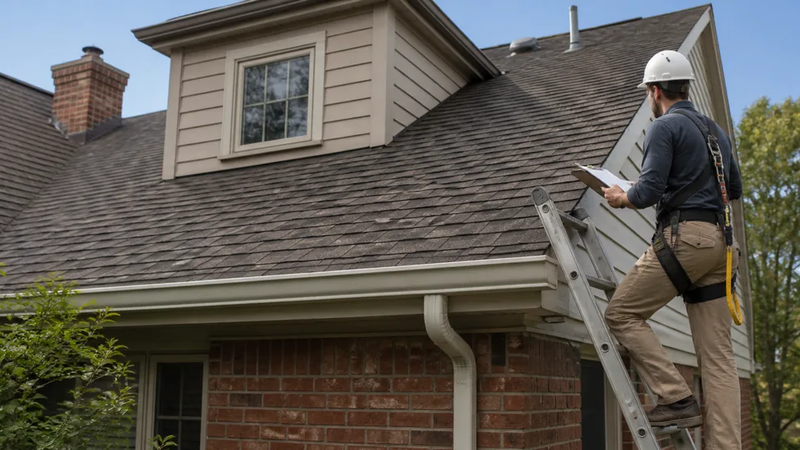
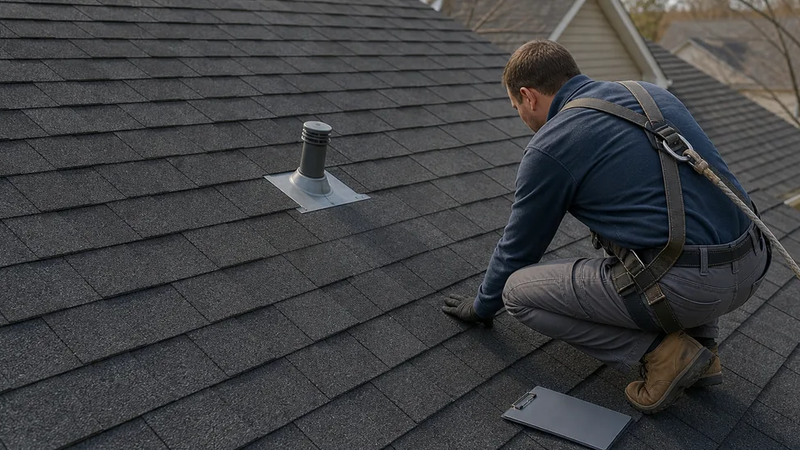
Homeowners can make limited observations from the ground, through accessible windows, or from a securely positioned ladder when they can do so safely. NRCA advises staying off the roof when possible and says inexperienced people should not walk on roofs without appropriate experience and equipment.
A qualified roof inspector or experienced roofing professional is the better choice when access is steep, high, wet, icy, fragile, or otherwise unsafe. Professional evaluation also makes sense when a leak must be traced, storm effects are uncertain, or visible deterioration needs diagnosis.
Bottom line
Use twice-yearly inspections as the routine baseline, then add checks after severe weather or a meaningful new warning sign. Keep the scope clear: routine visual checks can flag concerns, while unsafe access, concealed conditions, and uncertain causes call for closer professional evaluation.