On this page
The direct answer
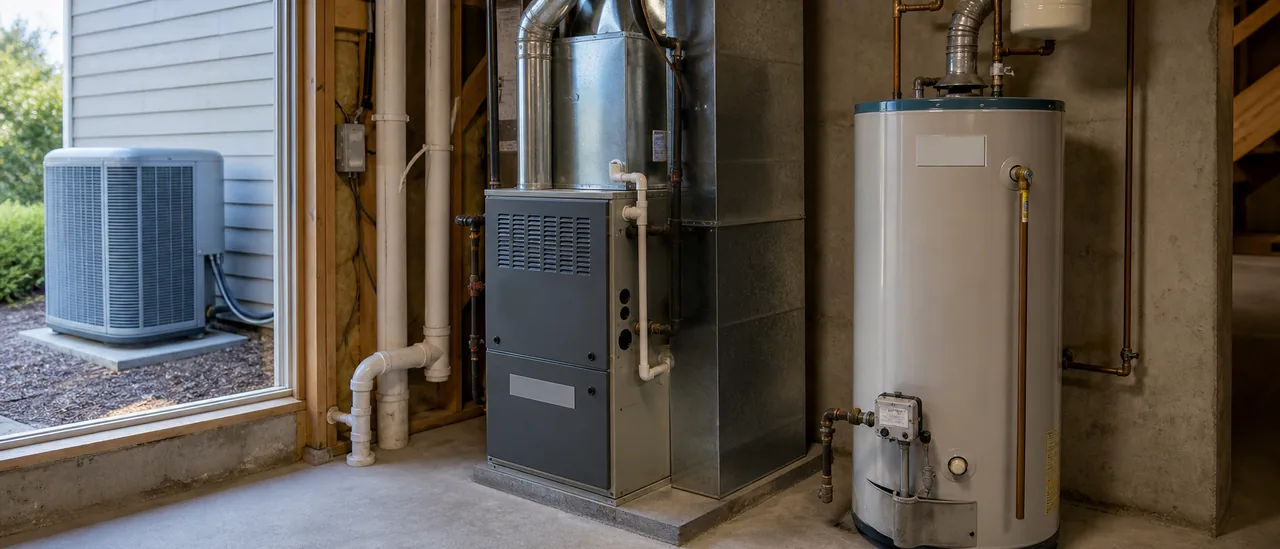
The furnace, air conditioner, and water heater do not necessarily share one age. Each unit's age is usually estimated from its own data plate, serial number, or documented installation date. The year the house was built is not enough because any system may have been replaced separately.
A manufacture date and an installation date are also different. Equipment could have remained in storage before installation, so the most accurate answer may be a year or a reasonable date range rather than an exact day.
How each age is established
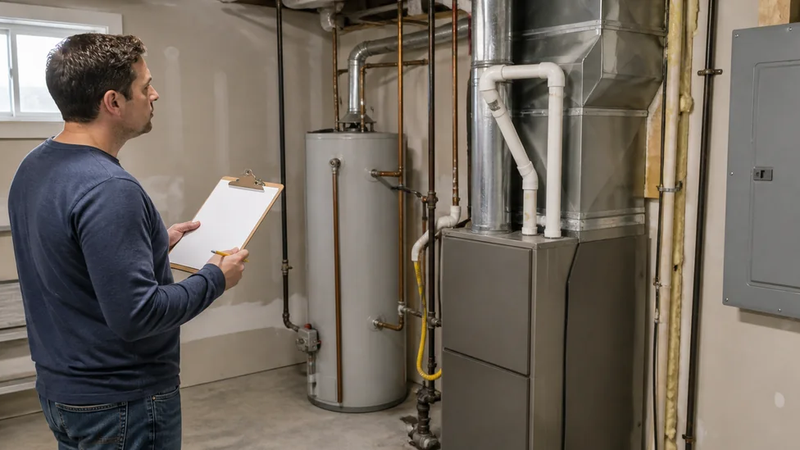
Start with the permanent data plate or rating label on each appliance. Record the manufacturer, model number, and complete serial number. Some labels print a manufacture date plainly; others encode it in the serial number.
The decoding pattern is not universal. InterNACHI's water-heater dating chart, for example, shows formats that use year and week, month and year, or letters representing dates. Some letter codes repeat on a cycle, which means the equipment's design and available records may be needed to resolve the correct decade.
Useful supporting records include:
- an installation invoice or permit tied to the equipment;
- a dated warranty registration or service record;
- an inspection report that includes a label photograph; and
- the manufacturer’s confirmation when a serial code is ambiguous.
For a split air-conditioning system, check both the outdoor condenser and the indoor coil or air handler. Components can be different ages. A furnace and central air conditioner may share a blower and ductwork without having been installed together.
Age is not remaining service life
A manufacture date tells when equipment was made. It does not prove present condition, efficiency, installation quality, or how much useful life remains. Those questions require separate observations and, when needed, evaluation by the appropriate system specialist.
What a home inspection can—and cannot—tell you
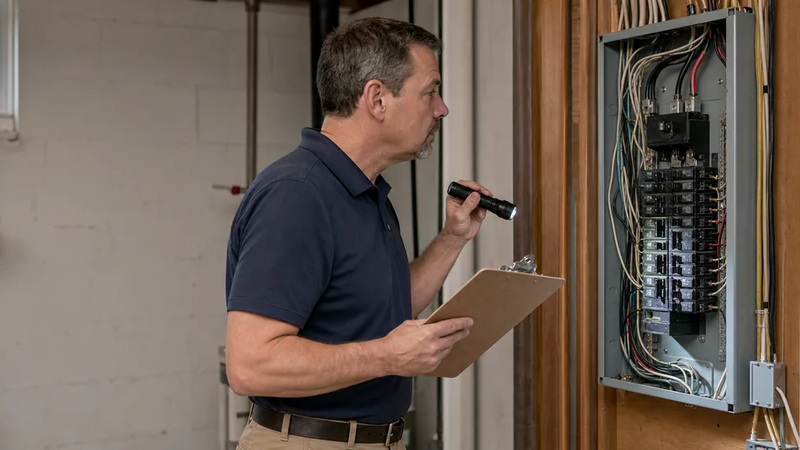
A general home inspection is a visual examination of accessible systems. InterNACHI's standards call for operating the heating and cooling systems with normal controls and inspecting specified water-heating components. The same standards say an inspector is not required to determine a water heater's age or life expectancy.
Therefore, an age shown in a report may be an estimate or an added service rather than a guarantee. If the label is missing, damaged, painted over, or inaccessible, the report should explain the limitation instead of assigning false precision. Operating normally on inspection day does not confirm a specific age, and an older date alone does not establish a defect.
Practical bottom line
Treat the three systems as separate pieces of equipment. Verify each label, decode it with manufacturer-specific information, compare the result with installation records, and note whether paired components have different dates. The defensible answer is the documented or reasonably estimated age of each unit—plus a clear statement wherever the evidence cannot narrow it further.