On this page
A small roof leak is serious
A small roof leak may release little visible water, but it means the roof system is no longer keeping water out at that location. Prompt action matters because repeated wetting can reach concealed materials, and damp areas become harder to dry once water moves into insulation or a ceiling cavity.
“Small” usually describes the drip or stain a person can see. It does not reliably describe the opening, the amount of concealed wetting, or the repair needed.
A leak is evidence that the roof’s water-control function has failed somewhere, although the interior stain may not identify the exact location.
Why a little water can become a larger problem
The main variable is not one drip’s volume. It is how long and how often materials stay wet.
The EPA advises drying wet or damp areas within 24 to 48 hours after a leak; in most cases, mold will not grow when that happens. It also identifies roof materials above ceilings as a possible hidden-mold location. This does not mean every small leak has caused mold. It means continued moisture increases the concern, especially where the assembly cannot dry readily.
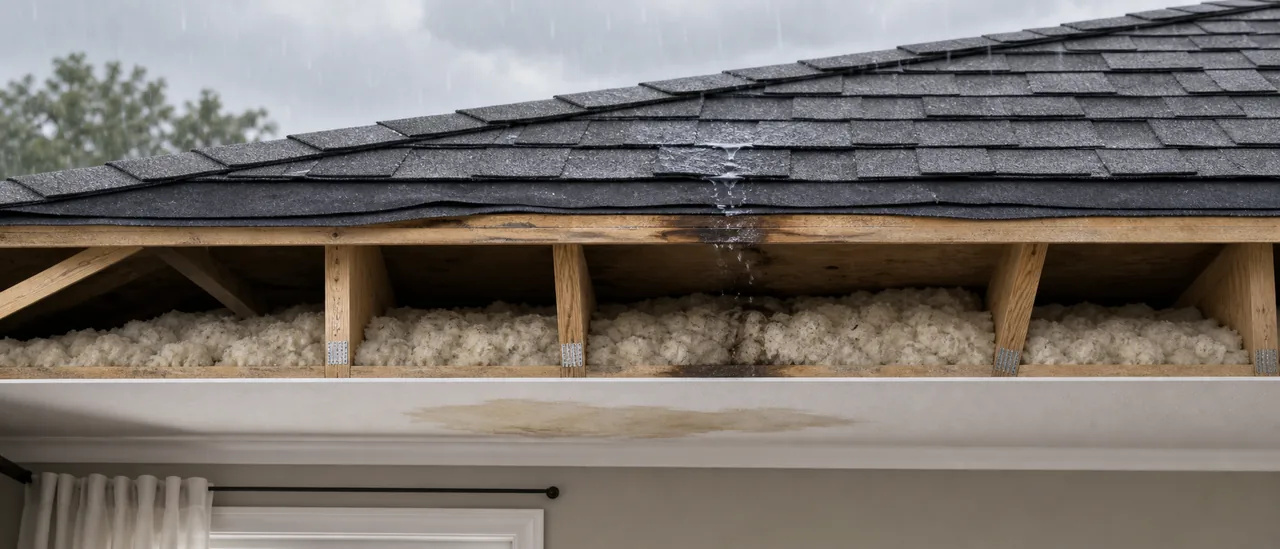
Water can affect more than the finished ceiling. Depending on the roof design and leak path, vulnerable materials may include:
- roof decking or sheathing;
- insulation, which can hold moisture out of view;
- ceiling drywall, paint, and trim; and
- items stored below the leak.
What changes the urgency
A first, brief drip during wind-driven rain is different from recurring staining after every storm. The situation deserves faster attention when a stain grows, the ceiling bulges or sags, water approaches a light fixture, or the attic contains visibly wet materials. Do not press on a swollen ceiling or stand beneath it.
Dry weather also does not prove the problem ended. The entry may simply be inactive until the next rain, snowmelt, or ice-dam condition.
The ceiling mark is a clue, not a measurement
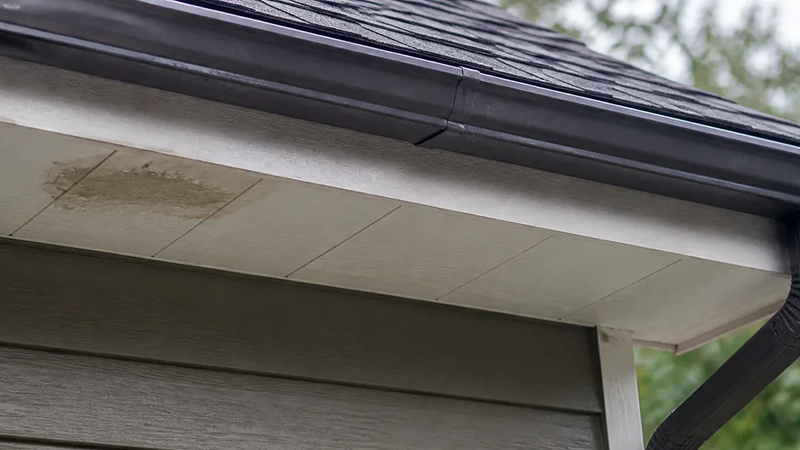
Stain size alone cannot establish the leak’s source, duration, or hidden extent. Inspection should trace the likely path and check adjacent materials rather than assuming the roof opening sits directly above the mark.
Practical bottom line
Contain dripping water only where it is safe, protect belongings, and document when the leak appears. The durable solution is to identify and stop the entry point, then dry and assess affected materials. A small leak caught after one event may remain limited; a recurring or concealed leak can require broader work. Its seriousness depends less on the size of the stain than on active hazards, repeated exposure, and what has become wet.