On this page
Inspect once the weather is safely over
Check your roof as soon as the high-wind threat has passed and daylight makes a ground-level look practical. For most homeowners, that means the same day or the next morning—not weeks later. The National Weather Service advises checking property only after you are sure the severe-weather threat has ended.
Here, “high winds” means a wind event strong enough to raise a reasonable concern about displaced roofing or wind-blown debris. It does not mean a particular reported gust proves roof damage. A weather report can prompt a check, but the condition of the roof determines what needs attention.
The National Roofing Contractors Association suggests an additional roof inspection after severe weather. An early check matters because shifted or missing materials can leave the roof less weather-resistant, while indoor moisture may be the first sign that water found an opening.
Keep the first check on the ground
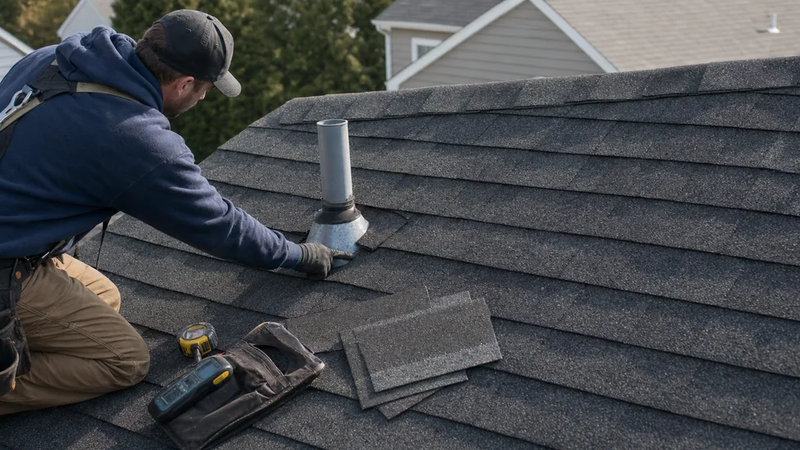
Do not climb onto a wet, steep, debris-covered, or possibly weakened roof. Watch for downed power lines and stay out of visibly damaged structures. Use a clear ground-level view, and leave roof access to someone with suitable experience and equipment.
What to check right away
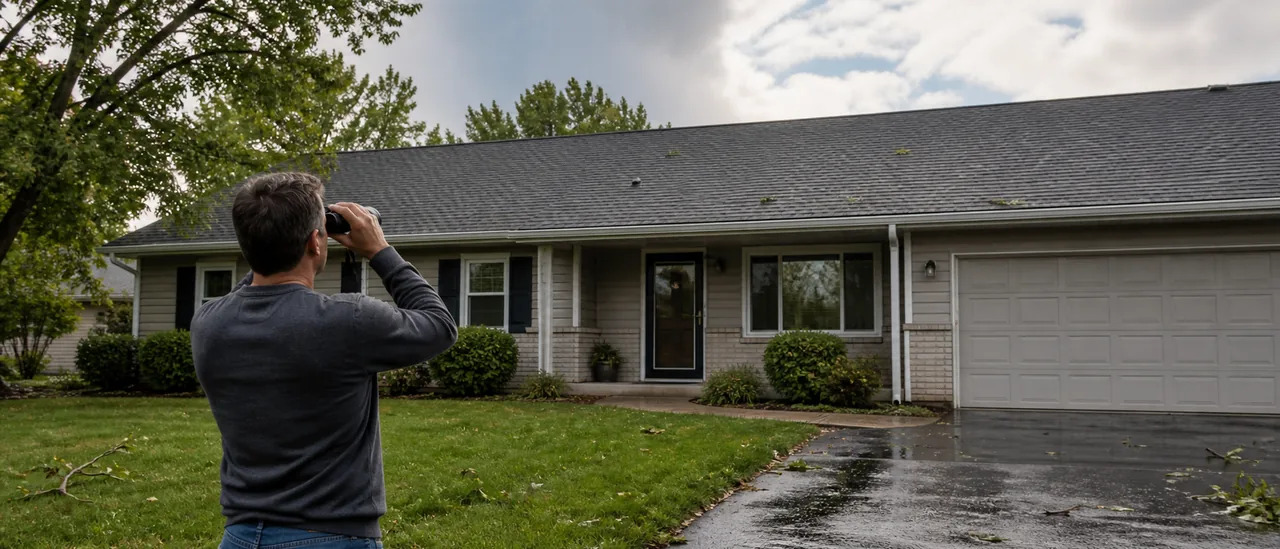
Walk around the home only when the area is safe. Look from several angles; binoculars can help with details that are difficult to see from below.
- Missing, lifted, curled, cracked, or displaced shingles or tiles
- Branches, loose flashing, or damage around vents and skylights
- Bent, detached, or blocked gutters and downspouts
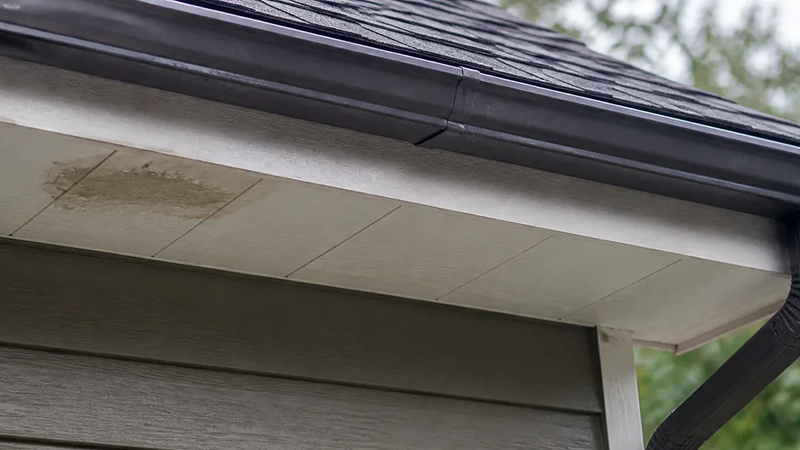
- New water stains, dripping, damp insulation, or daylight visible from the attic
A ground check has limits. Roof edges may hide damage, and some problems are not visible from the yard. The absence of an obvious defect therefore does not prove the entire roof is unaffected.
When not to wait for a routine check
Arrange a professional evaluation promptly if roofing material is missing, a branch struck the roof, water is entering the home, or the roofline appears changed. The same applies when close inspection cannot be performed safely from the ground.
If there are no warning signs and the wind event was minor at your property, document the date and recheck after the next rain. Monitor ceilings and the attic where access is safe. This is observation, not a substitute for evaluating a suspected problem.
Practical bottom line
Inspect after the threat ends, ideally within 24 hours, but never trade speed for safety. Start from the ground, check indoors for moisture, and escalate visible damage or uncertainty. The useful deadline is “promptly once safe,” not an arbitrary wind-speed number.