On this page
Is 50 pages a bad sign?
No—a 50-page home inspection report is not inherently bad. The important condition is whether the report clearly explains the inspection scope, significant findings, access limitations, and sensible next steps.
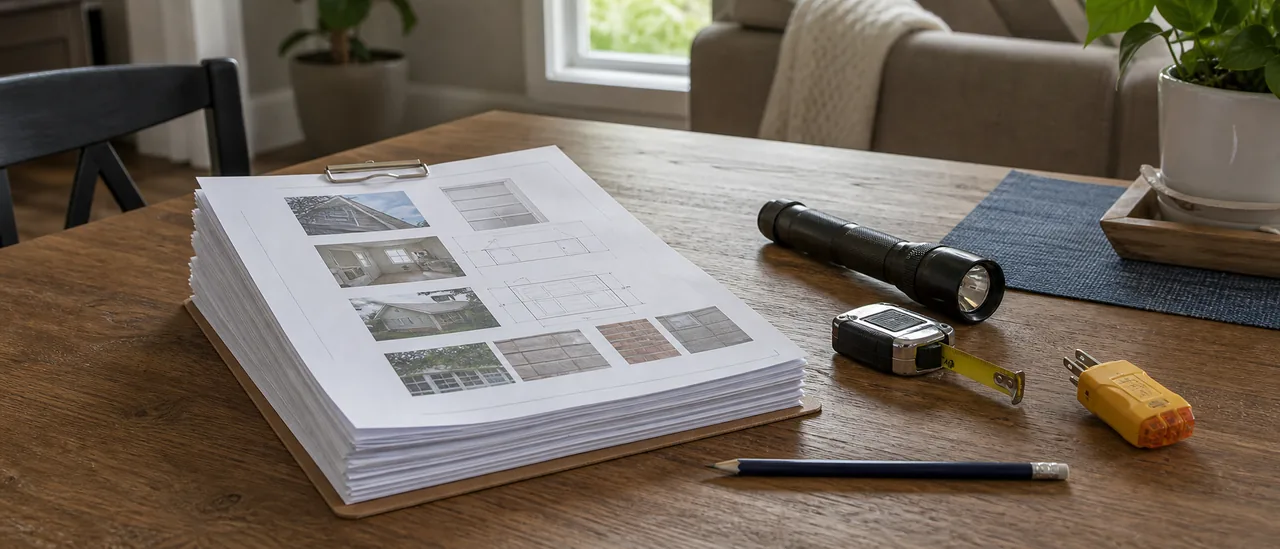
Page count is not a defect count or a quality score. Photos, larger type, system descriptions, maintenance notes, and repeated headers can add pages without making the home worse. A compact report can describe the same conditions with fewer images or denser formatting.
ASHI’s Standard of Practice focuses on what a written report should communicate, while allowing the inspector to select its format and medium. It calls for reporting inspected components that are unsafe, significantly deficient, not functioning properly, or near the end of their service lives. It also requires explanations, recommendations, and identification of required components that were not inspected.
Count decisions, not pages
Sort the report by what needs prompt attention, what needs monitoring or maintenance, and what could not be inspected. A specific observation and reason matter more than the number of pages surrounding them.
What the report can confirm
A standard home inspection is primarily visual and limited to readily accessible, installed systems and components. It can document conditions visible on the inspection date, describe affected components, and recommend correction, monitoring, or further evaluation when warranted.
It cannot confirm that concealed spaces are defect-free. InterNACHI’s standard says an inspection is not technically exhaustive and will not identify concealed or latent defects. ASHI likewise excludes determinations such as the causes of deficiencies, future conditions, and repair methods or costs from its minimum standard.
That distinction matters when reading a long report. Detailed photographs and commentary can make an observed condition easier to understand, but extra pages do not turn a visual inspection into destructive testing, engineering analysis, or a warranty.
How to judge the report
Read the complete report rather than judging its thumbnail count or stopping at the summary. Check whether it:
- distinguishes significant or unsafe conditions from maintenance and cosmetic notes;
- identifies the location and nature of each important observation;
- states which areas or systems were not inspected and why; and
- connects any recommendation for further evaluation to a specific finding.
Ask the inspector to clarify ambiguous wording or priorities. When the report identifies a condition outside a general inspection’s scope, evaluation by an appropriately qualified professional may be reasonable—but the recommendation should follow from the finding, not from the report’s length.
The practical bottom line: 50 pages can be perfectly normal. Judge the report by its clarity, documented scope, limitations, and the seriousness of its findings.