On this page
No—the two reviews serve different purposes
No, a blue tape walkthrough is not the same as a home inspection. The walkthrough usually identifies visible finish, completion, or correction items for the builder, while a home inspection evaluates accessible systems and components under a defined standard.
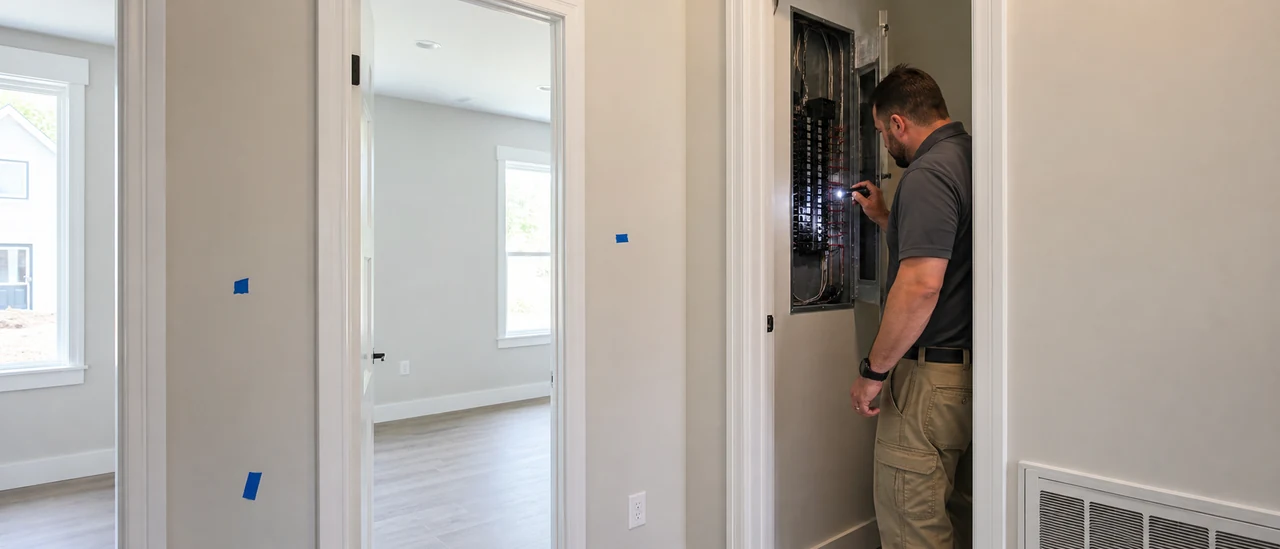
“Blue tape walkthrough” is informal terminology, not a universal inspection standard. The exact process depends on the builder and purchase documents. Tape may mark a paint blemish, chipped trim, cabinet adjustment, or another punch-list item.
Purpose, scope, and reporting differ
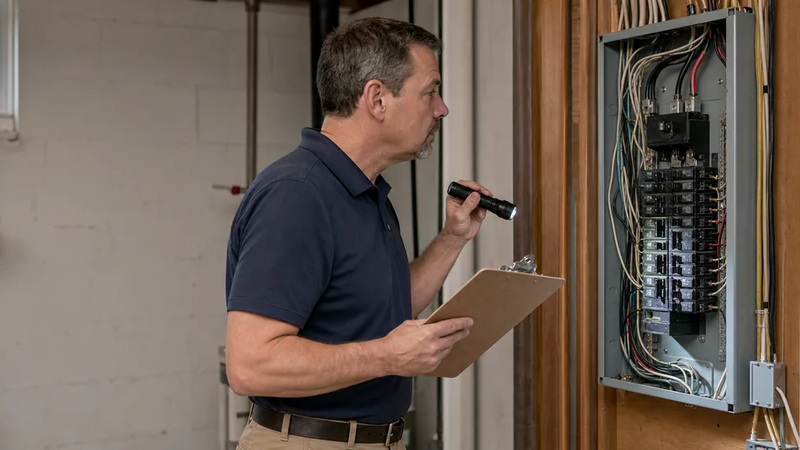
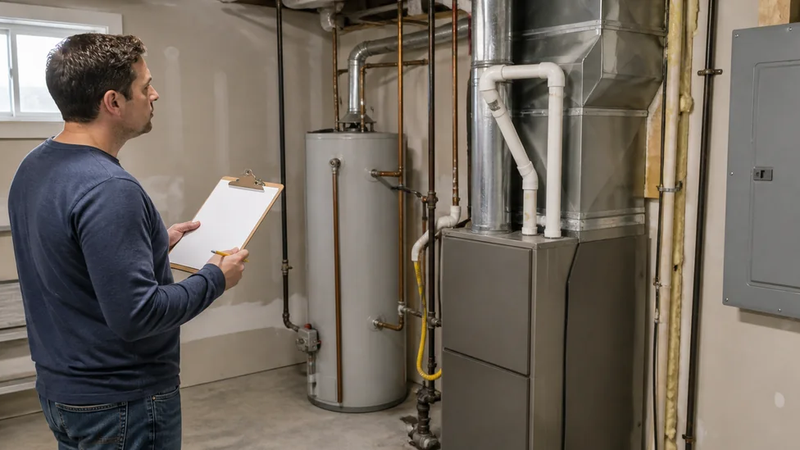
A home inspection has a broader, condition-focused purpose. Under the American Society of Home Inspectors standard, an inspector examines listed, readily accessible and visually observable installed systems. The inspector also provides a written report describing significant deficiencies and items needing further evaluation.
By contrast, a blue tape walkthrough commonly focuses on whether a new home appears complete and whether visible items need correction. It can be useful, but tape on drywall does not test an electrical receptacle, operate heating or cooling controls, examine an attic, or assess roof drainage.
| Question | Blue tape walkthrough | Home inspection |
|---|---|---|
| Main purpose | Record visible completion and finish items | Evaluate the condition of covered systems and components |
| Typical focus | Paint, trim, doors, cabinets, surfaces, unfinished work | Structure, roof, exterior, electrical, plumbing, HVAC, interiors, insulation and ventilation |
| Documentation | Builder punch list or walkthrough notes | Written inspection report |
| Governing scope | Builder process and contract documents | Applicable state rules, agreement, and stated standard of practice |
Neither process confirms every condition
The distinction does not make a home inspection exhaustive. ASHI’s standard excludes conditions that are not readily accessible and does not require destructive procedures. Inspectors generally do not determine concealed defects, exact causes, repair methods or costs, future failures, or code compliance under that standard.
A clean finish is not proof of system condition
Smooth paint and aligned trim can pass a walkthrough while an accessible system defect remains. Conversely, a cosmetic mark may matter to the punch list without representing a system defect.
Construction timing creates another limitation. Equipment may not be installed or operating, while restricted rooms or stored materials may block views. The report should identify required components that were present but not inspected and explain why.
Practical bottom line
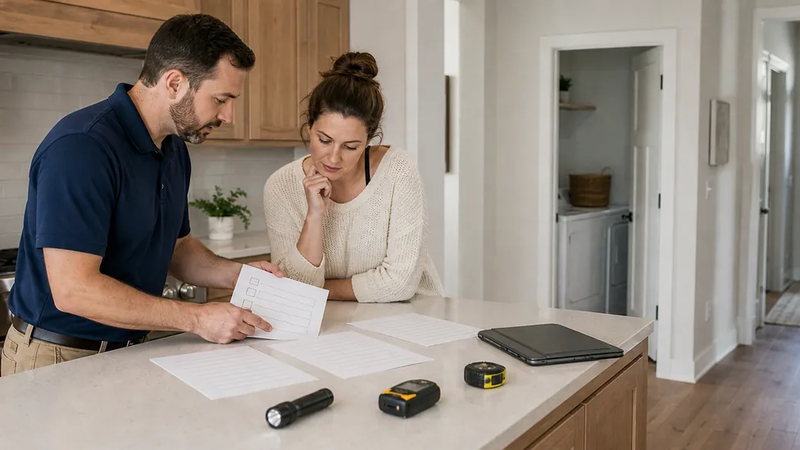
Treat the two processes as complementary, not interchangeable. Use the blue tape walkthrough to document completion and visible finish concerns under the builder’s procedure. Use an independent home inspection to obtain a broader evaluation of accessible systems and a written report; the Consumer Financial Protection Bureau specifically advises choosing an independent inspector accountable to the buyer.
Before either appointment, confirm the scope, access, deadlines, and how unresolved items will be recorded. If an inspection identifies a significant condition beyond its scope, evaluation by the appropriate qualified specialist may be the next reasonable step.