On this page
No—they answer different questions
No, a home inspection is not the same as a code inspection. The most important limitation is that the exact scope depends on the inspection agreement, applicable state rules, and the local authority’s adopted codes.
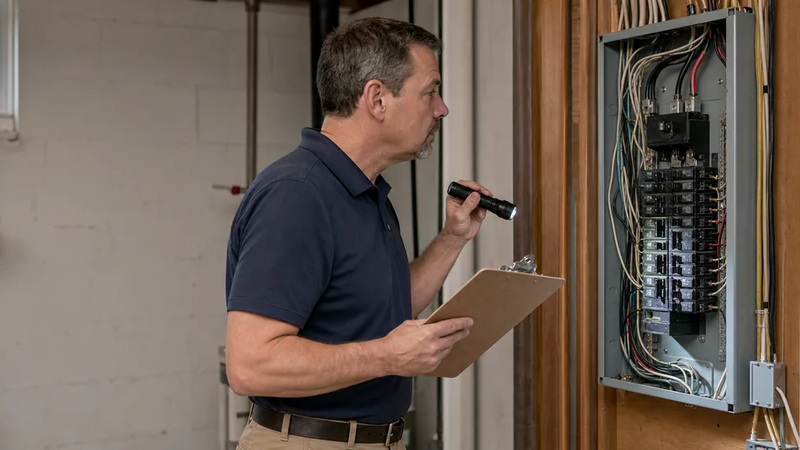
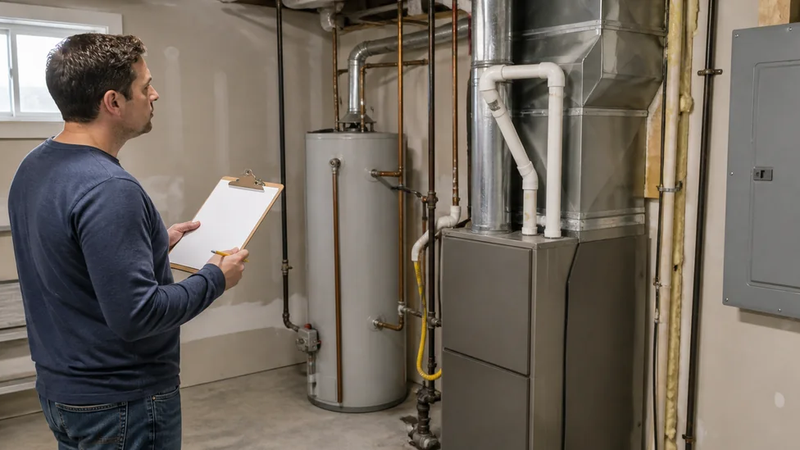
A general home inspection is a non-invasive visual examination of accessible areas. Under InterNACHI’s standard of practice, its purpose is to identify observed material defects in specified systems and components. It describes the property’s visible condition on the inspection date, rather than certifying legal compliance.
A code inspection, by contrast, evaluates work under the authority and procedures of a jurisdiction. For example, Pennsylvania regulations direct a construction code official to inspect for compliance with the approved permit and Uniform Construction Code. Local code editions, amendments, permit procedures, and required inspection stages differ.
| Question | General home inspection | Code inspection |
|---|---|---|
| Main purpose | Report visible, accessible conditions and observed material defects | Evaluate covered work against applicable code and permit requirements |
| Typical context | A buyer, owner, or seller wants a broad condition review | Permitted construction, alteration, repair, or code-enforcement work is being reviewed |
| Basis | The governing standard of practice, state rules, and inspection agreement | Adopted codes, local amendments, approved plans, and permit scope |
| Authority | Provides an inspector’s observations and recommendations | Produces an official approval, correction notice, or other jurisdictional result within its scope |
Why the findings can overlap
Both inspectors may observe the same stairway, electrical panel, plumbing work, or structural component. They can still report it differently because their assignments are different.
A home inspector may flag an unsafe or defective-looking condition and recommend correction without declaring a code violation. InterNACHI’s standard specifically says the inspector is not required to determine code or regulatory compliance. A code official may instead compare permitted work with specific enforceable requirements.
That overlap does not make either inspection a substitute for the other. A code approval addresses the work and stage presented to the official; it is not necessarily a broad assessment of the entire home’s condition. Likewise, a home inspection report does not establish that permitted work passed every required inspection.
Neither inspection confirms what cannot be observed
A home inspection does not identify concealed or latent defects. Code inspections also depend on required work remaining exposed and accessible at the appropriate stage. Finished surfaces can therefore limit what is visually confirmed.
Practical bottom line
Use the home inspection report to understand visible condition, function, safety concerns, and recommended follow-up within its stated scope. Use permit records and the local building department’s inspection results to answer whether covered work received required code approvals.
If a report raises a concern that requires calculations, dismantling, specialized testing, or interpretation of a particular code edition, evaluation by the appropriate qualified specialist or code authority may be needed. First read the report’s exclusions and identify the precise question still unanswered.