On this page
A range can help, but it is not a repair quote
In 2026, published national data puts many roof repairs at $395–$1,965, with about $1,172 typical. That range generally covers a defined professional repair, not the inspection itself. Repair area, roofing material, and access or structural complexity change the price most.
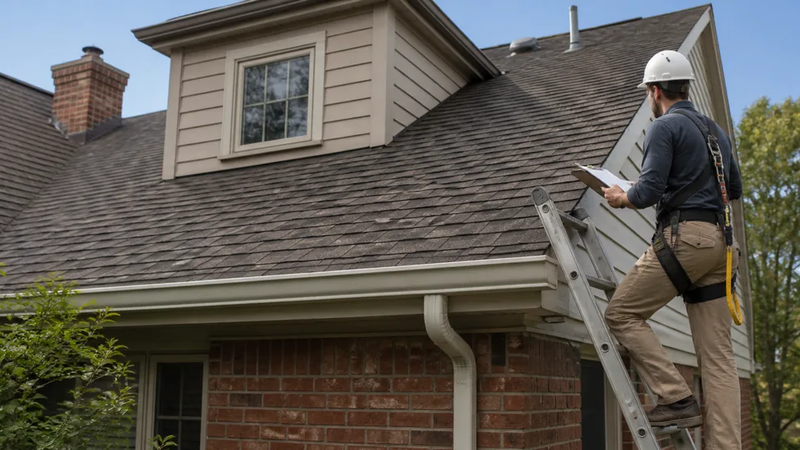
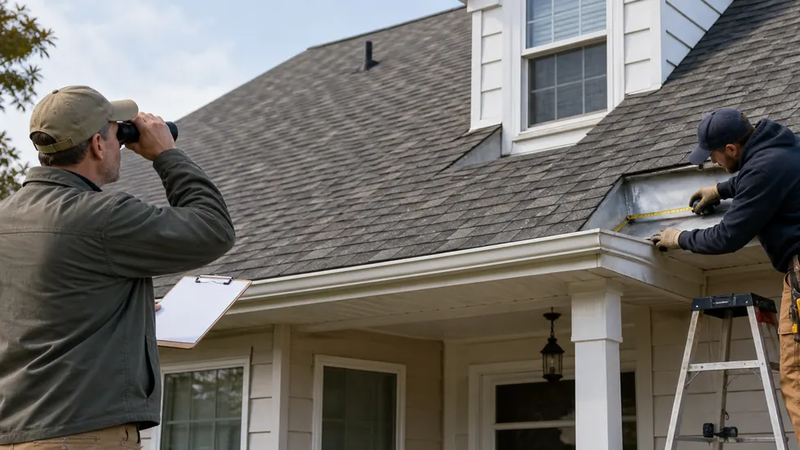
A roof inspection report may include a rough cost range when the inspector is qualified and local rules permit it. It should not present that allowance as a firm contractor estimate. The report’s main job is to describe observed conditions, inspection limitations, and recommended next steps.
The American Society of Home Inspectors’ standard does not require inspectors to determine correction costs. ASHI separately says projected costs may be included within the inspector’s expertise, provided they are not an offer to perform the work; state restrictions may also apply.
Allowance versus estimate
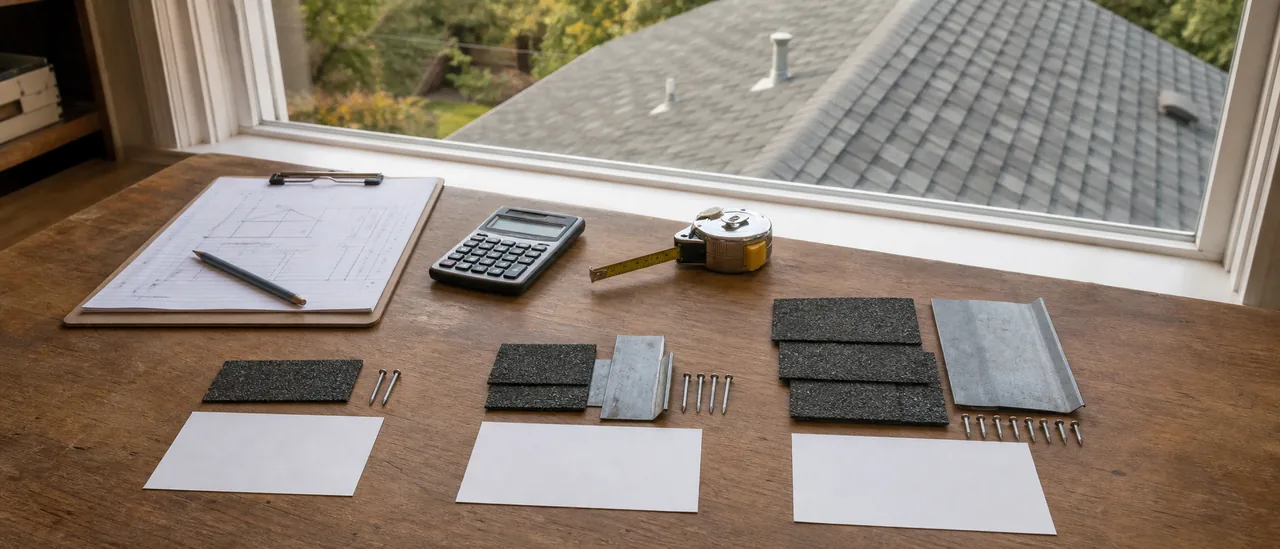
A planning allowance is a broad budget based on visible conditions and stated assumptions. A repair estimate prices a defined scope, materials, labor, access, permits, disposal, and exclusions. Labeling the number prevents false precision.
What the number should include
If a report gives a cost range, it should identify the defect or condition behind it. It should also state whether the range covers a spot repair, replacement of a roof section, or work on flashing, decking, fascia, or framing.
Useful ranges disclose their assumptions: roof type, approximate repair area, access method, visible substrate condition, and whether interior restoration is excluded. They should be dated and tied to the property’s region because labor rates and market conditions vary.
| Budget scenario | What may be visible | How to use the number |
|---|---|---|
| Low | Small, accessible covering or flashing repair; no visible deck damage | Preliminary allowance near the lower end |
| Typical | Defined localized repair with ordinary access and compatible materials | Compare with a detailed on-site quote |
| High | Steep or complex roof, specialty material, broad damage, or suspected deck or framing work | Obtain a specialist scope before budgeting |
These scenarios are not promises. A 2026 market guide reports asphalt-shingle repairs at $150–$1,500, while clay-tile repairs run $500–$2,500. The difference illustrates why a report cannot produce a dependable property-specific price from defect labels alone.
Why an inspection cannot confirm every cost
A visual inspection is not technically exhaustive. Under ASHI’s standard, concealed conditions and latent defects are outside the required inspection, and inaccessible components do not have to be evaluated.
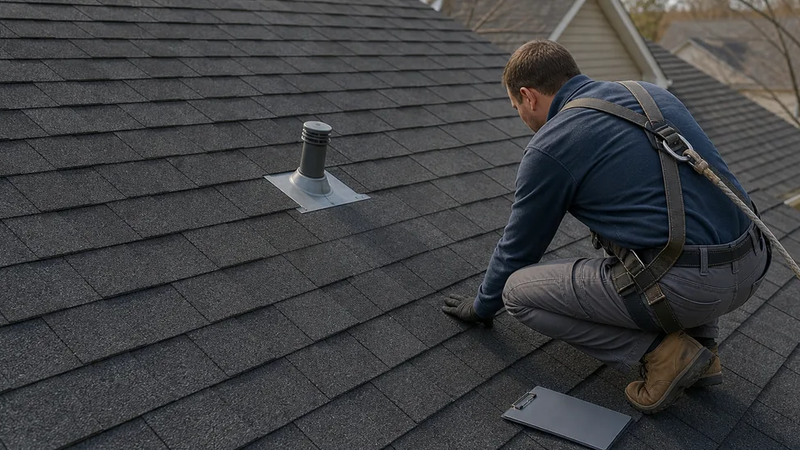
That matters because removing roof covering may reveal deteriorated decking, wet insulation, corroded fasteners, or a larger repair boundary. A visual report can document stains, displaced materials, surface wear, and accessible flashing. It generally cannot confirm concealed moisture, hidden deck condition, or every required construction detail without additional investigation.
Regional labor, permit requirements, disposal charges, material availability, minimum service fees, roof height, pitch, and staging needs can also move a quote. Even a careful allowance can become stale as prices or site conditions change.
When to obtain a specialist estimate
Obtain an on-site roofing estimate when the decision depends on a reliable total, the repair boundary is unclear, specialty materials are involved, or the report notes limited access or possible concealed damage.
Ask the estimator to separate known work from allowances and exclusions. The document should specify materials, quantities, access, disposal, permits, and how hidden damage will be authorized. That turns an inspector’s useful condition report into a price based on an actual repair scope.