On this page
Usually, review the agreement before paying in full
Usually, do not pay the full roof-inspection fee merely to reserve an appointment. First receive a written agreement that identifies the inspector, total price, work included, report delivery, and cancellation terms.
Full prepayment can still be reasonable when a qualified inspector has a clear fixed-fee policy and the written terms are acceptable. The condition that changes the recommendation is not the payment date alone; it is whether the provider and promised work can be verified before the money leaves your control.
Here, “upfront” means the entire fee is collected before the site visit. A card authorization or refundable scheduling deposit is different and should be described separately.
Use the contract as the decision tool
Payment terms should not exist only in a phone call or checkout screen. For example, Washington’s home-inspector rules require a pre-inspection agreement to state the inspector’s compensation and generally describe what will and will not be inspected. A related rule requires providing the report according to the agreement’s terms. Ohio also requires a written contract before home-inspection services and requires the inspection fee to appear in it.
Those are state-specific examples, not a nationwide rule for every roof inspection. Licensing and contract requirements vary, and a stand-alone roof inspection may be regulated differently from a whole-home inspection. Check the rules that apply where the property is located.
Before agreeing to full prepayment, compare the actual terms:
| Check | Upfront payment is easier to justify when… | Pause or request different terms when… |
|---|---|---|
| Provider | The inspector’s identity and applicable credentials are verifiable | The business will not identify who performs the inspection |
| Scope | Roof areas, access method, exclusions, and optional services are written down | “Full inspection” is undefined or important items are only verbal |
| Deliverable | The agreement promises a written report and gives a delivery date | The report format or delivery timing is unclear |
| Changes | Cancellation, weather delays, rescheduling, and refund terms are specific | The entire fee is called nonrefundable without explaining what happens if no visit occurs |
| Payment | The total charge and payment method appear on a receipt | New fees can be added without prior approval |
Match the fee to the inspection you are buying
A higher fee or full prepayment does not make an inspection technically exhaustive. Ohio’s standard describes a home inspection as a visual, non-technically-exhaustive examination of readily accessible components at a particular date and time. It also requires reporting the roof-inspection method.
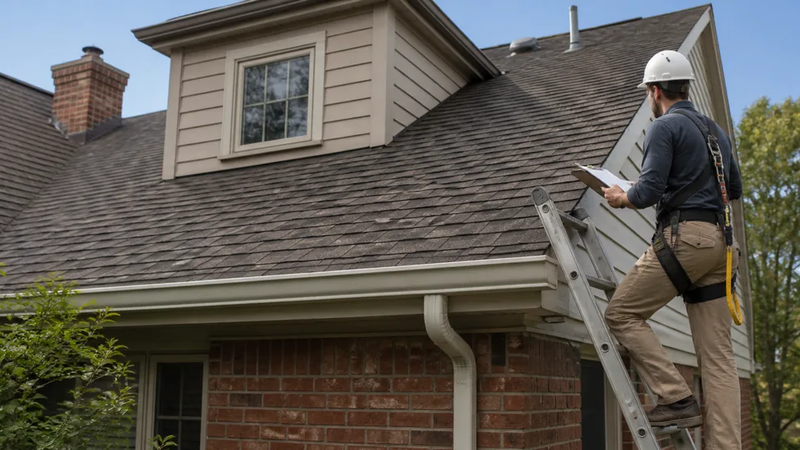
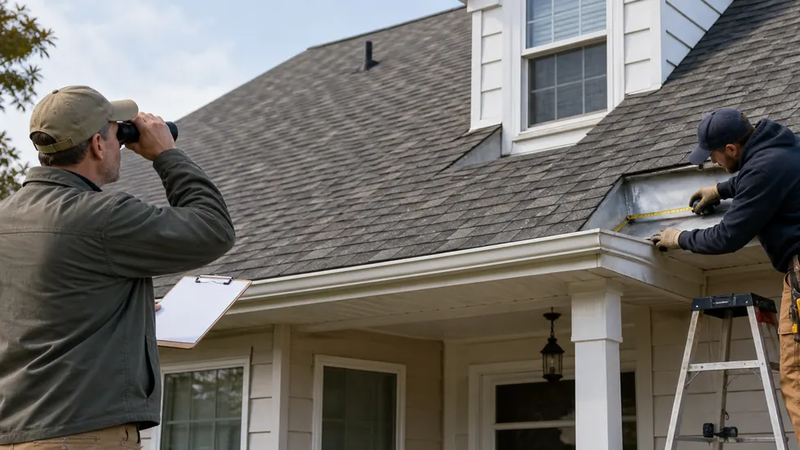
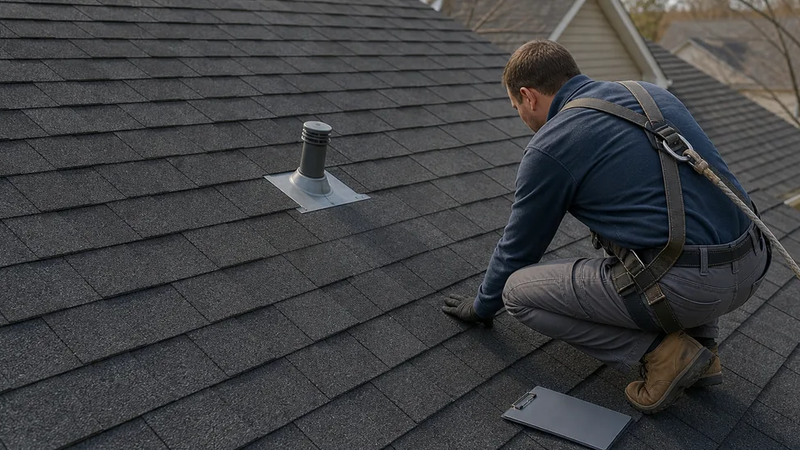
The agreement should say whether the roof will be viewed from the ground, roof edge, roof surface, drone, attic, or some combination. It should also identify any promised photographs, moisture measurements, material sampling, or other work beyond a visual review.
Access and safety can change what is completed. Maryland’s roof-inspection standard, for example, does not require an inspector to walk a roof when doing so could cause damage or be unsafe. It also does not require determining roof-covering life expectancy, installation methods, or the presence or absence of hail damage. These limitations illustrate why “full fee” and “full access” are not the same thing.
A practical payment rule
Pay only after you can answer three questions: Who is responsible, exactly what will be done, and what happens if it is not done as agreed? Keep the signed agreement and receipt, and confirm how disputes, cancellations, and weather delays are handled before the appointment.
If the provider refuses to document the scope or payment terms, choose another qualified evaluator. If the agreement is complete but full prepayment still feels disproportionate, ask whether a deposit with the balance due at the visit or report delivery is available.