On this page
Yes—request the records before closing
Yes. A seller should provide available roof invoices, contracts, and warranty documents when the roof was replaced or repaired. These records help a buyer verify what work was represented, when it occurred, and whether any promised coverage can continue after the sale.
The condition that changes the answer is the governing transaction. A seller may not possess every record, and the legal duty to produce one depends on the purchase contract and applicable disclosure law. The request should therefore become a written contract or disclosure issue when the documents materially affect the buyer's decision.
State forms illustrate why location matters. Delaware's official disclosure asks for the last roof-installation date, roof problems or repairs, and whether an existing warranty is transferable. That form applies in Delaware; it is not a nationwide rule.
What each document can establish
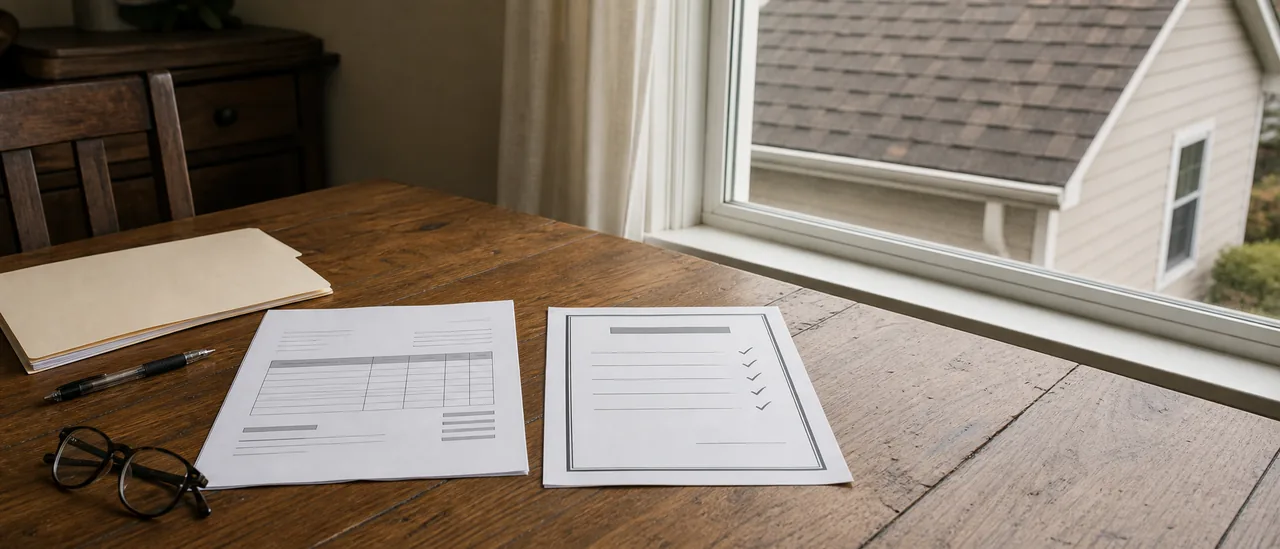
An invoice is evidence of a billed transaction, not proof that the entire roof is sound. A detailed contract or final invoice may identify the contractor, work date, roof areas, materials, tear-off or overlay, flashing, ventilation, and price.
Warranty papers answer a different question. They should identify the issuer, covered work or materials, exclusions, coverage period, and any transfer procedure. Read the actual terms rather than relying on a listing description or an informal statement that the roof is “under warranty.”
| Record | Useful for | Does not prove |
|---|---|---|
| Final invoice or contract | Who performed stated work, when, and under what scope | Present roof condition or correct installation |
| Warranty certificate and terms | Coverage, exclusions, expiration, and transfer steps | That coverage is active or transferable now |
| Permit and final approval, if applicable | What the local authority reviewed under its process | Freedom from every defect or future leak |
| Inspection report | Visible conditions and limitations on the inspection date | Hidden conditions or future performance |
Treat “warranty included” as a claim to verify
Ask the warranty issuer—not only the seller—whether the specific coverage is active, transferable, and subject to a deadline, fee, registration, maintenance record, or proof-of-purchase requirement.
When missing records matter more
Missing paperwork deserves closer attention when the listing emphasizes a recent roof, the seller completed repairs after inspection, the roof age affects price, or financing depends on a repair. It also matters when different roof sections appear to have different ages or when the seller's account conflicts with permit records or observed conditions.
Do not convert missing documents into an automatic conclusion that the work was improper. The records may have been lost, the contractor may no longer operate, or the work may predate the seller. Instead, treat the gap as unresolved information and decide how the contract should allocate that uncertainty.
A lender can add another requirement. The Consumer Financial Protection Bureau explains that some loan programs impose property standards and that a lender may require major repairs, including a new roof, before closing. Seller paperwork may help explain completed work, but it does not replace the lender's appraisal, repair conditions, or requested evidence.
Documents do not replace inspection
A current inspection addresses observable condition; invoices address history. Under the American Society of Home Inspectors' standard, a home inspection visually examines readily accessible systems and components. Its roofing section includes roofing materials, drainage systems, flashing, skylights, chimneys, and penetrations, while requiring the inspection method to be described.
Before the inspection contingency or document-review deadline expires, compare the seller's records with the disclosure, permit history, inspection report, and lender conditions. Have the appropriate real-estate or closing attorney review any promised transfer, missing-document remedy, or contract language, and obtain a qualified roof inspection when condition or scope remains uncertain.