On this page
Usually yes—share the complete issued report
The seller should usually share the full roof report when using it to describe the roof or support a transaction position. The answer changes if the seller does not control the report, the inspection agreement restricts distribution, or local law and the purchase contract require a different process.
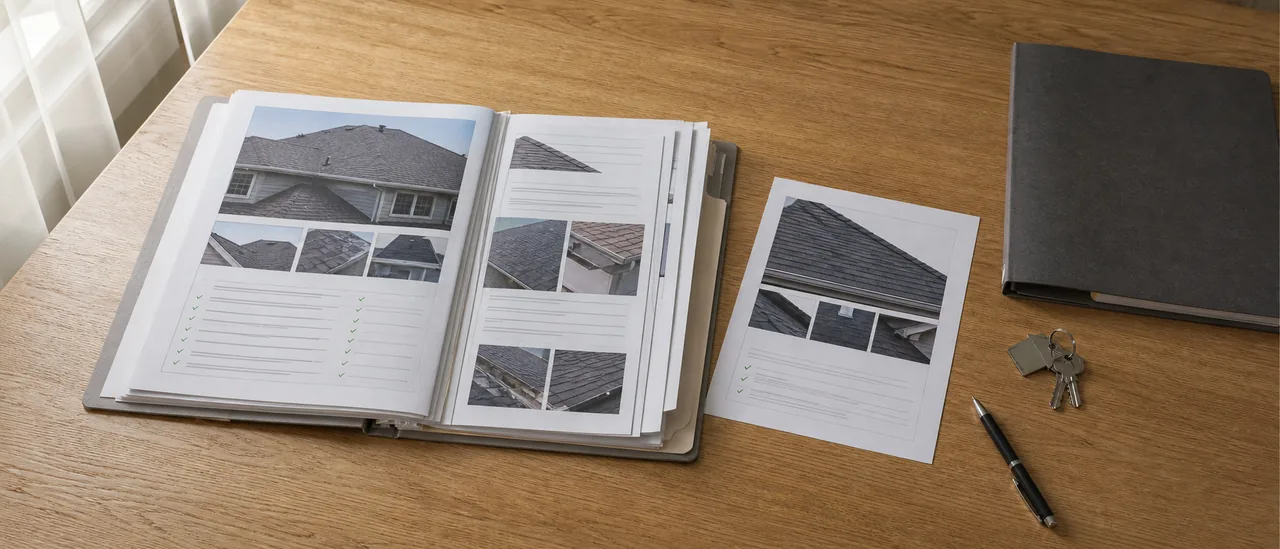
“Full report” here means the complete document issued by the inspector: findings, photographs, inspection date, inspection method, limitations, recommendations, and identifying information needed to connect it to the property. It does not mean an inspector’s drafts or unrelated private payment information.
Sharing only a favorable page or a verbal summary can remove important context. A buyer cannot properly weigh a finding without knowing which roof areas were inaccessible, whether the inspector walked the roof, and what further evaluation was recommended.
Why the limitations belong with the findings
A roof report records conditions within a defined scope; it is not a promise that every defect was found. The American Society of Home Inspectors’ current standard covers readily accessible, visually observable components and requires the inspection method to be described. It also says an inspection under that standard is not technically exhaustive.
The complete report therefore helps the reader distinguish an observed defect from an uninspected area. Photographs and limitations may materially change the meaning of a short conclusion such as “no active leak observed.”
| Transaction situation | Better document choice | Reason |
|---|---|---|
| Seller cites the report’s conclusion | Complete issued report | Lets the buyer read the supporting observations and limits |
| Report identifies an uninspected area | Complete report plus any later specialist document | Preserves the original limitation and the follow-up result |
| Repairs followed the inspection | Original report plus invoices, permits, and completion records | Shows what was found and what work was actually documented |
| Distribution rights are unclear | Inspection agreement reviewed before release | Avoids assuming the seller may distribute a report owned by someone else |
When the answer requires transaction-specific review
Disclosure duties are jurisdiction-specific. They may concern known property conditions, previously received inspection reports, delivery timing, or a prescribed form. They do not all answer the narrower question of whether every seller must hand over every roof document.
California illustrates why local review matters. Its residential-transfer statutes refer to previously received physical-inspection reports and provide a specific rule for certain expert reports, including a qualifying roofing contractor’s report, when information is requested by a prospective buyer. That rule should not be treated as a nationwide standard.
Sharing is not the same as adopting every conclusion
Send the report as the inspector issued it and identify its date. If the seller disputes a finding or has newer evidence, preserve the original and provide the response or later document separately. Do not rewrite the inspector’s conclusion inside the report.
The inspection agreement may also identify the client, intended use, or distribution limits. If the seller commissioned the report, that agreement should be checked before circulation. If another party commissioned it, obtain permission or ask that party to distribute it directly.
What the buyer should do with the report
The buyer can use the seller’s report to frame questions, compare later findings, and identify areas needing closer review. It should not replace the buyer’s own due diligence. HUD’s current homebuyer notice says an appraisal does not replace a home inspection and advises arranging an inspection early enough to address results through the contract.
Before the report is delivered or relied upon, have the applicable disclosure form, purchase contract, and inspection agreement reviewed by the transaction’s real-estate or legal professional. The buyer should also obtain an independent roof inspection when the report is old, limited, disputed, or does not cover the conditions material to the purchase.