On this page
Attend if you can, especially near the end
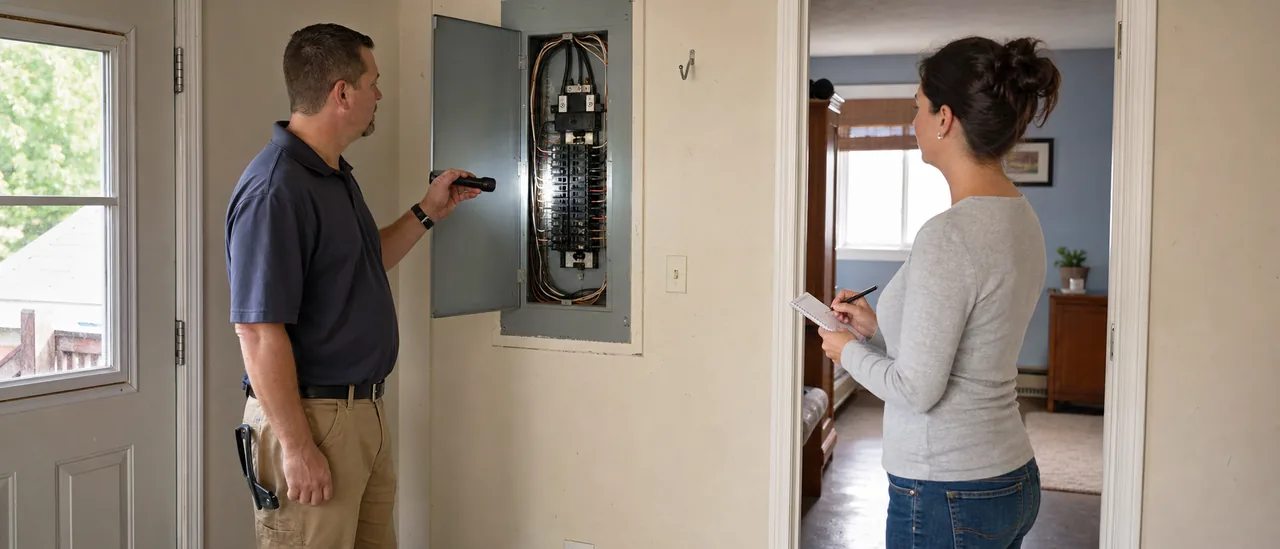
Yes—buyers should usually attend at least the inspector’s final walkthrough or summary. Being there makes it easier to connect written findings with their location, ask questions, and understand which observations deserve attention.
The answer changes when attendance would distract the inspector, violate the seller’s access rules, or create a safety problem. Follow the inspector’s preferred format and the access arrangements made for the property. If the full appointment is impractical, ask whether you can join for the final portion instead.
Why being there helps
The Consumer Financial Protection Bureau recommends attending when possible because presence makes the report easier to interpret and allows questions. A photo of a stain or aging component may be clear on paper, but seeing its size, surroundings, and relationship to other systems provides useful context.
Attendance also gives you a chance to learn what the inspector actually observed. Useful questions include:
- Is this a defect, a maintenance item, or simply an observation?
- Was the entire component accessible, or only part of it?
- Does the finding need prompt attention or routine monitoring?
- Is further evaluation needed, and what question should that evaluation answer?
Save transaction negotiations for your real-estate or legal adviser. The inspection visit is best used to understand the property and the report.
Participate without interrupting the inspection
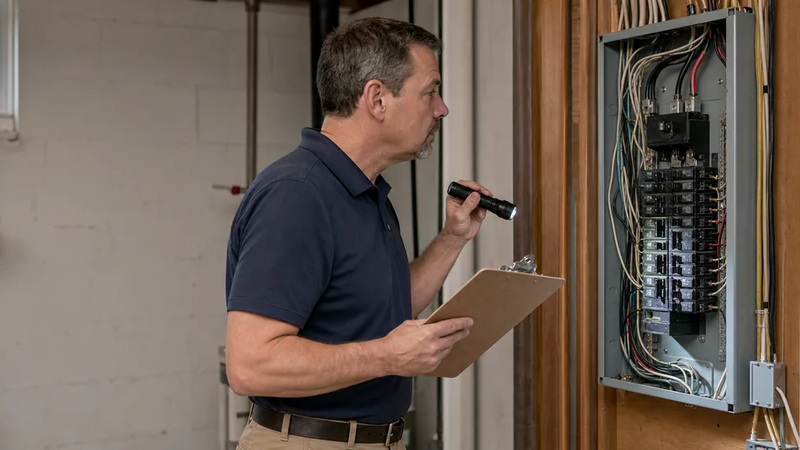
Ask the inspector before following into attics, crawl spaces, onto roofs, or near electrical equipment. Some areas may be unsafe or inaccessible, and an inspector may need uninterrupted time to test systems and document conditions.
Attendance does not expand the inspection
Watching the inspection does not turn it into destructive testing, code verification, or a guarantee. The agreed inspection scope and applicable standard still control what is examined and reported.
InterNACHI’s standard defines a home inspection as a non-invasive visual examination of accessible areas. It also says an inspection is based on observations made that day, does not reveal every possible issue, and does not identify concealed or latent defects.
That means neither you nor the inspector can confirm conditions hidden behind walls, under finished floors, or inside closed assemblies by sight alone. Attendance helps you understand the visible evidence and its limits; it does not eliminate uncertainty.
When you cannot attend
Missing the appointment does not make the inspection worthless. Arrange the best substitute before inspection day:
- Confirm how and when the inspector will deliver the written report.
- Ask for a phone or video recap while the property is still fresh in the inspector’s mind.
- Send questions about access, major systems, and known concerns in advance.
- Review the complete report promptly, including limitations and areas not inspected.
- Ask what unresolved findings may need evaluation by an appropriately qualified specialist.
Do not rely only on a verbal summary. The report records the observed conditions, recommendations, and scope limitations you will need when deciding what comes next.
Make attendance serve the decision
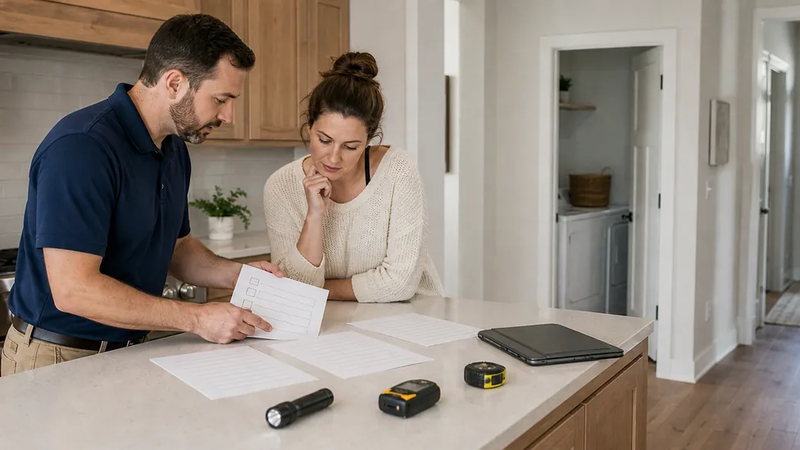
If you attend, focus on understanding rather than shadowing every step. Let the inspector work, take notes during the summary, and distinguish observed conditions from possible causes.
The practical rule is simple: attend when permitted and feasible, with the final walkthrough as the highest-value portion. If you cannot be there, a prompt report review and direct conversation with the inspector can preserve much of the benefit.