On this page
The decision rule
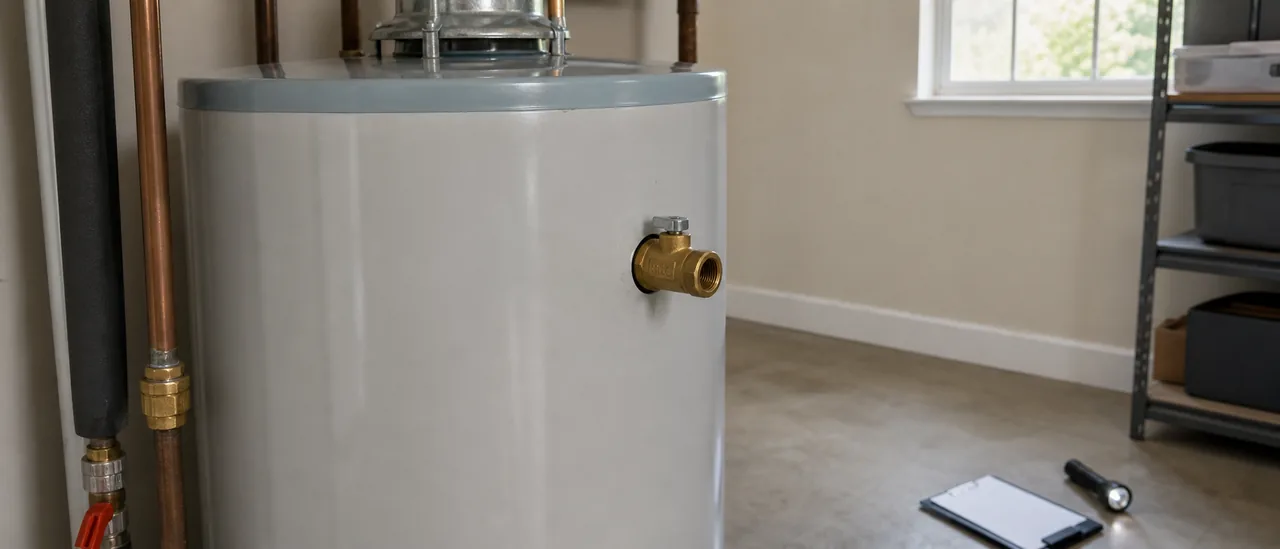
A missing TPR discharge pipe usually should trigger a repair condition, not an automatic decision to abandon the purchase. Proceed only after a qualified plumber confirms that the temperature-and-pressure relief valve, water heater, and new discharge route are suitable. The answer changes if the valve is also missing, blocked, leaking, altered, or connected to a damaged heater.
“TPR” means temperature-and-pressure relief. The valve is the safety device; the discharge pipe is the route that carries any release toward an appropriate termination. A missing pipe therefore does not, by itself, prove that the valve or tank has failed. It does leave a release without the intended routing away from people and the building.
Do not test the valve during a casual showing
A relief event can release dangerously hot water. Leave operation, diagnosis, and repair planning to the inspector or plumber responsible for evaluating the installation.
When buying may still make sense
The defect is more manageable when all of the following are true:
- The inspection identifies no active discharge, corrosion, tank leakage, or improper alteration at the valve.
- A plumber can specify a compliant route and termination for that jurisdiction and installation.
- The seller completes the work before closing, or the contract clearly assigns the repair and its cost.
- A reinspection confirms the finished work rather than relying on a receipt alone.
- The lender accepts the agreed timing and documentation.
The International Code Council’s guidance on the 2021 International Residential Code illustrates why a pipe cannot simply be attached in any convenient way. The cited model requirements call for full-size discharge piping, gravity drainage without traps or sags, and discharge that avoids personal injury or structural damage. Local authorities may adopt a different code edition or amendments, so those details are a verification checklist—not a universal prescription.
Conditions that change the answer
Pause the transaction when the missing pipe may be only one part of a larger unsafe or deteriorated installation. Warning signs include capped or damaged discharge piping, evidence of repeated discharge, tank leakage, substantial corrosion, an unstable heater, or a proposed pipe route that could expose occupants to hot water.
Also pause if nobody has established where the pipe may legally terminate. Routing depends on the adopted code, the heater’s location, approved materials, and the available drainage arrangement. A seller’s promise to “add a pipe” does not resolve those questions.
Financing and contract terms can independently control the decision. The Consumer Financial Protection Bureau distinguishes an inspection from an appraisal and notes that some loan programs require specified property standards. It also explains that repair negotiations and cancellation rights depend on the purchase contract; an inspection contingency may permit cancellation when the buyer is not satisfied with the results.
Set a transaction-safe next step
Ask for a written plumbing evaluation that identifies the valve’s condition, the applicable local requirements, the proposed discharge path, and any related heater defects. If the seller will repair it, use a licensed contractor where required, obtain the invoice and permit or approval record if applicable, and arrange a final reinspection before the contractual deadline.
Do not assume that an appraisal will replace this work or that a repair credit preserves every loan or contract option. Have the home inspector and qualified plumber review the completed installation, then give their reports and repair documents to the lender and the transaction professional advising on the contract before removing the inspection contingency or closing.