On this page
Buy only after the sewer risk is defined
You can buy a house with Orangeburg sewer pipe, but do not proceed as though the line were an ordinary maintenance item. Make the purchase only after a sewer-scope inspection defines its present condition and the price, financing, and contract address a realistic repair or replacement outcome. The answer becomes more favorable if a qualified specialist documents an open, serviceable line and the transaction still works if hidden deterioration is found later.
Orangeburg here means bituminous fiber sewer pipe. That material identification matters, but it does not reveal a particular line’s present condition. A property-specific inspection must establish whether the pipe is open, deformed, damaged, or affected by roots.
Material identification is not a condition report
“Orangeburg present” answers what the pipe is made from. It does not show how much is installed, where it runs, whether it is deformed, or whether the camera reached the connection. Those facts require property-specific evidence.
Evidence that can support the purchase
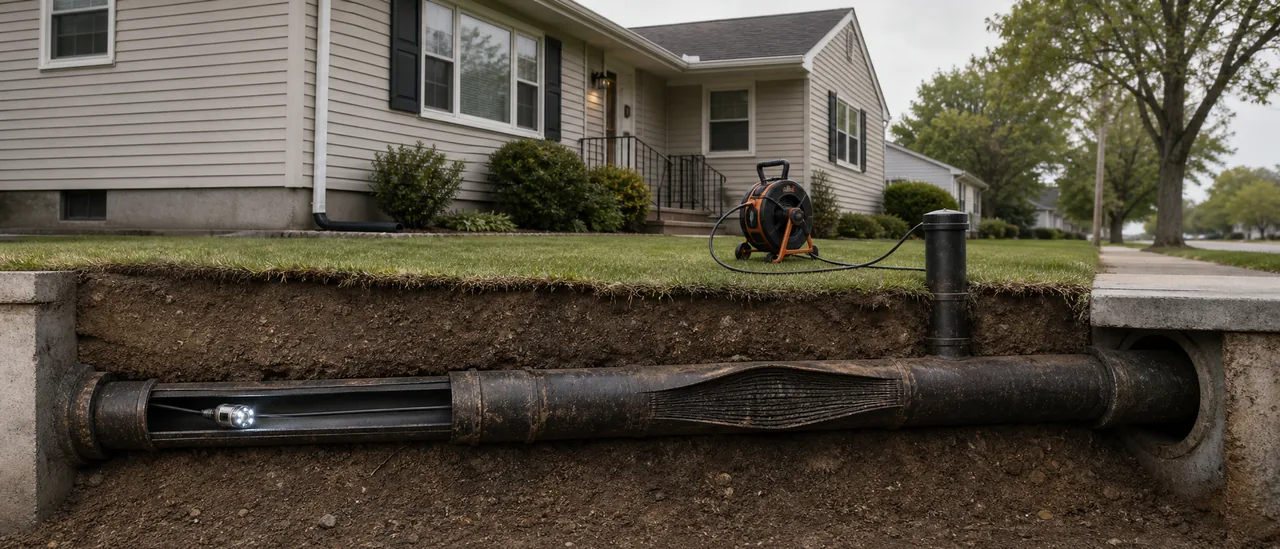
Start with the complete sewer-scope video and written report, not a verbal summary. The inspection should identify the access point, inspected portion, pipe material where possible, and visible conditions such as flattening, delamination, roots, standing water, offsets, breaks, or collapse.
InterNACHI’s sewer-scope standard illustrates both the value and the limits of this inspection. It calls for video of the exterior lateral and documentation of observed defects, but says the inspection is not technically exhaustive and does not identify concealed or latent defects. A clear video is useful evidence, not a guarantee of future performance.
A purchase may be reasonable when all of these conditions are satisfied:
- the specialist reached and recorded the relevant lateral to its endpoint;
- no unexplained gap, blockage, or inaccessible segment remains;
- any observed deformation or root intrusion has a written repair recommendation;
- independent proposals define access, excavation or rehabilitation method, permits, restoration, and exclusions;
- the buyer can absorb the documented work and a sensible concealed-condition allowance; and
- the lender has accepted the property’s condition and any proposed repair arrangement in writing.
Findings that should change your answer
| Finding | Transaction meaning |
|---|---|
| The camera could not pass a restriction | The unviewed section remains an unknown, not evidence that the rest is sound. |
| The pipe is flattened, delaminated, broken, or collapsed | Obtain a site-specific replacement or rehabilitation scope before committing. |
| Roots or repeated backups are documented | Do not treat another cleaning as proof of durable correction. |
| The route crosses paving, additions, mature landscaping, or an easement | Access and restoration may materially change the project. |
| Responsibility for the lower lateral is unclear | Confirm the boundary with the local utility and recorded property documents. |
| The seller offers a credit without a defined scope | Compare the credit with independent written proposals and financing requirements. |
Municipal guidance is useful but local. Santa Barbara’s defect glossary says Orangeburg laterals can deform, lose capacity, and collapse; it lists options ranging from replacing a collapsed section to replacing all Orangeburg portions. That is not a universal repair prescription. A qualified local contractor must determine what is feasible for the actual line, and the authority having jurisdiction controls permits and accepted methods.
Make the decision before deadlines expire
Inspection rights, repair negotiations, and cancellation options depend on the signed contract and local law. The Consumer Financial Protection Bureau notes that seller repair participation depends on contract terms and that some loan programs may impose property-condition requirements. A seller credit therefore may solve the economics without satisfying the lender or preserving your right to withdraw.
Before removing an inspection or financing contingency, obtain the full sewer-scope video and report, written repair or replacement proposals from a licensed sewer specialist, local utility responsibility records, permit requirements, and written lender acceptance. Have a qualified local real-estate attorney or other authorized transaction professional review the contract language and deadlines.