On this page
Do not buy until the water problem is defined
Do not buy the house as-is while standing water remains unexplained. A purchase may still be reasonable if independent inspections establish the source, extent, damage, and correction—and the remaining cost and uncertainty fit your decision. The answer changes most when evidence shows a corrected, isolated event rather than recurring groundwater, drainage failure, or leakage.
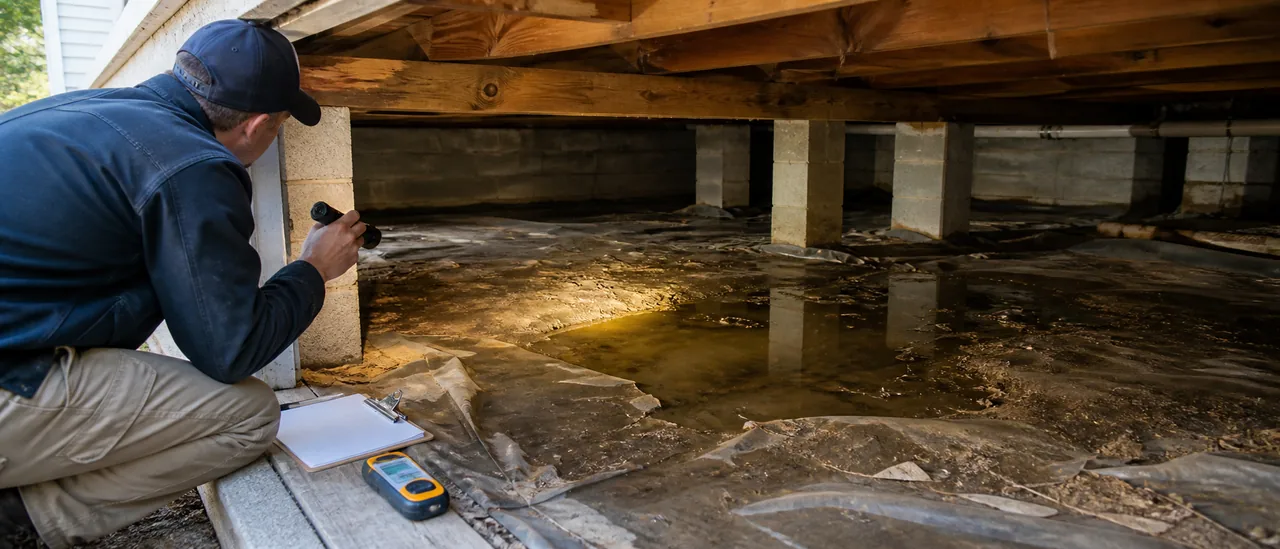
Here, standing water means visible liquid water pooled on the crawl-space soil, slab, or ground cover when the property is inspected. Water stains and high humidity may show a past or different moisture condition, but they are not the same observation.
Why pooled water changes the decision
Standing water is evidence of an active moisture-management problem, not proof by itself that the foundation has failed or mold is present. The source could involve surface drainage, groundwater, plumbing, condensate, or more than one pathway.
The EPA identifies high-humidity crawl spaces as common sites of hidden mold growth. It also explains that groundwater may enter a crawl space and accumulated moisture may move into other parts of a building. Department of Energy building guidance adds that soil moisture can enter as liquid or vapor, and crawl-space moisture can promote mold and rot along floor framing.
That makes the cause, duration, recurrence, and affected materials more important than the water depth alone.
Evidence that changes the answer
| Situation found | Evidence needed before deciding | Practical meaning |
|---|---|---|
| A supply or drain leak is suspected | Leak location, completed repair record, and dry reinspection | The problem may be bounded if no related damage remains |
| Rain or groundwater is suspected | Grading and drainage assessment, proposed correction, and follow-up under relevant conditions | Recurrence remains uncertain until the water pathway is addressed |
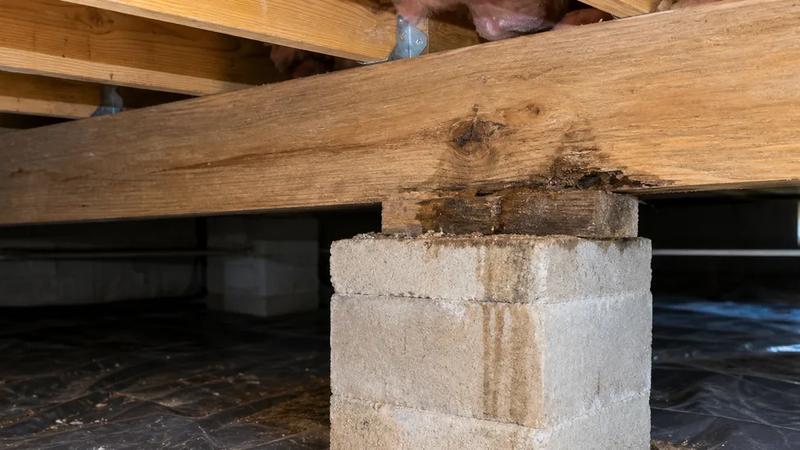
| Framing or foundation effects are visible | Focused evaluation by the appropriate structural or other qualified specialist | The decision must include the documented repair scope and consequences |
| Water prevented crawl-space entry | Written access limitation and reinspection after safe water removal | Unseen areas remain an unresolved risk, even if the visible water is pumped out |
A general home inspection is an essential starting point, but it may not answer every column in the table. InterNACHI’s standards require reporting observed indications of active water penetration. They also state that an inspection is not technically exhaustive, need not determine a condition’s cause or repair cost, and need not enter an unsafe crawl space.
Pumping out the water does not close the issue
A dry snapshot after pumping shows only the condition at that moment. Keep the issue open until records and follow-up observations explain where the water came from, what it affected, and how recurrence will be controlled.
When to pause or decline
Pause the transaction when access remains limited, the seller cannot document the source, or the proposed correction addresses water removal without addressing entry. Persistent wet materials, musty conditions, damaged insulation, deteriorated framing, foundation movement, or contaminated water also justify a narrower specialist evaluation before a decision.
Declining may be the prudent choice when material unknowns cannot be resolved before your contract deadline, the documented work exceeds your tolerance, or required repairs cannot satisfy the lender. Do not assume that a seller credit transfers the technical and scheduling risk away from you.
Resolve the property and contract questions
The Consumer Financial Protection Bureau advises arranging an independent inspection promptly so additional inspections can be completed. It also notes that repair negotiations and cancellation rights depend on the purchase contract, while some loan programs may impose property standards or require major repairs before closing.
Before committing, obtain the full home-inspection report and a reinspection of previously inaccessible areas; source-specific findings and written correction estimates; seller disclosures, repair invoices, permits, and transferable warranties; and the lender’s written requirements. Have the applicable licensed inspector and drainage, plumbing, structural, or environmental specialist review the condition, then have your lender and real-estate attorney review the documents against the loan and purchase contract.