On this page
Treat the water as unresolved, not an automatic rejection
Do not buy the house as-is until the standing water has been independently evaluated. Buying may be reasonable when the cause is limited, the foundation and interior show no related damage, and a documented correction fits your budget and contract. Recurring water, uncertain drainage, or signs of movement change that answer.
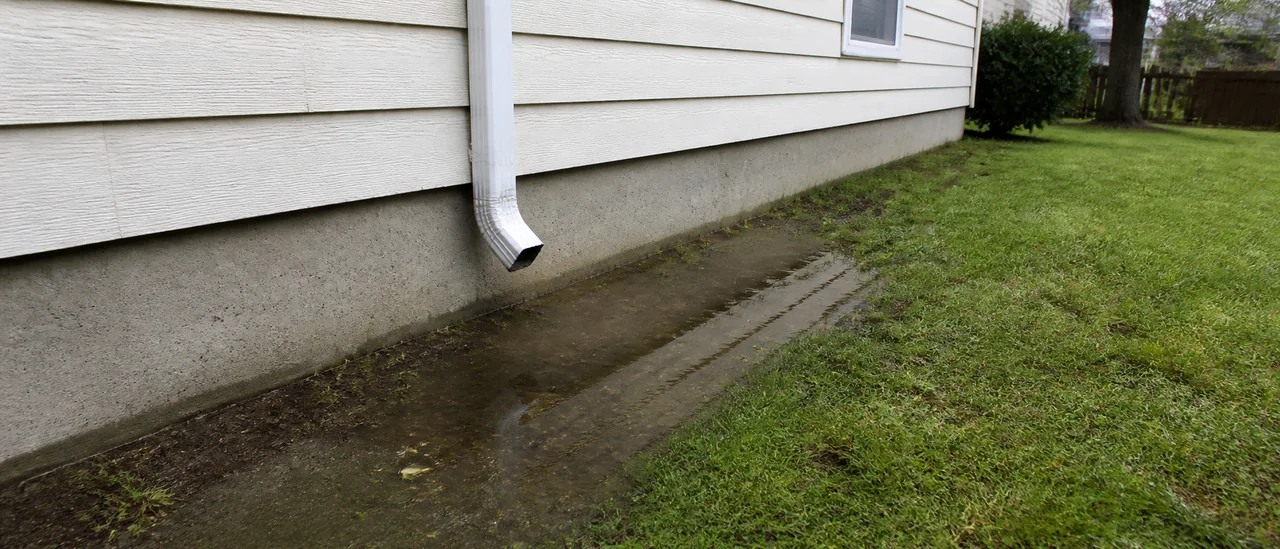
For this decision, standing water near the foundation means visible water remaining on the ground or a hard surface beside the foundation. It is not merely damp soil, and it does not by itself prove a leak, mold, or structural failure.
What the observation tells you
Pooled water shows that water is not draining away at that place and time. It does not identify whether the source is roof runoff, negative grading, an obstructed drain, irrigation, a plumbing leak, groundwater, or a short-lived storm condition.
That distinction matters because the repair scope can range from a localized drainage correction to work involving below-grade systems. The visible pool is a reason to trace the water path, not a basis for selecting a repair before the site and building are examined.
An inspection should also look beyond the puddle. Relevant observations include foundation cracks or displacement, erosion, saturated soil, efflorescence, interior staining, damp basement or crawl-space materials, and whether downspouts or paved surfaces direct water toward the house. None of those observations should be diagnosed from a listing photo alone.
Evidence that supports—or changes—the purchase
| Finding | What would support proceeding | What keeps the risk open |
|---|---|---|
| Water appeared after one unusual event | Weather record, identified pathway, completed correction, and dry follow-up | No baseline showing whether it returns during ordinary rain |
| Grade or roof runoff directs water toward the wall | Written drainage scope, proper discharge location, and post-work observation | Water is merely pumped away or soil is added without evaluating the full path |
| A drain or sump is involved | Accessible components, discharge route, service history, and functional evaluation | Buried or concealed sections remain unverified, or discharge returns toward the house |
| Cracks, movement, or interior moisture are present | Focused assessment defining cause, extent, and repair implications | A drainage proposal is offered without evaluating the affected structure or interior |
InterNACHI’s standards require inspectors to examine surface drainage and grading where they may adversely affect the structure. However, its standard inspection is visual, is not technically exhaustive, and does not require determining a condition’s cause or repair cost. A specialist assessment may therefore be necessary even after a general inspection.
A dry day is not proof of correction
Ask what conditions produced the water and what conditions tested the proposed fix. A dry reinspection has limited value if the original pooling occurred only during sustained rain, snowmelt, irrigation, or seasonal high groundwater.
When the safer answer is no
Pause or decline when the source cannot be established before the inspection deadline, concealed areas remain inaccessible, or the seller will not allow appropriate follow-up. The same applies when significant foundation movement, recurring interior water, or an unpriced drainage system leaves the repair scope materially uncertain.
A credit does not remove that uncertainty. It only reallocates money, and the actual work may affect timing, permits, neighboring drainage, or lender requirements. Local rules and the purchase contract determine available remedies; do not assume a general right to cancel or demand repairs.
Close the evidence gap before closing
The Consumer Financial Protection Bureau advises arranging an independent inspection promptly so there is time for additional inspections. It also notes that negotiation and cancellation rights depend on the purchase contract, while some loan programs impose property standards or lender-required repairs.
Obtain the full inspection report, seller disclosures, prior drainage or foundation reports, invoices, permits, warranties, and any site or grading plans. Have a licensed home inspector evaluate the property under observable conditions, then obtain drainage, plumbing, geotechnical, or structural review as the findings require. Before the contingency expires, have the lender and a qualified real-estate attorney review the documented condition, proposed correction, and contract consequences.