On this page
Buy only after the roots and entry point are defined
You can buy a house with tree roots in the sewer line when a complete sewer scope shows limited intrusion, the pipe remains serviceable, and a qualified specialist defines an acceptable correction plan. Reconsider the purchase when roots substantially restrict flow, the camera cannot pass, or cracks, failed joints, displacement, or collapse make the repair exposure uncertain.
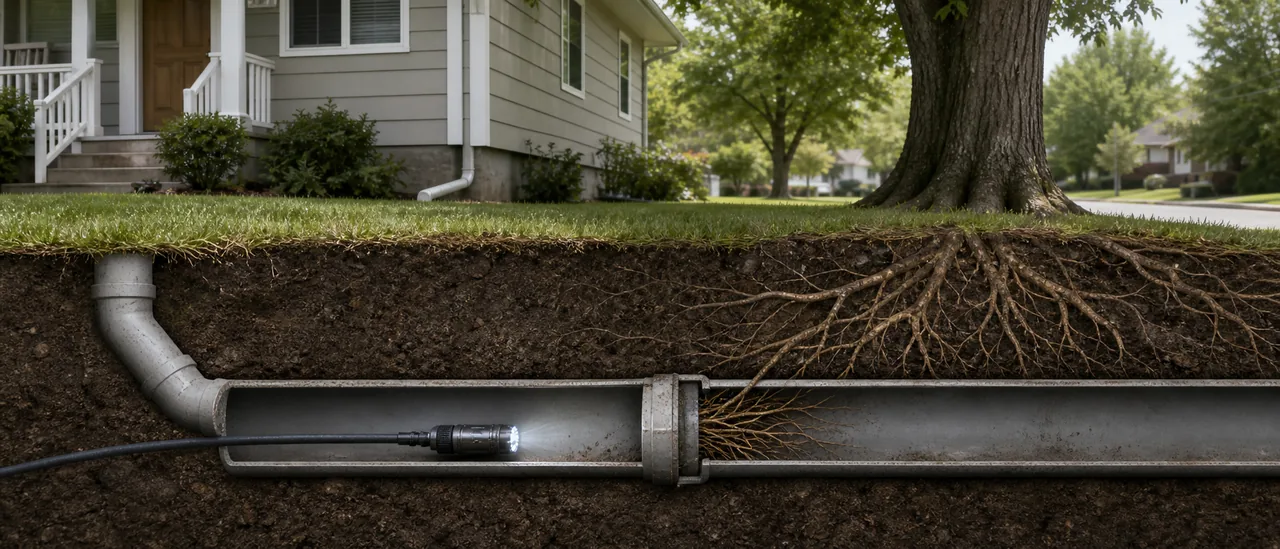
“Root intrusion” means plant or tree roots are visible inside the sewer lateral. It is not a repair diagnosis by itself. The important questions are where the roots entered, how much of the pipe they obstruct, whether the pipe is structurally defective, and whether cleaning would be maintenance or only a temporary response to a failed line.
A standard home inspection may not answer this question
ASHI's general standard covers readily accessible interior drain, waste, and vent systems but excludes underground items. Confirm that your inspection agreement separately includes a recorded sewer scope to the applicable connection point.
Evidence that can support proceeding
A more manageable finding is localized, clearly visible, and paired with a passable pipe that has no observed cracks, separation, offset, standing water, or collapse. The specialist should identify the pipe material, distance to the affected location, access point, and portion actually viewed.
InterNACHI's sewer-scope standard treats any observed root intrusion as needing correction. It also requires the report to describe inspected and uninspected portions, while recognizing that the inspection is not technically exhaustive and does not predict future conditions. That makes the full recording and written limitations more useful than a one-line summary.
Ask the seller for prior scope videos, cleaning and repair invoices, permits, warranties, and disclosure forms. Compare older and current footage when available. Recurring root removal or repeated backups may indicate that cleaning has managed symptoms without resolving the entry path.
Findings that change the answer
Roots often appear with a defect that deserves separate attention. Municipal guidance from Santa Barbara notes that failed joints can allow root intrusion and that broken pipe can admit roots; its listed responses range from cleaning and monitoring to spot repair, rehabilitation, or replacement, depending on the defect.
| Scope finding | Transaction meaning |
|---|---|
| Small, localized intrusion; complete view; no associated defect observed | Obtain a written maintenance or correction plan and verify the contingency amount |
| Roots at several joints or evidence of recurring cleaning | Expect continuing maintenance and investigate whether joint repair is warranted |
| Dense roots, restricted flow, standing water, or an untraversable section | Condition and downstream defects remain uncertain; require further evaluation |
| Cracked, separated, offset, broken, or collapsed pipe | Price a defined repair or replacement scope before accepting the property |
Do not assume removing a nearby tree repairs the line. The transaction issue is the sewer's condition and the pathway that allowed entry. Also verify who owns the affected lateral segment: responsibility can change by jurisdiction, utility rules, easements, or shared-line arrangements.
Make the decision before the deadline
Separate physical findings from contract and financing questions. The Consumer Financial Protection Bureau explains that an inspection differs from an appraisal, inspection-based negotiation or cancellation depends on the purchase contract, and some loan programs may impose property standards.
Before the inspection or objection deadline, have a qualified sewer or plumbing specialist review the complete scope video, locate the roots, document every unviewed section, and provide a written correction scope. Then have the appropriate lender and real-estate or legal professional confirm how that scope affects financing, responsibility, credits, repairs, and your rights under the signed contract.