On this page
Buy only when the risk and repair are defined
Do not buy a house with stairs that remain unsafe and unexplained at closing. Moving forward may be reasonable when a qualified professional identifies the defects, provides a complete repair scope, and the transaction gives you a reliable way to complete and verify that work.
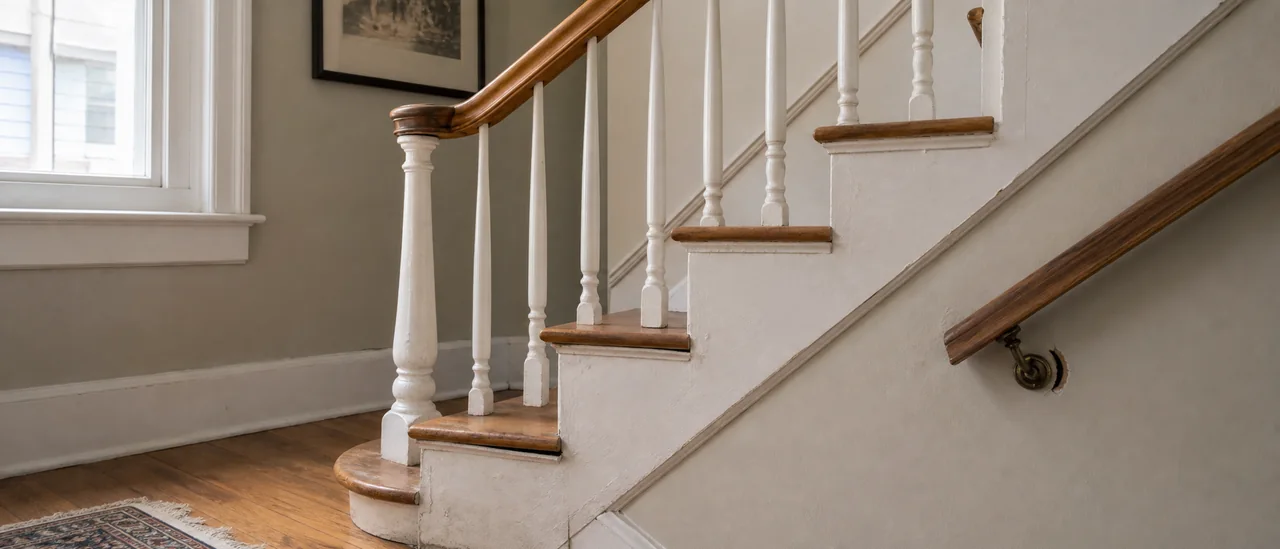
“Unsafe stairs” is a practical description, not a single universal defect or legal classification. It can refer to loose or damaged treads, inconsistent step geometry, missing or unstable handrails or guards, inadequate landings or lighting, deterioration, or movement in the supporting structure. Whether a condition violates a rule depends on the home, alteration history, and locally adopted requirements.
Do not test a visibly unstable stairway
Avoid using stairs that move, have broken or missing walking surfaces, lack fall protection at an open edge, or have been restricted by an inspector. Keep others away until a qualified professional determines that access is safe.
Conditions that support the purchase
A purchase can remain sensible when the problem is limited, accessible, and supported by evidence rather than assumptions. Before deciding, look for:
- A report identifying each affected stairway and the actual observed condition.
- Evaluation by an appropriate contractor, and by a structural engineer when movement, failed framing, foundation support, or design adequacy is in question.
- An itemized repair scope that covers treads, stringers, landings, handrails, guards, lighting, and finishes where relevant.
- Written confirmation of permits or local inspections when the jurisdiction requires them.
- A realistic allowance for concealed deterioration and related finish work.
- Contract terms that clearly address responsibility, access, deadlines, verification, and remedies.
A missing handrail with sound supporting construction presents a different scope from decayed exterior stairs or a staircase pulling away from its framing. The label “unsafe” alone is not enough to price the work or judge whether repair is straightforward.
Conditions that should change your answer
Pause the transaction when the cause remains unknown, the seller limits further evaluation, or the proposed repair treats only a visible symptom. Extensive rot, corrosion, foundation movement, damaged stringers, improvised framing, or multiple nonuniform steps may require design work and reconstruction rather than a small correction.
| Evidence before closing | Decision meaning |
|---|---|
| Defined defect, complete scope, and repair verification | Proceeding may be reasonable |
| Unknown support or concealed deterioration | Investigate before committing |
| Unsafe access with no enforceable repair plan | Do not accept the condition as-is |
| Repair may affect appraisal or loan approval | Confirm lender requirements immediately |
A standard home inspection is an important starting point, but it is visual and limited to readily accessible components. The ASHI Standard of Practice includes interior steps, stairways, and railings, plus attached or adjacent exterior steps and railings. It does not turn the inspector’s observations into engineering analysis or a repair design.
Transaction rights also depend on the actual purchase contract. The Consumer Financial Protection Bureau explains that repair negotiations depend on the contract and local market conditions, while a satisfactory-inspection contingency may provide a right to cancel. An appraisal is separate from an inspection, and a lender may impose repair conditions when an appraisal identifies major work.
Documents and safety steps before deciding
Collect the inspection report, clear photographs, specialist findings, itemized estimate, repair drawings if needed, permit history, and written post-repair verification. Ask the lender whether repairs, reinspection, certification, or an escrow arrangement must occur before closing. Have a local real-estate attorney or qualified transaction professional interpret deadlines and remedies when the contract is unclear.
Until the stairway is repaired and verified, restrict access rather than relying on a warning sign or a promise of later work. The Consumer Product Safety Commission advises keeping stairs well lighted, using handrails, and keeping stairs clear and slip-resistant; follow those precautions only on stairs that are otherwise stable enough to use.