On this page
Buy only after the cause and repair scope are clear
You can buy a house with a water-damaged subfloor if the moisture source has been stopped, the affected area is accessible and defined, and a qualified professional provides a credible repair scope. Do not proceed on the assumption that staining, a dry surface, or a seller’s patch proves the problem is limited.
The recommendation changes when the floor feels soft or uneven, damage reaches framing, the source remains active, or the seller will not permit further evaluation. Those conditions create uncertainty about safety, cost, timing, and whether the home will satisfy the lender.
What “water-damaged subfloor” actually means
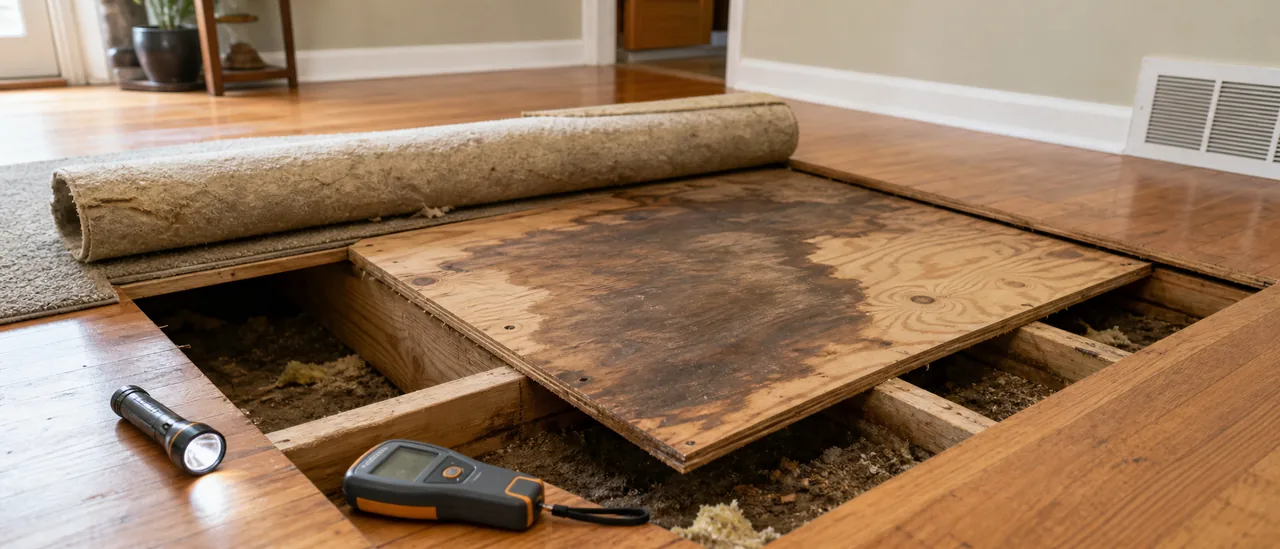
The subfloor is the structural sheet or board layer fastened over floor framing and beneath the finished flooring. Water damage may describe anything from a dried stain to swelling, delamination, fungal growth, or material that has lost strength. The phrase alone does not establish severity.
The first question is where the water came from. A repaired appliance leak presents a different risk from recurring plumbing leakage, exterior water entry, crawl-space moisture, or contaminated floodwater. The source, duration, and number of wetting events affect how broadly the assembly should be examined.
EPA guidance emphasizes quick drying after leaks and notes that moisture control is central to preventing mold. Drying history therefore matters, but the 24-to-48-hour guidance is not proof that a particular floor is mold-free or structurally sound.
Conditions that support moving forward
A purchase may remain reasonable when all of these are true:
- the source is identified, corrected, and documented;
- flooring or crawl-space access allows the damaged boundaries to be evaluated;
- the subfloor and nearby joists are checked for deterioration, deflection, and remaining moisture;
- the repair scope includes affected finishes, underlayment, subfloor, framing, and moisture control as applicable; and
- the price, closing schedule, and contract allocation account for the verified work.
A home inspector can provide useful condition information about visible floor structure. However, the American Society of Home Inspectors’ standard does not require engineering analysis. Significant deterioration, altered framing, or uncertain load capacity may require a structural engineer or another qualified specialist.
Conditions that should pause the purchase
| Finding | Why it changes the decision |
|---|---|
| Active or unexplained moisture | New material can be damaged unless the source is corrected. |
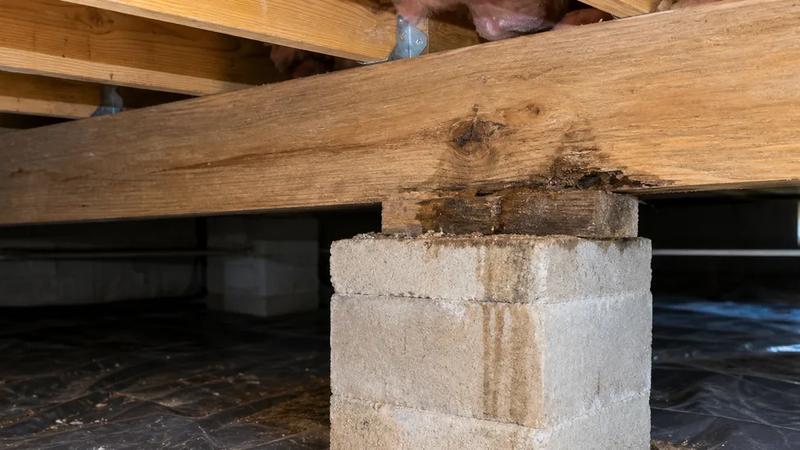
| Softness, sagging, or damaged joists | The issue may extend beyond a localized panel replacement. |
| Finished flooring hides the boundaries | A reliable scope may require selective removal or another agreed investigation. |
| Sewage or floodwater involvement | Cleaning, removal, and health precautions differ from a clean-water leak. |
| No permits, invoices, photos, or warranty for prior work | The buyer cannot verify what was opened, replaced, or left concealed. |
| Lender or insurer has unresolved conditions | The transaction may not close on the assumed terms. |
An appraisal is not a damage inspection
HUD states that a lender-required appraisal estimates value and does not replace a home inspection. Do not treat appraisal completion as confirmation that the subfloor is acceptable.
Make the decision through the transaction
Obtain the inspection report, moisture-source diagnosis, photographs, repair invoices, permits where applicable, and a written scope with allowances for concealed damage. Compare those documents with the purchase agreement rather than assuming a universal right to cancel, demand repairs, or receive a credit; those rights depend on the contract and jurisdiction.
Before the relevant contingency or objection deadline, have a licensed home inspector evaluate accessible conditions, bring in a structural or water-restoration specialist where the findings require it, and submit the resulting documents to the lender and a local real-estate attorney or other qualified transaction adviser.