On this page
Buy only after the problem is defined
You can buy a house with well pump problems, but only after an independent well or pump specialist identifies the cause and documents the repair scope. Proceed when testing shows acceptable system performance and water quality, the cost fits the transaction, and your lender accepts the proposed resolution.
The recommendation changes if the apparent pump defect may actually involve inadequate well yield, unsafe water, a damaged well, or an unknown electrical fault. Delay the decision when access, testing, or reliable records are unavailable.
What “well pump problems” can mean
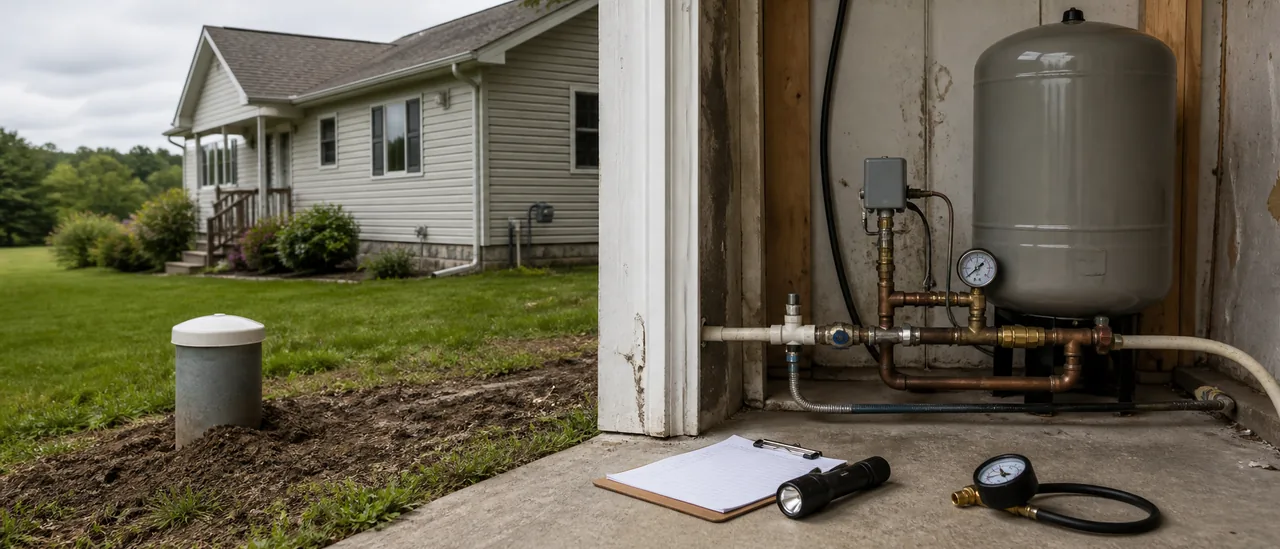
A well pump moves groundwater from a private well into the home’s water system. “Pump problem” is an informal description, not a diagnosis. It may refer to no water, weak or fluctuating pressure, frequent cycling, unusual operation, or a system that cannot sustain household demand.
Those symptoms can originate in the pump, pressure tank, pressure switch, wiring, piping, well condition, or available groundwater. A functioning faucet during a short visit does not establish long-term output, and a water sample does not establish pump performance.
Separate three different questions
Equipment condition asks what failed. Well performance asks whether the source can supply the needed water. Water quality asks whether laboratory results are acceptable. A purchase decision needs answers to all three, not a single repair estimate.
Evidence that supports proceeding
A manageable transaction usually has consistent evidence:
- a written specialist report identifying observed symptoms, tests performed, diagnosis, and limitations;
- measured performance results, with the test method and conditions stated;
- a certified-laboratory water report covering lender requirements and locally relevant contaminants;
- the well construction record, permits, equipment information, and repair history when available;
- an itemized repair proposal stating parts, labor, permits, testing, exclusions, and warranty terms; and
- contract terms, financing, and cash reserves that account for the documented work.
State rules can determine who may inspect, sample, or repair a private well. Wisconsin, for example, limits certain paid property-transfer statements about a well and pressure system to licensed well drillers or pump installers. Its property-transfer inspection excludes the home’s plumbing distribution and electrical-code requirements. Confirm the applicable scope and credentials where the property is located.
Factors that change the answer
| Finding | Practical decision |
|---|---|
| Isolated, confirmed equipment fault with a complete written repair scope | Proceed may be reasonable if the price, timing, lender, and contract address it |
| Diagnosis is uncertain or estimates conflict | Extend the investigation or pause; do not price an unidentified defect |
| Output is inadequate for expected demand | Evaluate the well and available remedies, not just pump replacement |
| Water results are unacceptable or incomplete | Obtain public-health guidance, confirmatory testing, and a separate correction scope |
| Seller restricts access or will not allow meaningful testing | Treat the unresolved condition as a reason to delay or decline |
Repair cost is only one variable. Access to a submersible pump, damaged wiring, corroded piping, an abandoned well, or a low-producing well can expand the work substantially. No inspection can guarantee when a pump or pressure tank will fail or whether groundwater levels will change.
Water testing also deserves separate attention. EPA recommends certified laboratories and says well water should be tested after any well-system repair or when quality changes. The contaminants appropriate to a purchase can depend on state or local guidance, site history, nearby land uses, and lender conditions.
Resolve the transaction before removing protections
Do not assume that a seller credit, general home inspection, or appraisal resolves the well issue. The Consumer Financial Protection Bureau explains that inspections and appraisals serve different purposes, some loan programs may impose property standards, and inspection-based cancellation rights depend on the purchase contract.
Before the applicable deadline, have a properly qualified well or pump specialist inspect and test the system, obtain certified-laboratory water results, and collect the well record, permits, repair history, and written estimates. Give those documents to the lender, then have the appropriate real-estate attorney or licensed transaction professional review the contract’s access, repair, credit, contingency, and cancellation terms.