On this page
Buy only after the issue is defined
Do not reject the home automatically, but do not buy it with the issue unresolved. Proceed only if your lender identifies the exact requirement, a qualified professional confirms the foundation’s condition, and the contract assigns every correction, cost, and deadline.
Pause or walk away when there is observable movement or damage, the seller restricts access, the necessary certification cannot be obtained, or financing depends on work that cannot be completed before closing. The condition that changes the answer is simple: a missing document can be solvable; an unacceptable foundation is a different risk.
Find out what “certification issue” means
The phrase may describe several situations: no certificate exists, an older certificate cannot be located, the report excludes an addition, or an engineer found that the foundation does not meet the applicable standard. Ask for the lender’s condition in writing. A verbal “foundation problem” is too vague for a purchase decision.
A foundation certification is not the same as a general home inspection or a promise that no future movement will occur. For example, FHA policy requires a state-licensed or registered engineer or architect to certify compliance with HUD’s Permanent Foundations Guide. Other loan programs and jurisdictions can use different documentation rules.
| Finding | What it suggests | Sensible response |
|---|---|---|
| Acceptable foundation; certificate missing | Mainly a documentation gap | Confirm who can reissue or prepare the required record |
| Repairable deficiency with defined scope | Purchase may still work | Require plans, price, permits, completion terms, and recertification |
| Damage, movement, or unclear load path | Structural and financial uncertainty | Extend the contingency or decline until evaluated |
| Lender will not accept the property | Closing risk regardless of appearance | Resolve financing before waiving contingencies |
Check the foundation and the transaction separately
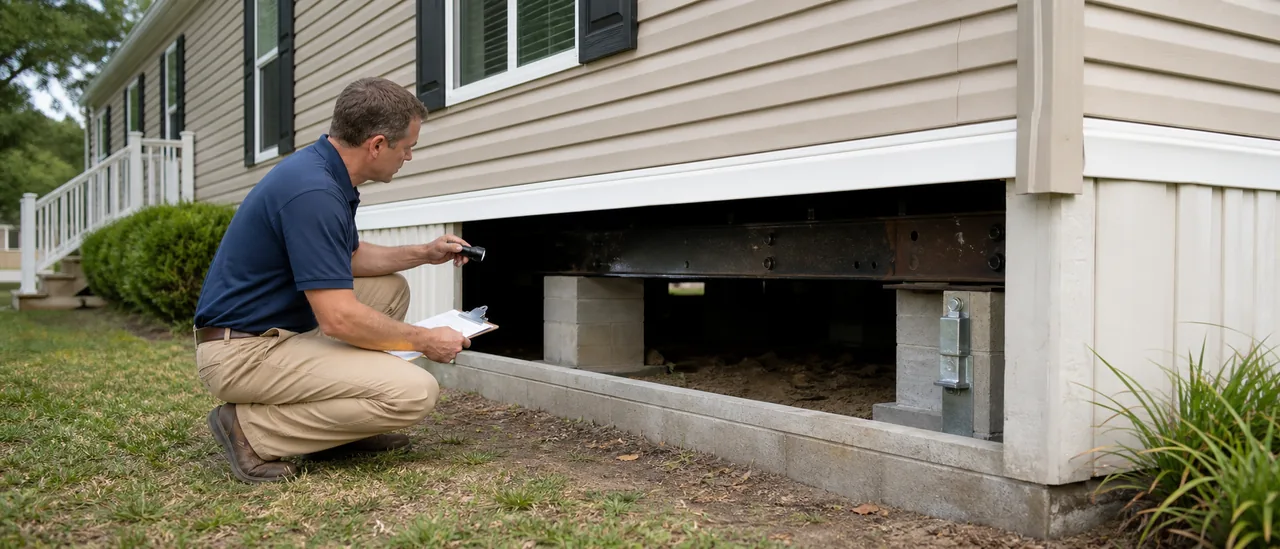
A standard home inspection remains useful because it covers visible foundation and framing components. However, the ASHI structural standard says a home inspector is not required to provide engineering analysis or an opinion on structural adequacy. When certification or structural acceptability is the question, use a professional qualified for that specific determination.
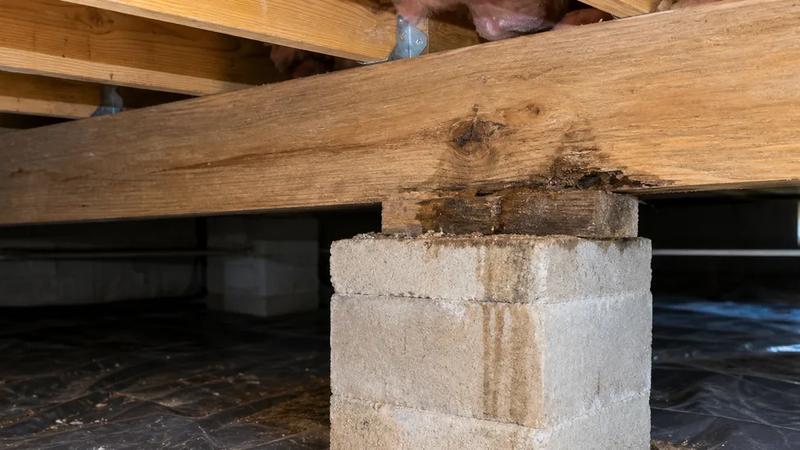
The evaluation should address the home and site actually being purchased. Relevant details can include supports, footings, anchorage, drainage, soil conditions, additions, and evidence of alteration or deterioration. HUD’s installation guidance also makes clear that installation standards and inspection programs vary between HUD-administered and state-administered programs, so local requirements matter.
Do not let a new loan solve an old defect on paper
A lender’s approval answers an underwriting question. It does not replace a condition assessment, define the repair scope, or decide whether the purchase price fairly reflects the remaining risk.
Protect the decision before closing
Collect the foundation certificate or report, installation records, permits, alteration approvals, title documents, and any prior repair invoices. Verify that names, address, home identification details, professional license, seal, and referenced standard match the property and the lender’s request.
Then make the contract reflect the evidence. Keep inspection and financing contingencies until the lender accepts the documents. If repairs are needed, specify who designs and performs them, who pays, whether permits are required, and what final certification must say. Avoid relying on a credit that leaves you unable to close the chosen loan.
FHA policy illustrates why old records need careful review. It allows a prior certification for a future FHA loan when there have been no alterations or observable foundation damage. That is one program’s rule, not a universal approval path.
Buying can be reasonable when the defect is limited, the solution is documented, and the price and contract account for it. If the scope, approval path, or responsibility remains uncertain, the safer answer is not yet.