On this page
Direct recommendation
Yes. If a house relies on a private well, arrange transaction-appropriate laboratory testing before the inspection or due-diligence deadline. The answer may change when current results already exist and the contract, lender, and local authority all accept them.
Do not treat clear, pleasant-tasting water as a substitute for test results. Private-well owners are responsible for testing because federal rules for public drinking-water systems do not apply to privately owned wells.
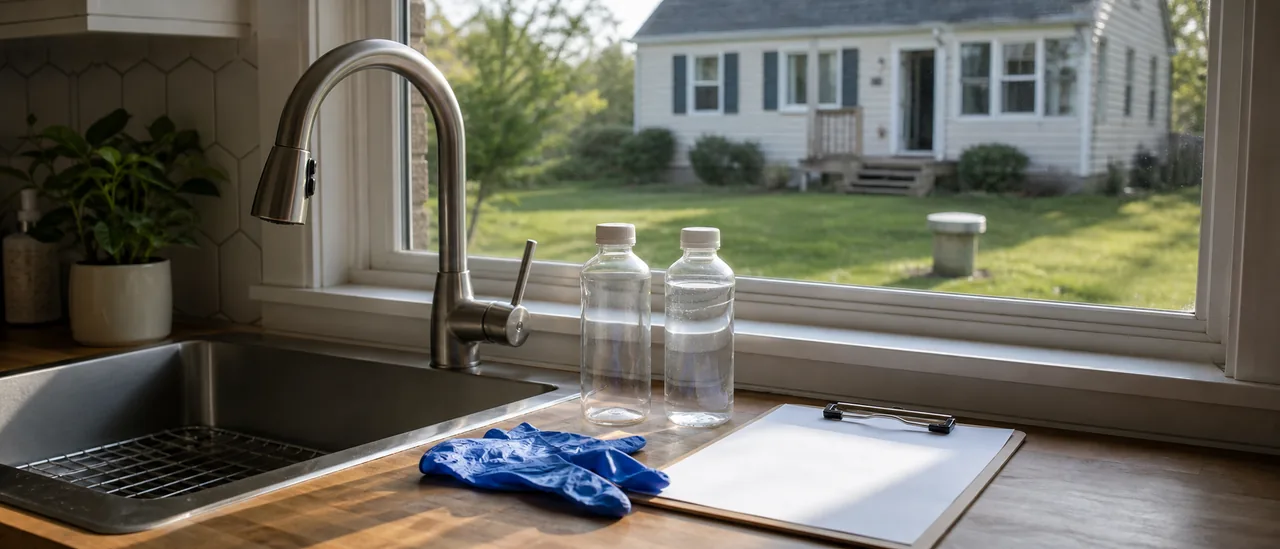
Here, well-water testing means analyzing a collected water sample for specified organisms, chemicals, and quality indicators. It is not a complete evaluation of the well’s construction, pump, pressure equipment, recovery, or available water quantity.
Decide which evidence you need
A purchase decision may require more than one evaluation. Keep the questions separate so a favorable result in one area does not conceal an unanswered issue elsewhere.
| Transaction question | Appropriate evidence |
|---|---|
| What was present in the sampled water? | A laboratory report naming every tested parameter, result, sampling point, and collection date |
| Is the well system visibly sound and serviceable? | A well-system inspection covering accessible components within the specialist’s stated scope |
| Can the well provide adequate water for the household? | A yield, flow, or recovery evaluation when the contract, lender, or specialist calls for one |
| Will the result satisfy the transaction? | Written confirmation of local, contract, and lender requirements before sampling |
A standard home inspection may not answer these questions. InterNACHI’s voluntary Standard of Practice, for example, does not require an inspector to evaluate well pumps or tanks, determine exact flow or supply adequacy, or determine water quality or potability. Read the actual inspection agreement rather than assuming water testing is included.
Choose the test panel and timing
The Centers for Disease Control and Prevention recommends annual testing for total coliform bacteria, nitrates, total dissolved solids, and pH. It also advises asking the health department which additional germs or chemicals matter locally and using a state-certified laboratory.
For a purchase, build the panel from the property and transaction—not from a generic package alone. Ask about nearby agriculture, fuel storage, waste sites, flooding, land disturbance, prior well repairs, and regional concerns such as arsenic, radon, or other naturally occurring substances. The CDC specifically recommends additional testing after flooding or land disturbance, after well-system repairs, and when water taste, color, or smell changes.
When an existing report may be insufficient
Confirm the report’s age, sampled location, tested parameters, laboratory credentials, and chain-of-custody requirements. Retesting may be appropriate if conditions changed or the report does not meet the buyer’s contract, lender, or local rules.
Massachusetts environmental guidance recommends that prospective buyers test a private well before purchase. That recommendation illustrates the decision logic, but it does not establish the legal rule for another location. Requirements, acceptable laboratories, required parameters, and responsibility for sampling can differ by jurisdiction and transaction.
Review the result before the deadline
Read the complete report, not only a “pass” or “fail” summary. Confirm whether the sample was raw well water or treated water, because those results answer different questions. If treatment equipment is present, ask what the transaction requires and whether separate sampling is needed to assess the source and treated supply.
Before the due-diligence period expires, have the certified laboratory complete the required panel, the lender confirm its testing protocol, and the appropriate real-estate or legal professional review the contract and local requirements. If water quantity or system condition remains unresolved, obtain a scoped evaluation from a qualified well specialist.