On this page
Safety issues are conditions that could seriously harm people
Safety issues in a home inspection report are observed defects that the inspector believes pose an unreasonable risk to people. They concern personal harm rather than appearance alone, but the label does not automatically establish a code violation or prescribe a specific repair.
InterNACHI’s standard includes such risk in its definition of a material defect. It also says that age alone does not make a system or component materially defective.
What safety findings commonly involve
The exact wording differs among inspectors, standards, and jurisdictions. Typical findings may involve:
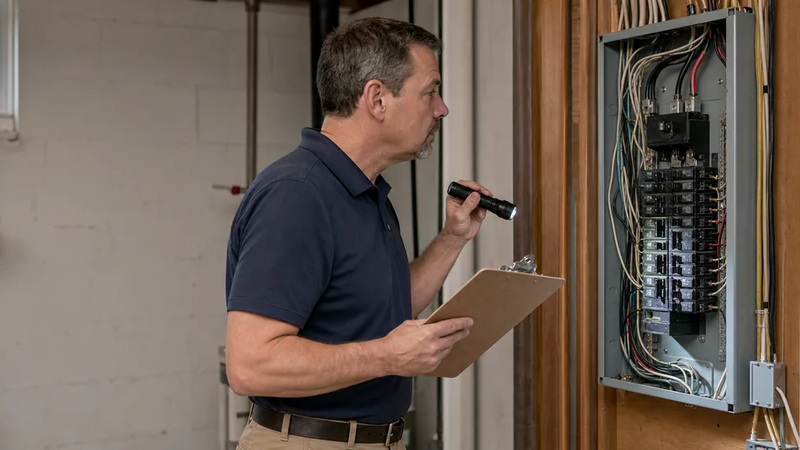
- electrical shock or fire exposure, such as accessible damaged wiring or panel openings;
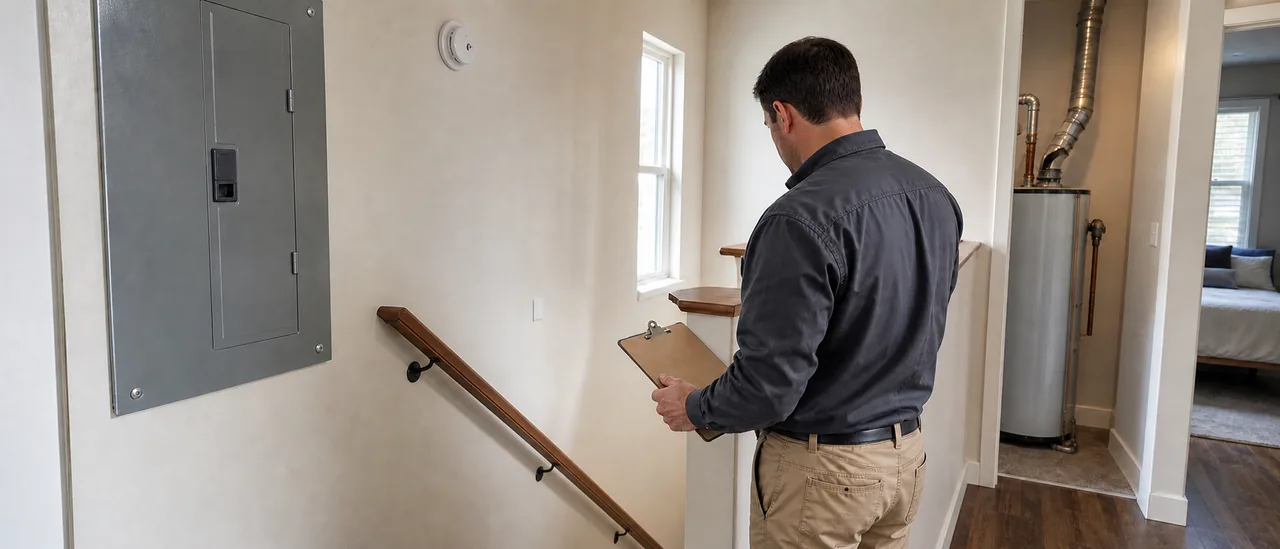
- fall hazards at stairs, decks, balconies, guards, or handrails;
- unstable structural components or visibly compromised walking surfaces;
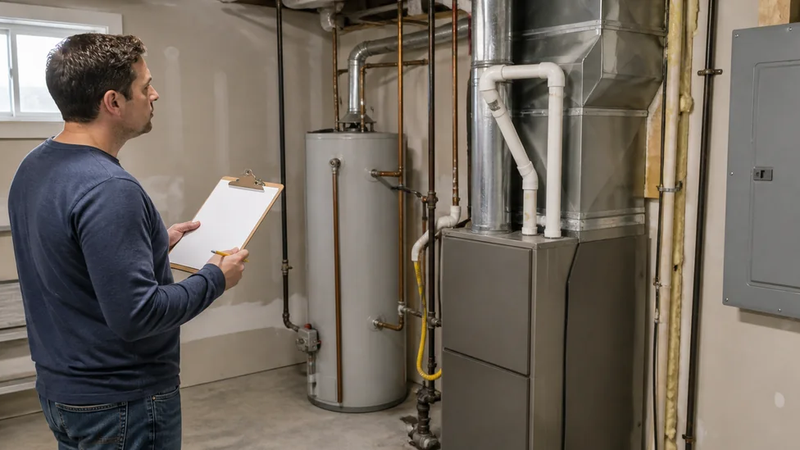
- unsafe operation or venting of heating equipment, fireplaces, or fuel-burning appliances;
- missing alarm devices or a garage-door safety sensor that does not operate as inspected.
These examples are not a universal checklist. InterNACHI’s standard covers electrical, heating, structural, exterior, interior, and fireplace systems, but individual scope can change through state rules and the inspection agreement.
What the report can—and cannot—confirm
A standard inspection is primarily visual. InterNACHI describes a non-invasive examination of accessible areas that reports defects both observed and deemed material. Ohio’s licensing rule provides a jurisdiction-specific example: it limits the inspection to a visual, non-technically-exhaustive examination of readily accessible systems and components.
A safety label is not a complete diagnosis
The report can identify the visible condition, explain why it matters, and recommend correction or further evaluation. It usually cannot establish a hidden cause, map the full concealed extent, or design the repair.
Important exclusions remain. InterNACHI does not require inspectors to determine code compliance, inspect inaccessible components, predict future conditions, or identify environmental hazards. It also excludes concealed or latent defects and says an inspection is not technically exhaustive. Ohio’s rule likewise excludes concealed conditions and allows inspectors to avoid procedures likely to cause danger or property damage.
Read the report’s scope, limitations, and “not inspected” notes alongside each finding. A missing test or inaccessible area means the report cannot confirm that area is safe.
Put urgent findings first
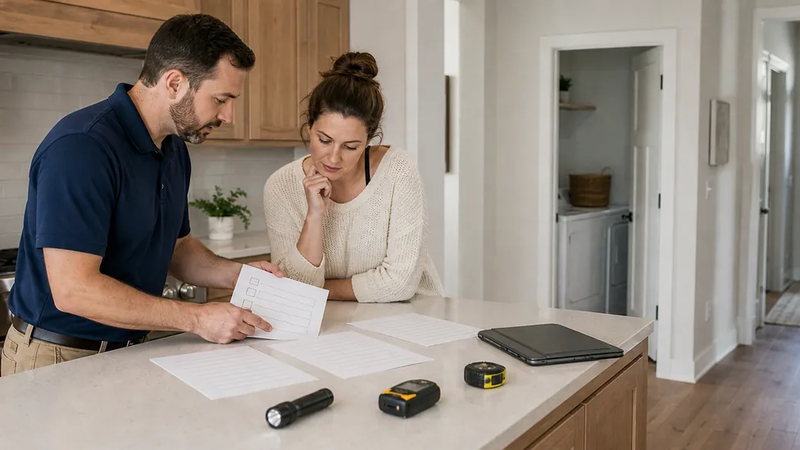
Prioritize findings by the stated hazard and recommended action, not by repair price or the number of pages. Ask the inspector to clarify unfamiliar labels, then direct system-specific questions to a qualified specialist when the report calls for further evaluation.
Follow immediate precautions
If the report says a condition presents an immediate hazard, keep people away from the affected area or stop using the affected system as directed. Arrange the recommended qualified evaluation or correction before normal use resumes.