On this page
Waiving a roof inspection means accepting the property without an independent, roof-focused record of accessible conditions. Visible defects, drainage concerns, unsafe access, and signs that warrant further evaluation may go undocumented. You also lose a clear statement of what could not be inspected.
What you may miss
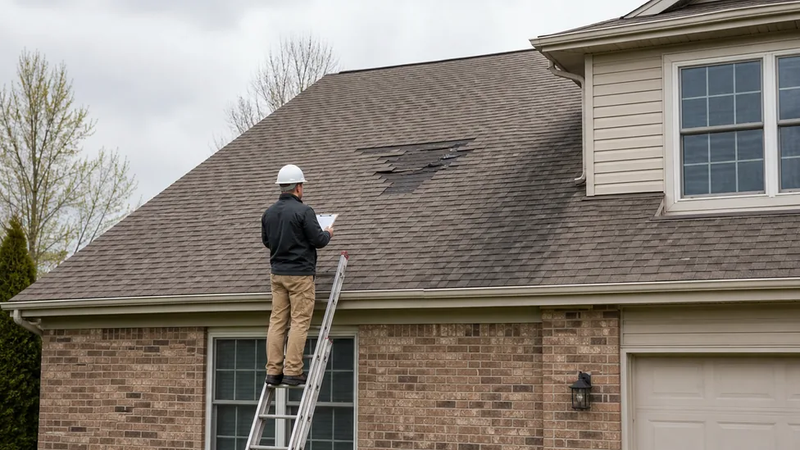
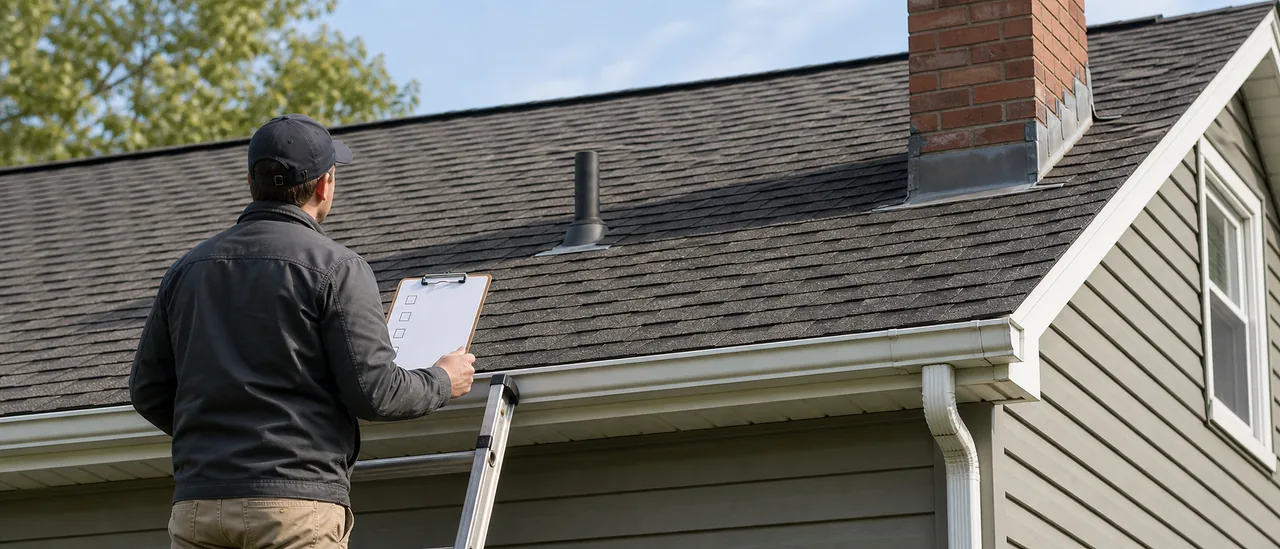
A roof is more than its shingles. A typical inspection may address roof coverings, visible flashing, gutters, downspouts, vents, skylights, penetrations, soffits, and fascia. The exact scope depends on the inspector’s agreement, local standards, roof type, weather, and access.
Without that evaluation, you may not receive documented observations of missing or deteriorated covering, damaged flashing, drainage defects, or visible moisture indicators. More importantly, you may not learn that snow, debris, height, steepness, fragile materials, or another unsafe condition prevented a close view.
That uncertainty matters even when the roof looks tidy from the ground. The Consumer Financial Protection Bureau distinguishes an independent home inspection from an appraisal and advises buyers to learn whether major problems or additional inspections are present. An appraisal therefore should not be treated as a substitute for a roof-condition assessment.
What an inspection can—and cannot—establish
Inspection standards vary by jurisdiction and contract. Washington’s home-inspector standard provides a useful example: it calls for reporting the roof covering’s type and general condition, visible components, ventilation method, and observed deficiencies. It also permits a safer alternate inspection method when walking the roof could cause damage or injury.
A standard visual inspection still has firm limits. It generally cannot establish conditions hidden beneath the covering, dismantle the assembly, guarantee that no leak exists, identify every cause, or predict future failure. Washington’s standard specifically excludes inaccessible conditions, remaining service life, causes of deficiencies, and future conditions from required determinations.
A clean report is not a warranty
An inspection describes accessible conditions at a point in time. Read its limitations and access notes alongside the findings; an unobserved area is unknown, not automatically sound.
Practical bottom line
Waiving the inspection trades information for uncertainty. The risk is highest when the roof is older, its history is unclear, ceilings show staining, exterior components look irregular, or significant areas cannot be seen safely. None of those details proves concealed damage, but each increases the value of qualified evaluation.
If an inspection is performed, confirm that the written scope covers the roof and attic areas that matter for the building. Review the stated method, exclusions, photographs, and recommendations. When access is limited or a visible condition suggests a deeper problem, a qualified roof professional can determine whether a more focused, intrusive, or instrument-assisted evaluation is appropriate.