On this page
Why the leak appears only with wind
A roof that leaks only during wind-driven rain usually has a small vulnerable opening. Wind carries water sideways or upslope into a gap that ordinary, downward rain does not reach. The opening may be in the roof covering, flashing, or an attic vent—not necessarily evidence that the entire roof has failed.
The most serious possibility is wind-lifted or missing roofing that exposes the underlayment or deck. A less extensive explanation is a loose vent edge or narrow flashing gap that leaks only when it faces the wind.
The most likely entry points
The location and wind direction help narrow the possibilities:
- Roof-cover damage: Lifted, cracked, displaced, or missing shingles, tiles, or panels can admit water. An unsealed deck joint or exposed fastener hole becomes another route if the covering and underlayment are compromised.
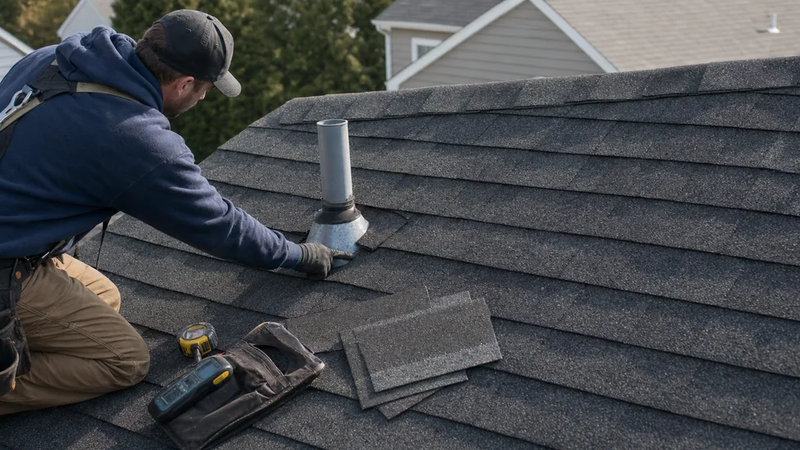
- Flashing defects: Loose, corroded, short, or poorly lapped flashing can leak where a roof meets a wall, chimney, skylight, valley, or plumbing penetration.
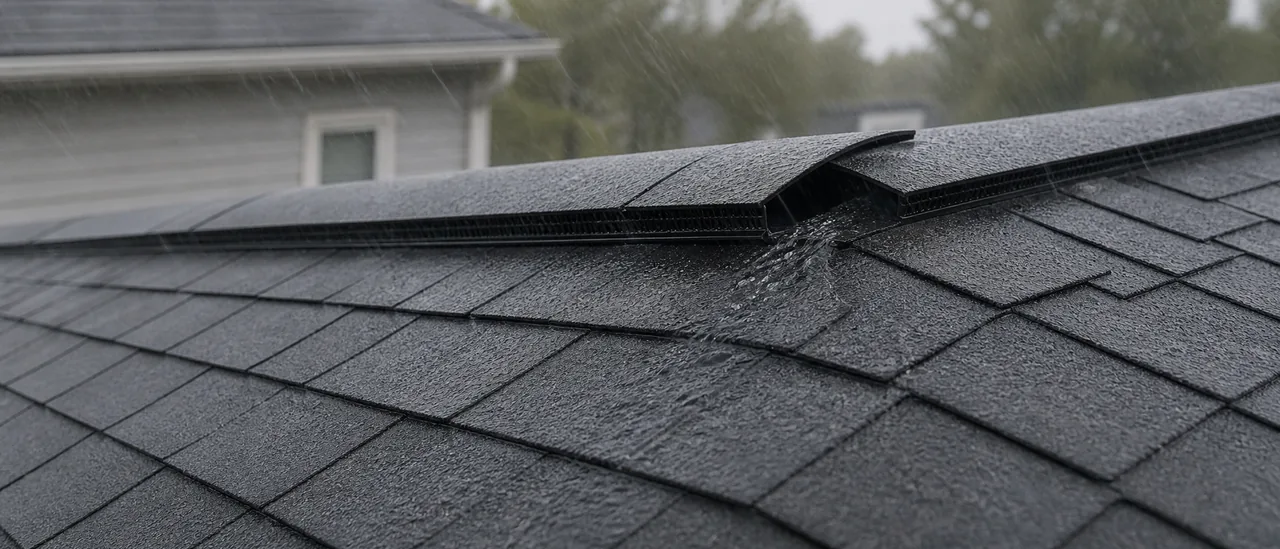
- Ridge and off-ridge vents: A shifted or partially detached vent can admit driven rain. Failed end plugs, closures, or fasteners may create a smaller opening.
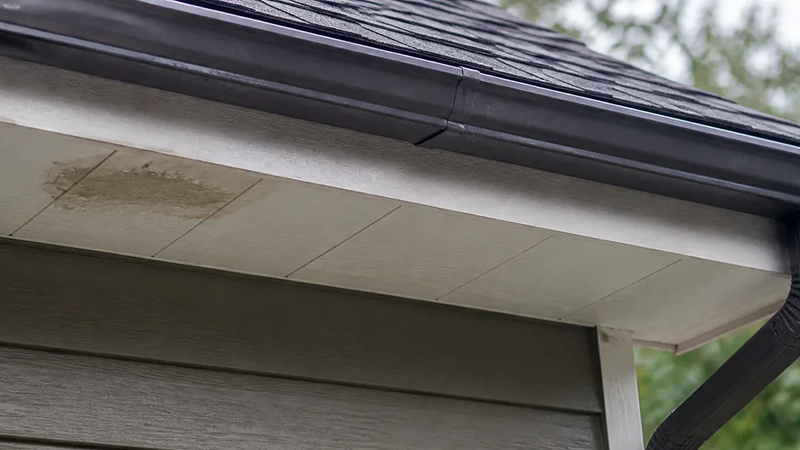
- Soffit or gable vents: Rain can enter these ventilation openings from the windward side even when the roof covering remains intact. Missing fascia can also expose soffit ends directly.
Wind direction is a diagnostic clue
A leak that repeats only with wind from one direction points toward the roof plane, wall intersection, or vent facing that exposure. It narrows the search but does not prove the exact opening.
How the cause is confirmed
Record when the dripping starts, the wind direction, and which rooms are affected. From a safe location, note missing roofing, displaced ridge caps, loose flashing, or damaged fascia. Inside the attic, if safely accessible, look for fresh wetting on the underside of the deck, fasteners, framing, and insulation.
The ceiling stain may not sit directly below the opening because water can follow roof decking or framing before it drops. A dry-weather inspection therefore combines the interior moisture path with exterior details. When necessary, a qualified evaluator may test small areas in a controlled sequence rather than flooding the whole roof and obscuring the source.
How urgent is it?
Active dripping, sagging ceiling material, wet electrical fixtures, or visibly missing roofing requires prompt attention. Keep clear of a bulging ceiling and avoid touching wet fixtures; shut off the affected circuit only if that can be done safely from a dry location.
Even a brief, directional leak deserves timely evaluation because the same opening may admit more water in the next storm. If the entry point is not obvious from the ground or attic, a qualified roof inspector can distinguish a vent leak from damaged covering or flashing without relying on the stain location alone.