On this page
The most likely explanation
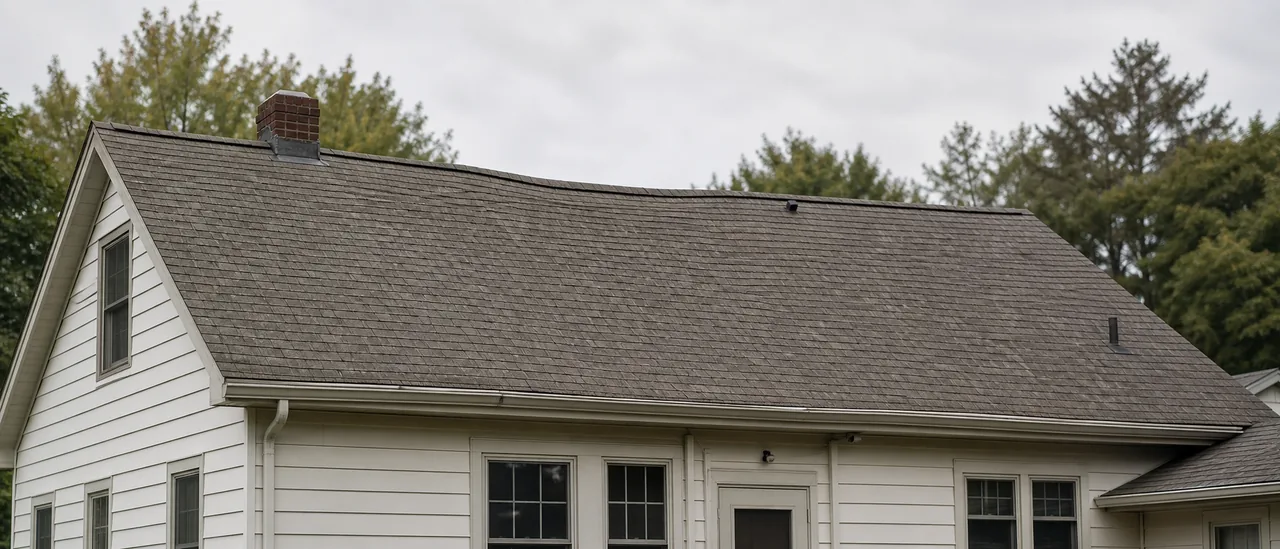
A sagging roof ridge usually means part of the roof framing or its support system has deflected or moved. Common causes include undersized rafters, inadequate bracing, failed connections, a ridge beam that lacks sufficient support, or exterior walls spreading because the rafters are not properly tied together.
The term ridge means the roof’s highest horizontal line. On many conventionally framed roofs, the board at that line is only a nailing and bearing surface for opposing rafters—not a beam carrying the roof by itself. The American Wood Council distinguishes this nonstructural ridge board from a structural ridge beam.
Other plausible causes
The framing arrangement determines what can sag. A roof with ceiling joists or rafter ties relies on those lower connections to resist outward thrust. Without adequate ties, a properly designed ridge beam must carry the rafter ends so they do not push the walls outward.
Other possibilities include:
- rafters that are too small for their span or have bowed over time;
- missing, cut, loose, or poorly placed ties and braces;
- displaced posts, bearing walls, or footings below a structural ridge;
- cracked, altered, insect-damaged, or moisture-decayed framing; and
- unusual loading, such as deep or drifted snow, that exposes an existing weakness.
Not every uneven peak is structural. Crooked ridge-cap shingles, an irregular roof plane, or perspective from the ground can create a similar appearance. A localized dip in the sheathing between rafters is also different from movement of the ridge framing itself.
A ridge board and a ridge beam do different jobs
A ridge board aligns opposing rafters in a tied roof system. A structural ridge beam supports roof loads and transfers them to posts, walls, and ultimately the foundation. Identifying which system is present is central to the diagnosis.
How the cause is confirmed
Confirmation requires comparing the exterior roofline with the attic framing and the structure below it. An inspector looks for bowed or split rafters, opened joints, missing ties, improvised alterations, displaced braces, moisture staining, decay, and evidence that walls have moved outward.
Measurements can show whether the ridge is level and walls remain plumb, but they do not identify the cause alone. Finished ceilings and insulation can hide critical connections. A current code provision also does not prove how an older roof was originally required to be built.
Urgency and next step
A longstanding shallow wave without cracks or continuing movement may be less urgent than a new or worsening dip. Prompt evaluation is appropriate when sagging appears with cracking sounds, split framing, new ceiling or wall cracks, stuck doors, active leakage, or movement after heavy snow.
Avoid walking on the roof or attempting to jack the ridge. A qualified roof inspector can document accessible conditions; suspected framing movement, damaged structural members, or inadequate load paths may require a structural engineer to determine the cause and a safe repair.