On this page
The most likely cause
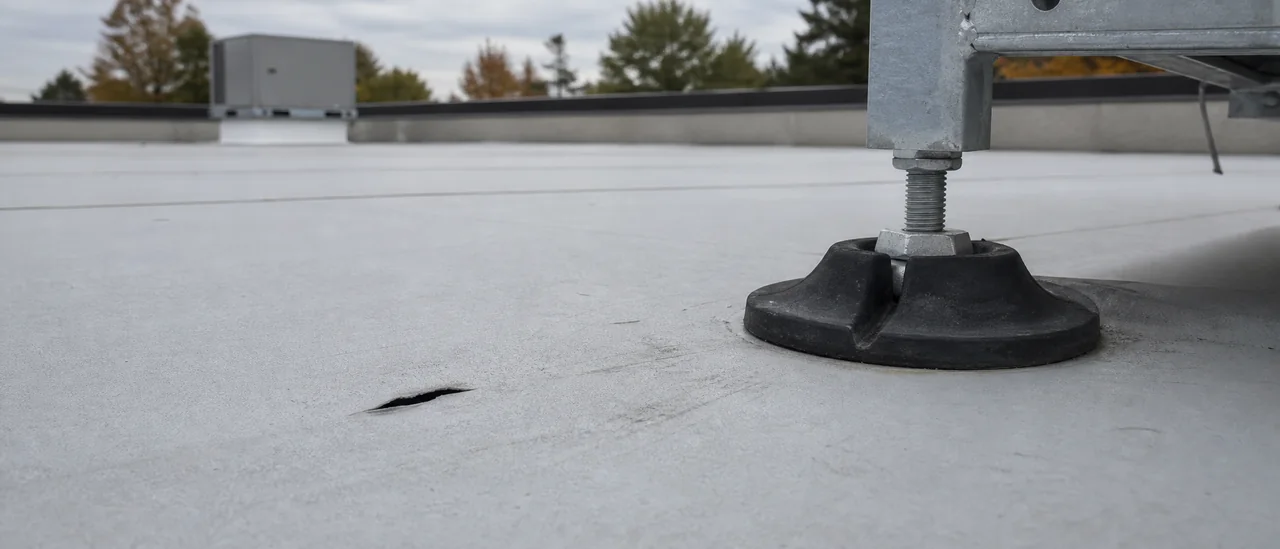
A tear is a split or cut through the waterproof sheet. Common direct causes include sharp contact, concentrated pressure, and repeated rubbing from debris, tools, equipment edges, or traffic over an unsupported spot.
Damage does not require one dramatic impact. A shifting support can abrade, cut, or puncture the membrane below, while service traffic increases exposure to physical damage.
Other ways a membrane can split
Not every tear begins with an object. If temperature-related movement is restrained or its loads are not transferred through the assembly, stress can concentrate at parapets, penetrations, or transitions. Building-science guidance documents shrinkage pulling membrane apart at a parapet.
Wind can contribute differently. A poorly controlled mechanically attached membrane may flutter as air moves through the assembly, stressing the sheet where loads are already concentrated.
Installation can leave a cut, hard edge beneath the sheet, or poorly detailed transition. Later movement or foot traffic may turn that weak point into an opening.
| Visible pattern | More consistent with | Important look-alike |
|---|---|---|
| Clean slice or small puncture | Sharp contact or dropped object | Mark that does not pass through the sheet |
| Scuffed opening beneath equipment | Repeated movement or abrasion | Surface discoloration without material loss |
| Split at a wall or penetration | Concentrated movement stress | Open seam beside otherwise intact membrane |
| Irregular opening over a soft spot | Pressure over damaged support | Blister or wrinkle with no break |
How the cause is confirmed
Confirmation depends on shape, depth, and location. An evaluation should document the endpoints, identify exposed layers, and check nearby seams, flashings, supports, debris, drainage, and substrate firmness. Maintenance guidance treats these as connected inspection areas.
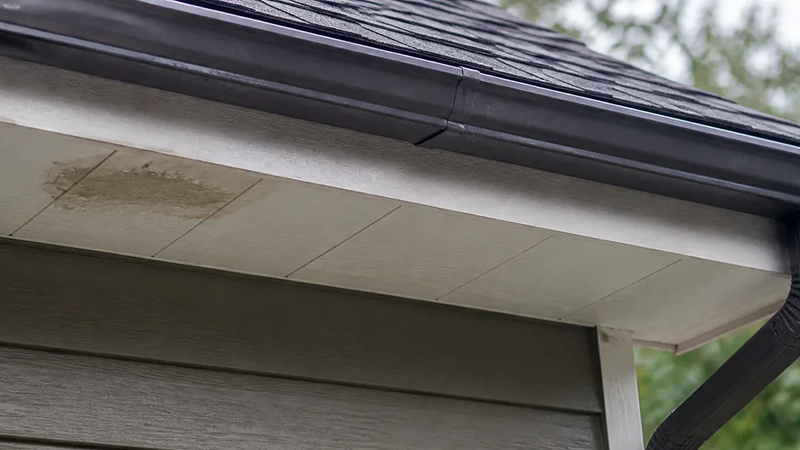
The distinction matters. An open lap is a seam failure, while a blister is a raised area; neither should automatically be labeled a membrane tear. Water staining indoors can establish a moisture problem, but it does not identify the rooftop entry point by itself.
A small opening can have a larger cause
A short cut beneath a shifting support may be local. A split returning at a parapet or penetration can signal unresolved movement in the roof assembly.
Urgency and next step
A confirmed break in the waterproof sheet deserves prompt protection and a compatible repair, even when it is short. Delay allows rain to reach underlying layers, and walking around the opening can enlarge it. Avoid improvised sealants until the membrane type and cause are known.
Qualified evaluation is sensible when the tear lies near equipment or an edge, keeps reopening, crosses a seam, sits over a soft area, or accompanies an active leak. The repair should address both the opening and the force that created it.