On this page
Why a roof may leak only sometimes
An intermittent roof leak usually means water enters only under a particular combination of rain, wind, snowmelt, or drainage conditions. A small opening may stay dry during light, vertical rain yet admit water when wind drives rain beneath a roof edge or toward a penetration.
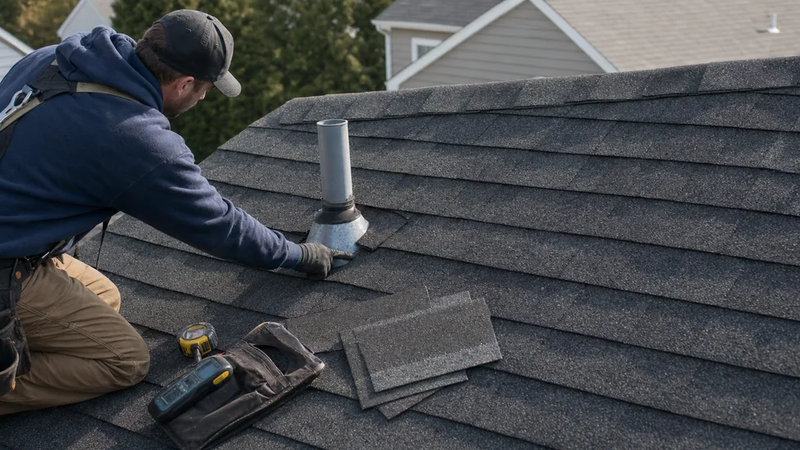
Flashing deserves attention because it protects transitions rather than broad, uninterrupted roof areas. Loose, deteriorated, or poorly integrated flashing around a chimney, vent, skylight, valley, or roof-to-wall joint may leak only when runoff approaches from a certain direction.
Other weather-dependent causes include damaged or displaced roofing, exposed fasteners, clogged drainage paths, and ice dams. Each can create leakage only after water accumulates, backs up, or moves differently than it does in an ordinary shower.
The leak may not be rainwater
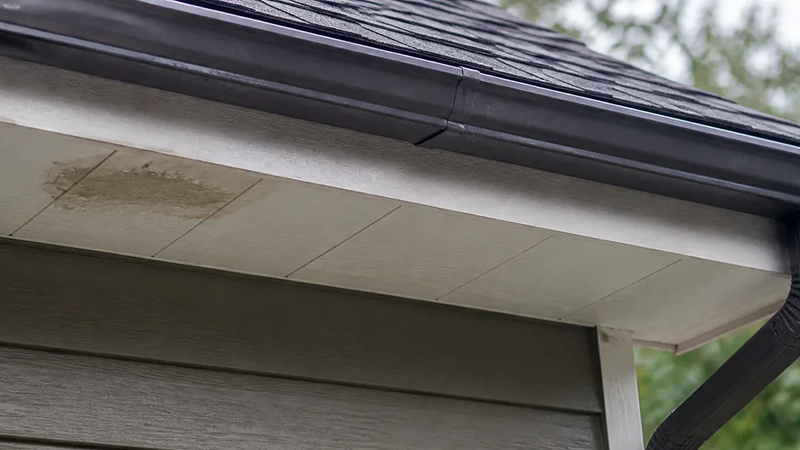
Some ceiling drips that appear to be roof leaks are actually condensation. Warm, humid indoor air can reach a cold roof deck, duct, pipe, or fastener, form water, then drip when conditions change. EPA guidance notes that moist indoor air entering a cold attic can condense and lead to water damage.
Plumbing and heating or cooling equipment above the stain are other look-alikes. A drain connection, supply pipe, condensate pan, or line may leak only while that system operates.
Timing narrows the cause
Leakage during wind-driven rain points toward a different pathway than dripping during a thaw, after long rainfall, or while an upstairs fixture or cooling system runs. Timing is evidence, not proof.
How the source is confirmed
Record when the leak appears, the rain duration and wind direction, recent snow or freezing conditions, and which household systems were running. Photograph the first visible moisture and mark its edge or measure its size without puncturing the ceiling.
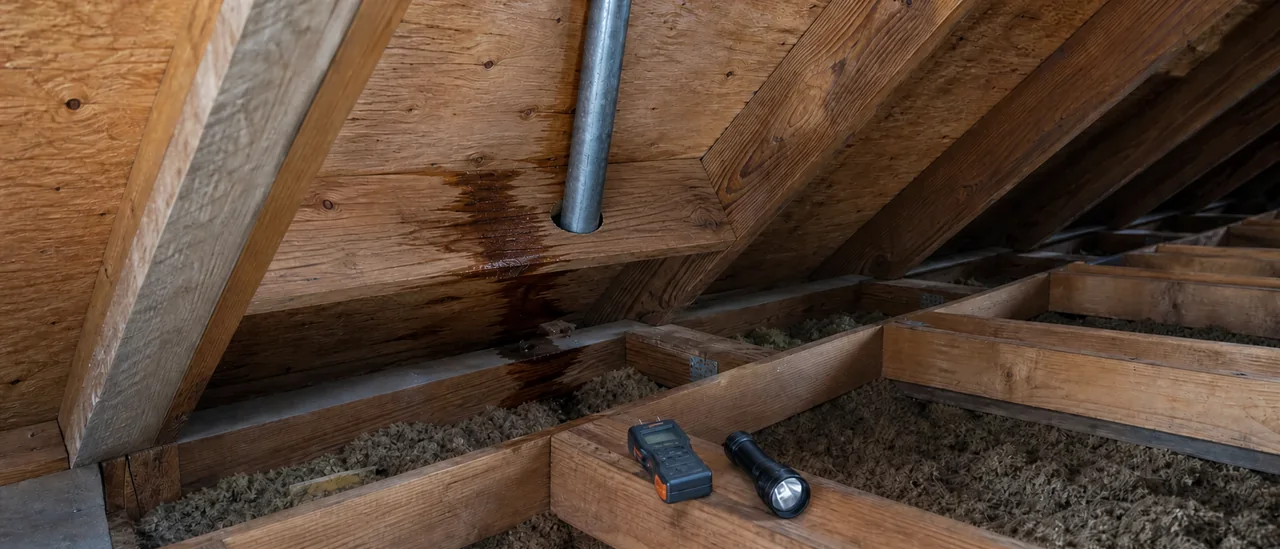
A qualified evaluation compares that pattern with conditions above the stain. The inspection may trace wet decking or framing from the attic, examine roof coverings and flashing, check drains and penetrations, and test nearby plumbing or condensate equipment. Because water can travel along framing or beneath roofing layers, the interior stain may not sit directly below the entry point.
Avoid walking on a wet, icy, or steep roof. Also keep clear of a ceiling that is sagging, bulging, or near electrical fixtures.
How urgent is an intermittent leak?
Intermittent does not mean harmless. Repeated wetting can damage finishes and insulation while leaving concealed materials damp. EPA guidance recommends correcting building-envelope leaks promptly and drying wet areas within 48 hours to limit mold growth.
Stop active water from reaching people and belongings when that can be done safely. If the source is not visible from an accessible area, arrange a qualified roof or building-moisture evaluation rather than assuming the stain identifies the defect.