On this page
Cracks and slips usually have different causes
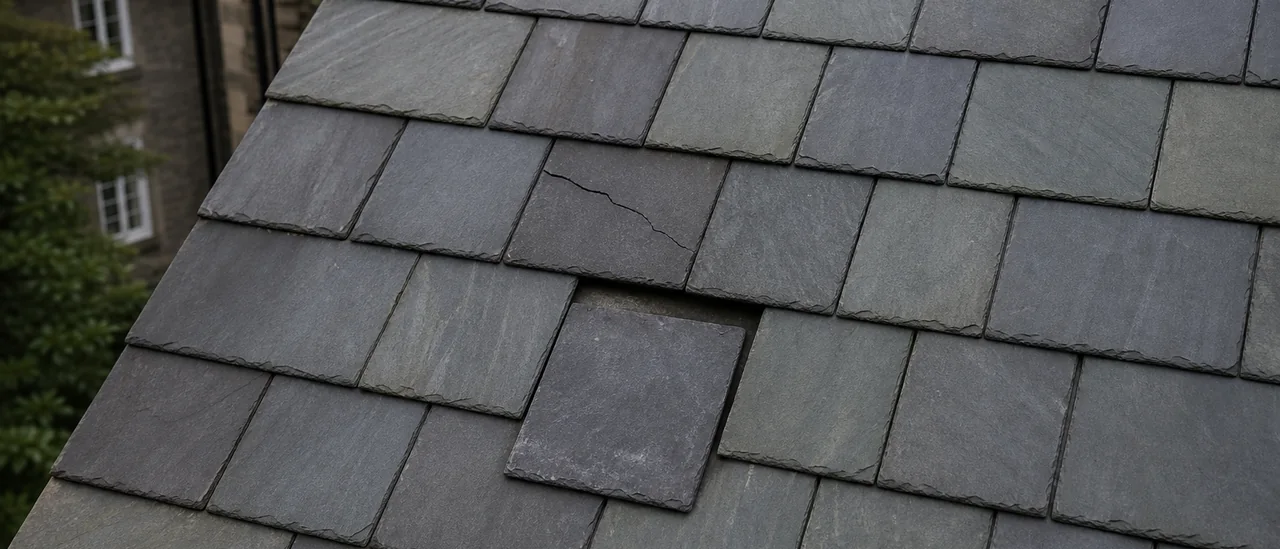
A cracked slate has physically fractured; a slipped slate has moved down from its intended position. Cracks commonly result from impact, foot traffic, weathered material, or incorrect nailing. Slippage more often means a nail or other attachment has failed, although a broken slate may also lose support and move.
One displaced tile does not automatically mean the entire roof is failing. The important distinction is whether the defect is isolated or part of a repeating pattern.
The pattern matters
A single break beneath a fallen branch suggests a local event. Cracks, surface flaking, and slips scattered across several roof areas are more consistent with broader material or fastener deterioration.
Why slate cracks
Natural slate can gradually weather and separate into thin layers, a condition called delamination. As this progresses, the slate becomes softer and easier to break. Lower-slope areas may deteriorate faster because they remain wet longer.
Installation and roof use can create damage too. An under-driven nail can work through the slate above it. Foot traffic and the quality of the original installation also affect roof longevity, while a hard localized impact can fracture an otherwise sound piece.
Why slate tiles slip
Slippage most often indicates that the attachment no longer holds the tile. National Slate Association guidance identifies individual slates sliding out of position as a common sign of corroded fasteners. Older steel or iron nails can lose their heads or corrode through at the shank, even when the slate itself remains serviceable.
The extent of corrosion changes the diagnosis. A localized wet area below a valley or another concentrated drainage path may affect only part of the roof. Similar slips across multiple slopes suggest a more widespread fastening problem.
How the cause is confirmed
Start with the location and pattern rather than guessing from one photograph. A condition survey looks for:
- cracks, missing corners, surface flaking, or delamination;
- exposed or projecting nails and holes worn through overlying slates;
- tiles that have shifted while neighboring pieces remain aligned; and
- clusters below valleys or other areas of concentrated water flow.
Some broken or missing slates can be spotted from the ground with binoculars, but close inspection is needed to distinguish a stone defect from a fastener failure. The evaluation should also determine whether the condition is isolated or recurring.
How urgent is it?
Arrange prompt repair when a slate has opened a gap, is loose enough to fall, or sits above an active leak. Localized fastening trouble may permit removal and reinstallation of the affected slates. Multiple fresh slips, widespread delamination, or repeated failures deserve a qualified slate-roof evaluation because spot repairs may not address the underlying pattern.