On this page
The most likely cause
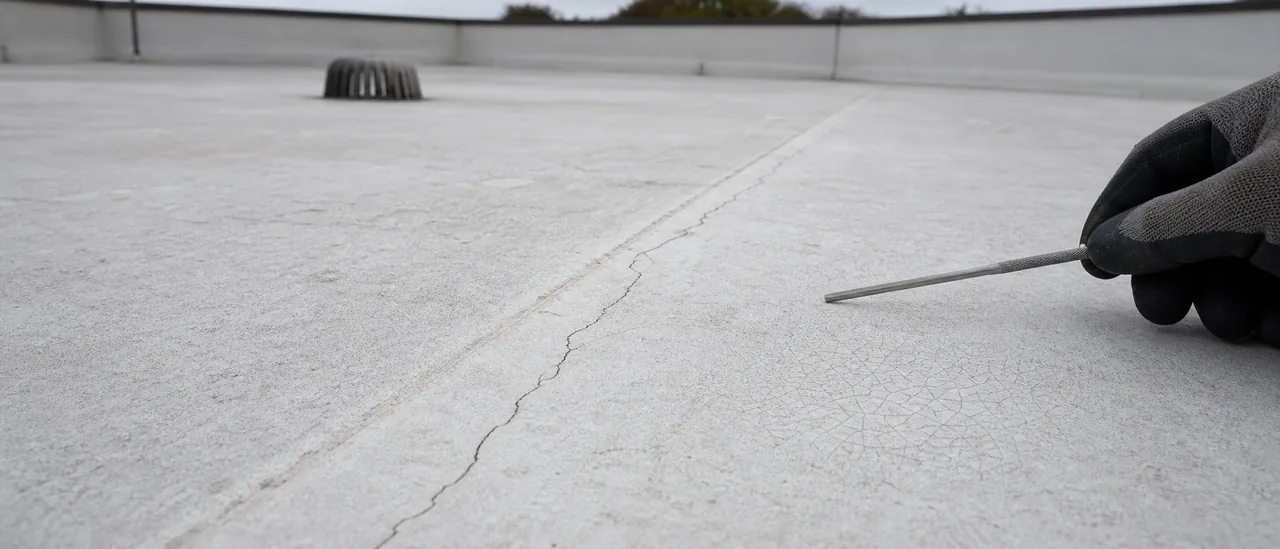
Cracks usually form when stress in the cured coating exceeds its ability to stretch. The stress often comes from movement in the roof beneath it, normal weathering that has reduced flexibility, or a coating film that did not bond or cure as intended.
Roof coating is more than ordinary paint. Many coatings cure into an elastic film intended to bridge small cracks and membrane seams. That flexibility has limits, especially where the substrate moves repeatedly or an existing crack opens.
The pattern is a clue, not a diagnosis
A long crack following a seam, joint, or substrate crack points toward movement below. Fine, shallow “crazing” across a broader area more often suggests film aging or an application problem. Either pattern still needs close inspection before repair.
Other plausible causes
Several conditions can produce similar-looking breaks:
- Movement below the coating: A crack, seam, joint, flashing edge, or unstable patch can move and reflect through the bonded film.
- Loss of flexibility: Sunlight, temperature cycling, and general weather exposure gradually change a coating. An older film may split instead of stretching.
- Poor adhesion: Dust, oils, loose material, residual moisture, or an incompatible existing surface can keep the coating from bonding uniformly. Weakly bonded areas may lift, tear, or crack.
- Application or curing trouble: A film outside the specified thickness, or one exposed to unsuitable temperature, dew, or rain while curing, may not develop the intended properties.
- Physical damage: Foot traffic, dropped tools, or sharp debris can create a cut that resembles a material crack.
Ponding water is not proof that it caused a crack. However, persistent wetness can expose weak adhesion or an already damaged area and deserves attention during the same evaluation.
How the cause is confirmed
Start with location and shape. Note whether the crack follows a seam, drain, penetration, patch, roof-deck joint, or visible change in material. Compare photographs over time, and check indoors for stains or dampness after rain.
A close evaluation may include gently checking whether edges are loose, measuring dry-film thickness, testing adhesion in a representative area, and looking for moisture below the coating. The coating type, substrate, application records, and recent weather help interpret those findings. Do not cut or peel the roof open without an appropriate repair plan.
How urgent is it?
Arrange prompt evaluation when a crack is open, growing, wet, aligned with a leak, or surrounded by blisters, softness, or loose coating. Keep people off the affected area and protect the interior if water is entering.
An isolated hairline mark on a dry, firmly bonded surface is less urgent, but it should be documented and rechecked. Because surface appearance cannot reveal concealed moisture or the condition of the underlying roof, uncertain or recurring cracks warrant evaluation by a qualified roof professional.