On this page
Damage usually starts with a weak detail or repeated movement
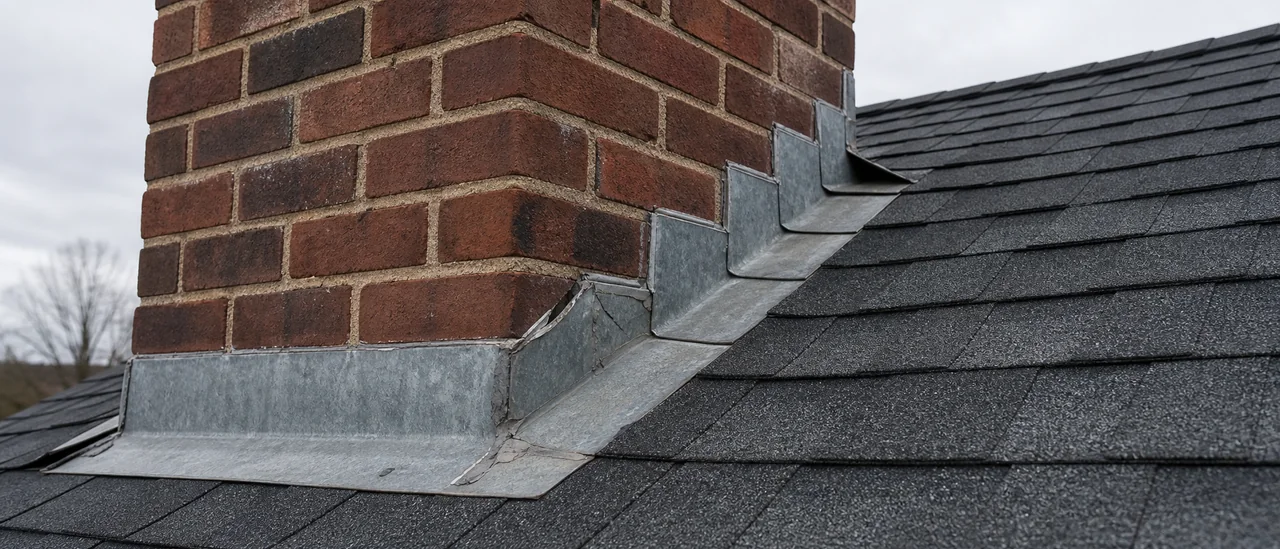
Damaged chimney flashing means part of the layered metal system around the chimney can no longer reliably direct water onto the roof. Poor installation is a frequent starting point. Missing pieces, insufficient overlaps, misplaced fasteners, or counterflashing that is not properly joined to the masonry can leave an opening from the beginning.
The system normally includes base, step, and counterflashing. Department of Energy building-science guidance shows these parts overlapping the roofing and connecting the roof’s water-control layer to the chimney. A visible bead of sealant alone is not the same as that layered connection.
Appearance is not a diagnosis
Surface staining or weathered sealant may justify a closer look, but it does not prove water is entering. Open laps, displaced metal, corrosion holes, or moisture below the detail are stronger evidence of failure.
Other ways flashing becomes damaged
Even correctly installed metal must accommodate changing conditions. Common contributors include:
- Thermal stress: Repeated heating and cooling expands and contracts metal, stressing folds, seams, and fasteners.
- Metal or fastener deterioration: Corrosion can thin the flashing, create holes, or weaken the points holding it in place.
- Masonry or roof movement: Small changes at the joint can pull counterflashing loose or open a previously tight lap.
- Later roof work or contact: Reroofing, maintenance traffic, tools, or debris can bend exposed metal or disturb its integration with shingles.
- Short-lived patching: Roofing cement or caulk can crack as it ages. A patch may conceal the original defect without restoring proper overlaps.
Virginia Tech extension guidance explains that roof-joint materials can expand, contract, shift, or crack as temperatures change. More than one cause can be present—for example, movement may crack an earlier sealant patch.
How the cause is confirmed
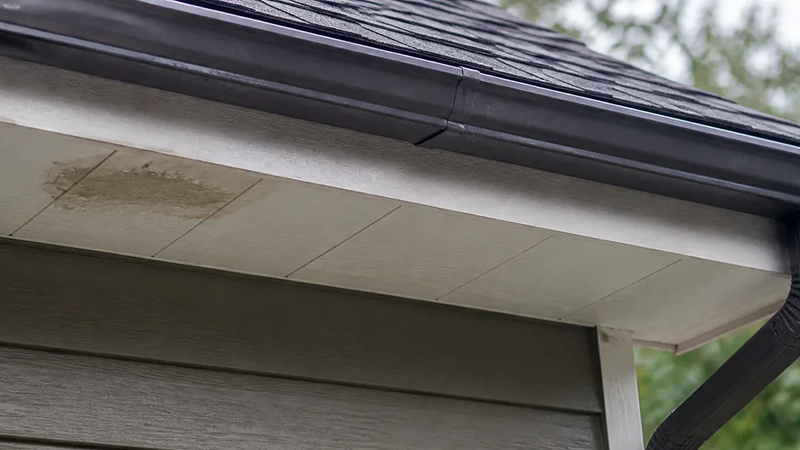
A ceiling stain near a chimney does not identify the entry point. Water can travel along decking or framing, and defects in masonry, the chimney cap, nearby roofing, or condensation can resemble a flashing leak.
Confirmation starts with the full perimeter: front apron, side step flashing, upslope flashing or cricket, counterflashing, laps, corners, and fasteners. The inspection also checks for rust, punctures, lifted edges, cracked patches, displaced shingles, and damp or stained materials below. Federal building-science guidance recommends inspecting flashing during reroofing and correcting pieces that are missing, damaged, or poorly installed.
Some overlaps are concealed beneath shingles or counterflashing. A qualified roof evaluation may therefore be needed to trace moisture and inspect the detail without causing more damage.
How urgent is it?
Active dripping, wet decking or insulation, loose metal, or a growing interior stain warrants prompt attention because continued entry can enlarge the affected area. A dry interior does not make an open lap or corrosion hole harmless; schedule evaluation before the next severe weather. Uniform discoloration with intact, secure overlaps is generally less urgent, but only an inspection can distinguish cosmetic aging from a pathway for water.