On this page
The most likely cause is repeated melting and refreezing
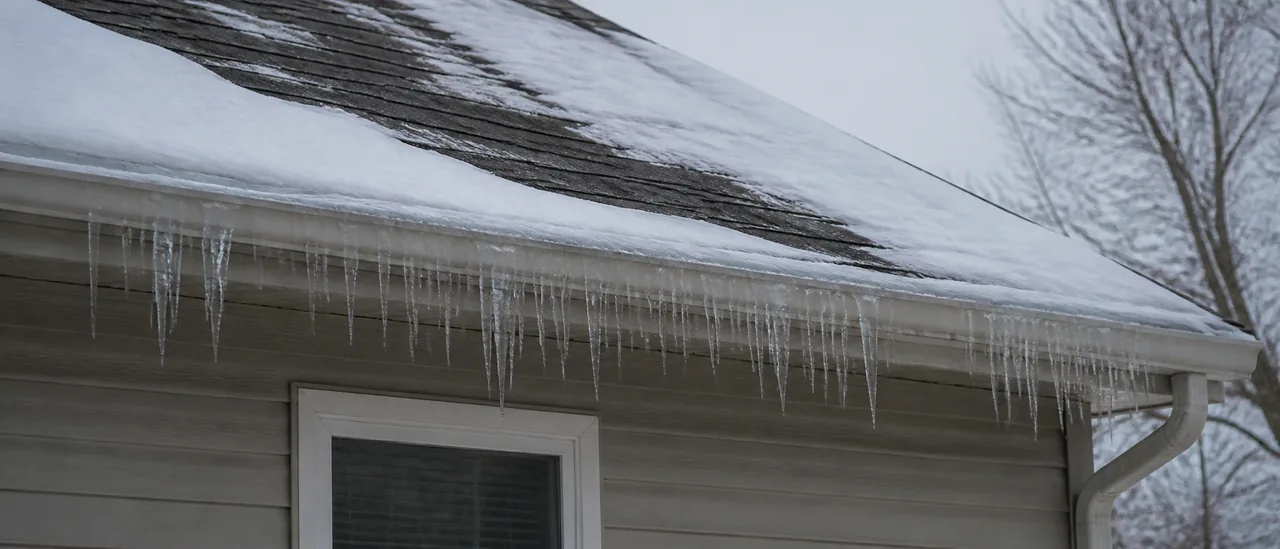
Large icicles usually mean water is repeatedly melting higher on the roof, flowing toward the eave, and freezing as it drips. When snow remains on the roof, that pattern often accompanies an ice dam: a ridge of ice at the edge that obstructs meltwater drainage.
The temperature difference matters. Heat escaping from the home can warm an upper section of roof above freezing while the exposed overhang stays below freezing. Snow melts over the warmer area, then refreezes at the colder edge. Air leaks, uneven or insufficient insulation, warm ducts, chimneys, and nearby exhaust outlets can create localized warm areas.
Icicles do not prove there is an ice dam
Icicles show that liquid water reached a freezing edge. They do not, by themselves, reveal whether water is trapped behind an ice ridge or entering the roof. Sun warming, a brief thaw, or a localized heat source can produce some melting without a significant dam.
The pattern provides useful context:
- Thick, extensive icicles below snow-covered eaves make repeated melt-and-refreeze activity more likely.
- Bare or thinning snow above one section can point to a localized heat path.
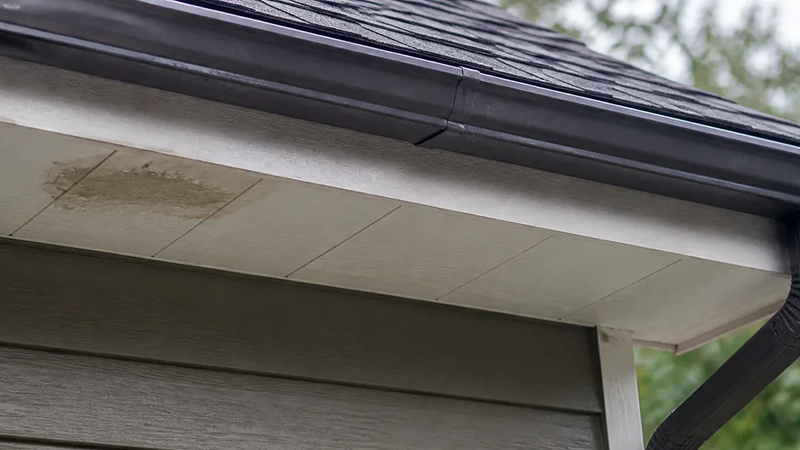
- An ice ridge at the eave, water staining, damp insulation, or dripping indoors raises concern for an active ice dam and leakage.
- Icicles limited to one outlet or warm roof penetration may reflect that specific heat source rather than a whole-attic problem.
Confirmation requires more than looking upward
Start with observations from a safe location. Compare the icicle pattern with roof snow cover, visible ice buildup, gutters, valleys, chimneys, vents, and any interior staining. Inside an accessible attic, damp sheathing, wet insulation, frost, or water tracks can confirm moisture involvement, although the visible interior spot may not identify where water entered.
A qualified evaluation may include attic air-leakage and insulation checks. Blower-door testing and infrared imaging can help locate heat-loss paths, but conditions and interpretation matter. A dry attic during one visit also cannot rule out leakage that occurs only during a thaw.
Keep clear of the fall zone
Large icicles can detach without warning. Do not stand, park, or place ladders beneath them, and avoid chopping ice from the roof edge. Winter roof work can injure people and damage roofing materials.
How urgent is it?
Treat active indoor dripping, spreading ceiling stains, sagging finishes, or unusually heavy ice buildup as prompt-evaluation conditions. Without interior leakage, large recurring icicles still justify checking the attic’s air sealing, insulation continuity, and roof temperature pattern after conditions are safe. The practical question is not simply how to remove the icicles, but what keeps supplying the meltwater.