On this page
The most likely cause
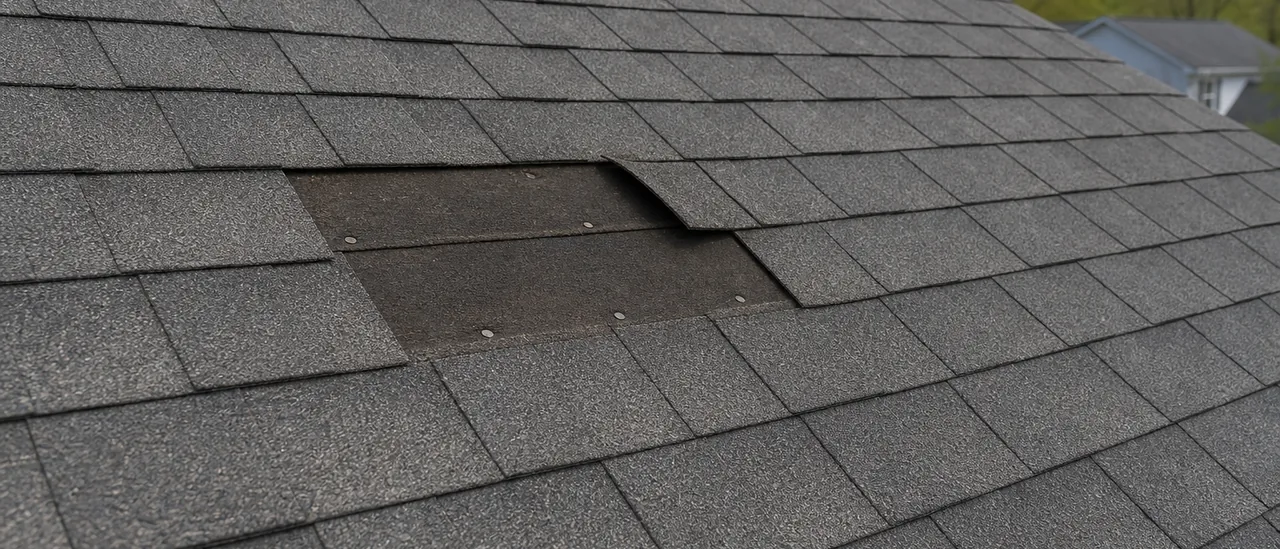
Wind is the most common immediate reason shingles disappear from an asphalt-shingle roof. Airflow can lift an edge, break the seal between courses, and pull a shingle over its fasteners. The result may be one missing tab, an entire shingle, or a larger patch.
Wind alone is not always the complete explanation. Wind resistance depends on both correct fastening and an intact shingle-to-shingle seal. A sound, well-bonded roof generally resists uplift better than shingles already weakened by another condition.
Missing is not the same as lifted
A dark-looking spot may be a lifted or folded tab, a color mismatch, or a previous repair—not an open gap. Confirmation requires seeing whether roofing material is actually absent and what layer is exposed.
Other plausible causes
Several conditions can make blow-off more likely or remove roofing directly:
- Weak or incomplete sealing. Dirt, cool installation conditions, or an interrupted seal can leave an edge vulnerable to later wind.
- Fastening errors. Nails placed outside the specified zone, driven too deeply, or otherwise installed incorrectly reduce holding power.
- Aging and brittleness. Older shingles may crack, curl, or detach more easily as their condition declines.
- Windborne debris or falling branches. Impact can puncture, tear, or dislodge shingles during the same weather event.
These causes can overlap. For example, wind may expose a fastening problem that had produced no visible symptom beforehand.
How the cause is confirmed
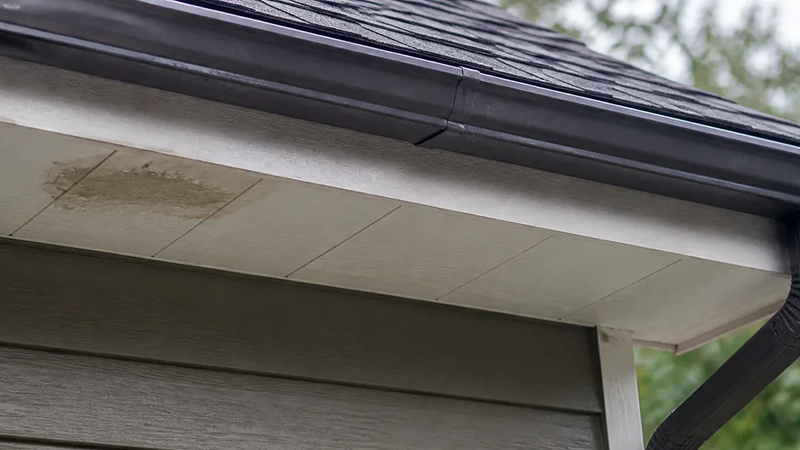
Start with a ground-level view or binoculars rather than climbing onto the roof. Note the gap’s location, whether pieces are on the ground, and whether nearby tabs look lifted, creased, or torn. Indoors, check the attic and ceilings for fresh moisture or staining.
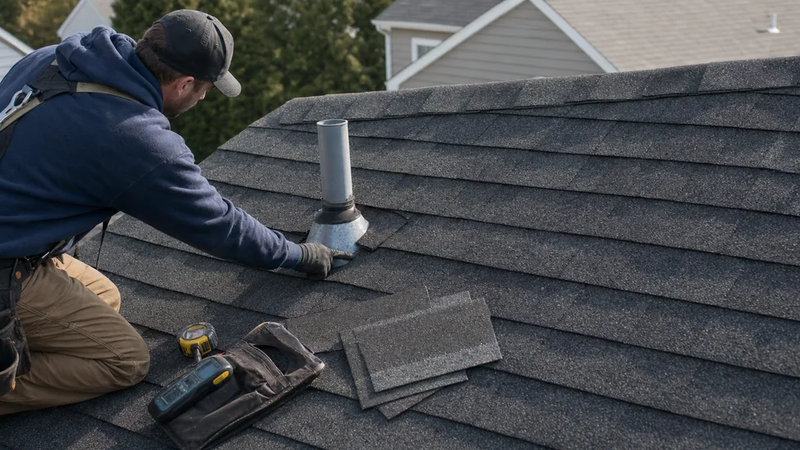
A close evaluation looks at the exposed layer, torn shingle edges, nail placement, seal condition, and the pattern of damage. Missing pieces concentrated at edges or ridges may suggest wind loading, while an impact mark or branch can support a debris cause. No single weather report, photograph, or nearby damaged roof proves why shingles left one specific roof.
How urgent is it?
A missing shingle interrupts the roof covering and can increase the chance of water reaching lower layers. Arrange a qualified evaluation promptly, ideally before more rain or strong wind. The evaluator can determine whether the issue is isolated or whether adjacent shingles have lost their seal.
Treat active dripping, spreading ceiling stains, or visibly sagging material as urgent. Until conditions are assessed, avoid walking on the roof or trying to press brittle or wind-loosened shingles back into place.