On this page
The most likely explanation
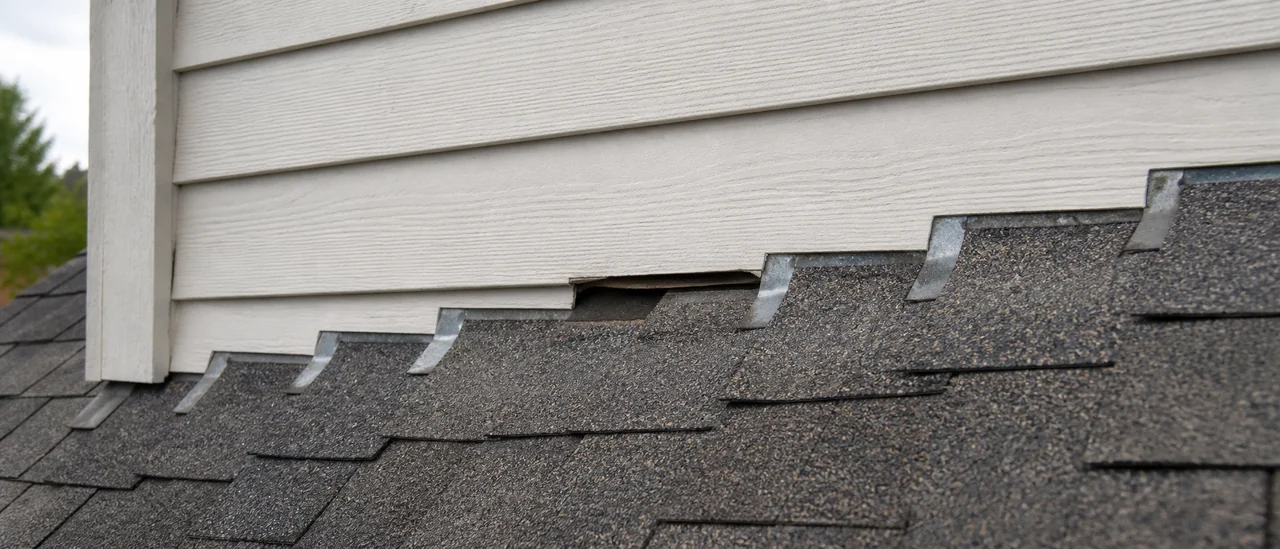
When step flashing is truly missing, it was commonly omitted during construction or not replaced during later roofing or siding work. These small flashing pieces should be woven between shingle courses where a sloped shingle roof meets a vertical wall. Their job is to direct water outward instead of letting it enter the wall assembly.
An apparent absence is less conclusive. Most of each piece normally sits beneath a shingle and behind siding, house wrap, or counterflashing. A roof-over can also raise the roof surface and cover an edge that was once visible. From the ground, “not visible” does not necessarily mean “not installed.”
Missing is not the same as defective
Corroded, undersized, poorly overlapped, or displaced metal may still be present but fail to manage water correctly. That is defective flashing, not literally missing flashing.
Other plausible causes
- Original installation error: The flashing may have been skipped entirely or installed only at some shingle courses.
- Roof replacement: Existing pieces can be bent or removed as shingles come off, then mistakenly reused incorrectly or left out.
- Siding or wall repairs: Work at the roof-wall joint can disturb the vertical legs or cover the assembly without restoring its drainage layers.
- A misleading repair: Surface sealant or one long exposed metal strip may conceal the absence of properly layered step pieces. Sealant alone does not recreate the intended overlap.
Weather does not normally make every concealed piece vanish. Wind, corrosion, or movement can damage or displace flashing, but an entirely unflashed joint points more strongly to installation or alteration history.
How the condition is confirmed
Confirmation follows the full roof-wall intersection. An inspector checks for one overlapping piece at each shingle course, proper integration behind the wall’s drainage layer, and a clear route for water to exit. The eave end also needs separate kick-out flashing; its absence is related, but it is not the same defect.
Siding may need limited release, or selected shingle edges may need careful lifting, to see concealed metal. Interior staining, damp sheathing, or decay can raise concern, yet those signs do not identify the exact entry point by themselves. Photographs from before reroofing or siding work may clarify what changed.
Avoid walking the roof or prying up bonded shingles yourself. Either action can damage materials and still produce an incomplete diagnosis.
Urgency and the next step
Missing step flashing is a meaningful water-entry risk, not automatic proof of an active leak. Prompt evaluation is appropriate when there is dripping, fresh staining, damp wall material, softened sheathing, or visible decay near the joint.
Even without symptoms, a confirmed gap should be corrected before repeated rain exploits it. A qualified roof or building-envelope professional can determine how much roofing or siding must be opened and whether concealed materials also need repair. Smearing caulk along the joint may hide the clue without restoring the layered drainage path.