On this page
The most common cause is restricted drainage
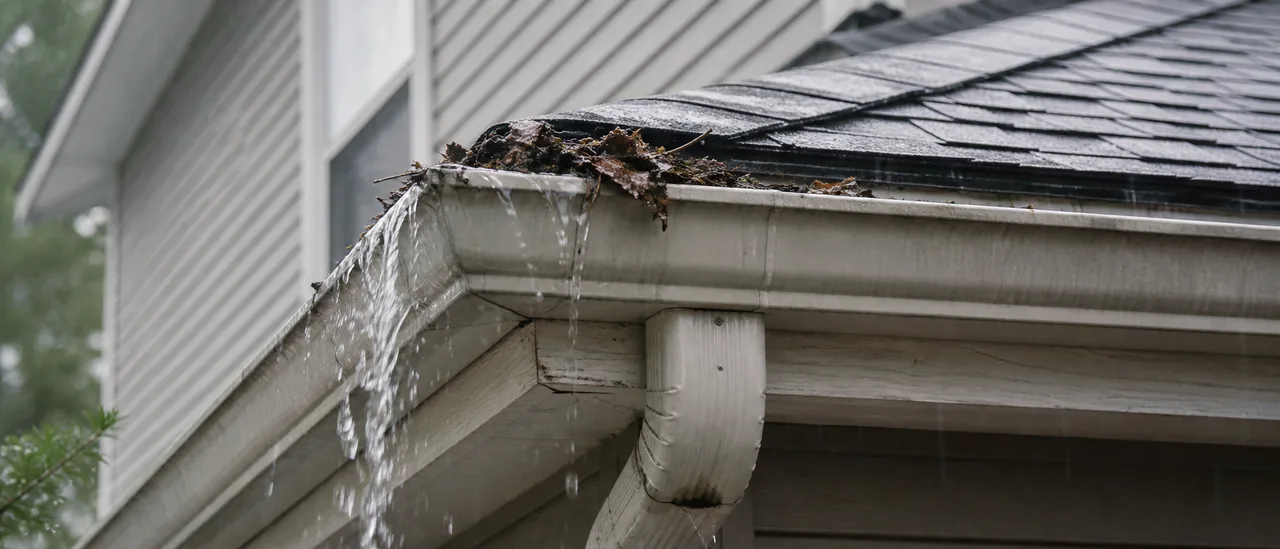
Overflowing gutters usually mean rainwater is entering faster than it can leave. Leaves, needles, shingle grit, nests, or other debris may obstruct the gutter outlet, downspout, or an elbow. Water then backs up and spills over the edge, often beginning near the blocked outlet.
The gutter itself may also be packed with debris. North Carolina State Extension recommends keeping downspouts and elbows clear and inspecting gutters after major weather events.
Overflow at one location, especially near a downspout, points first to a local blockage. Water standing after rain suggests poor pitch or a sag. Overflow along a broad section only during intense rain more often indicates inadequate capacity or concentrated roof runoff.
Other causes change how the overflow looks
A gutter must slope toward its downspouts. If hangers loosen, the channel can sag or tilt away from an outlet, creating a low spot that holds water. A gutter mounted too low, too far from the roof edge, or at the wrong angle may also miss fast-moving runoff instead of truly filling up.
Capacity is another possibility. Gutters and downspouts must handle the roof area and expected rainfall. A steep roof, a long run, widely spaced downspouts, or a valley that concentrates water can overload one section during a hard downpour. The U.S. Department of Energy’s Building America guidance notes that closer downspout spacing carries more water during peak rainstorms and that heavy rainfall can overwhelm gutter capacity.
Cold weather creates a different restriction. Snow or ice can fill the channel or block an outlet. Gutters do not cause roof ice dams, but frozen gutter contents can become part of an ice buildup already forming at the eave.
Confirm the cause from a safe location
Watch from the ground, a window, or another protected location during rainfall. Note where overflow starts, whether the nearby downspout discharges, and whether water remains after the rain stops. Do not climb a wet ladder or step onto a wet or icy roof to investigate.
After conditions are dry, visible debris at an outlet supports a clog diagnosis. Standing water supports a pitch or sag problem. If the channel drains freely in moderate rain but repeatedly spills during stronger storms, the evaluation should consider gutter size, downspout number and placement, roof area, and concentrated flow from valleys or upper roof sections.
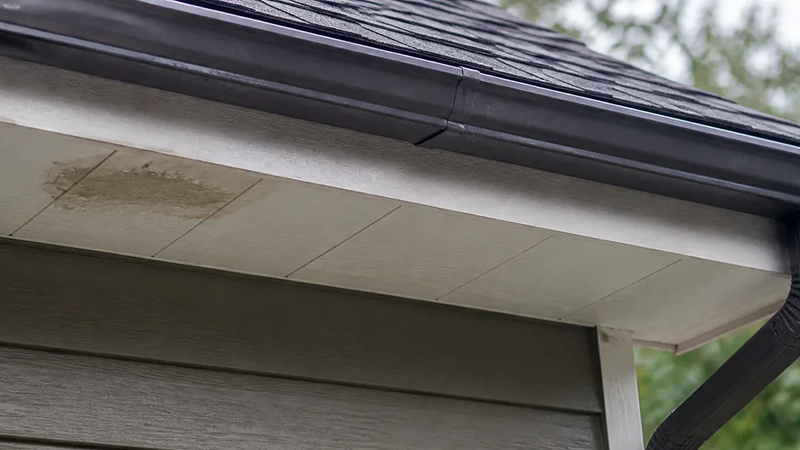
Overflow during one exceptional cloudburst is not automatically evidence of roof damage. Repeated overflow in ordinary rain, water running behind the gutter, loose sections, stained fascia or siding, or indoor moisture deserves prompt attention. If the cause cannot be confirmed safely from the ground, a qualified roof or gutter evaluation can distinguish a simple obstruction from an installation or capacity problem.