On this page
Rust begins where steel loses protection
Rust on a steel roof usually means moisture and oxygen are reaching exposed iron. The protective paint or metallic coating may be scratched, worn, cut, chemically attacked, or consumed. Persistent moisture then keeps the corrosion reaction active.
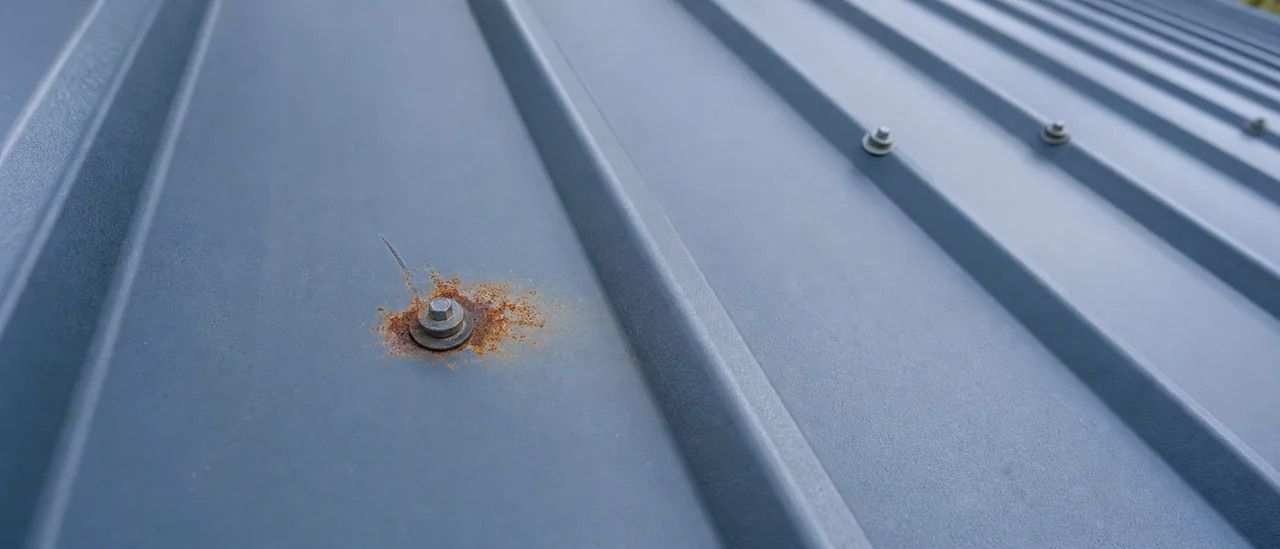
A small spot is not automatically a failing roof. Its location and pattern matter more than color alone. Rust limited to a scratch, cut edge, or fastener is different from widespread scaling, perforation, or corrosion along every seam.
Common reasons rust appears
Several conditions can expose steel or speed corrosion:
- Coating damage: Foot traffic, dropped tools, abrasive cleaning, hail, or installation scratches can breach the finish.
- Improper cutting or leftover filings: Abrasive cutting can strip protection from an edge. Fine steel particles, called swarf, may lodge on a panel and rust, leaving orange spots that resemble panel corrosion.
- Trapped or repeated moisture: Debris, poorly draining details, absorbent pads, or condensation discharge can keep areas wet longer than ordinary rain does.
- Incompatible materials: Moisture can connect dissimilar metals and create galvanic corrosion. Copper runoff, unsuitable fasteners, and some treated wood chemicals can accelerate attack on certain roof metals or coatings.
- Harsh exposure: Coastal salts, industrial contaminants, and some strong cleaners make moisture more corrosive.
Some pale deposits are not red rust
White or gray powder on galvanized steel may be zinc corrosion product rather than rust of the underlying steel. Color alone cannot show how much protective coating remains.
How to confirm the cause
Start with the pattern. A trail below another metal, corrosion centered on fasteners, rust at field-cut edges, or dots near a cutting area each suggests a different source. Check whether leaves, sealant shapes, equipment discharge, or roof-mounted items hold moisture against the panel.
Next, distinguish loose surface staining from corrosion of the panel itself. A qualified evaluator can identify the panel material and coating, inspect laps and fasteners, and determine whether cleaning reveals an intact finish or pitting. Aggressive scraping or wire brushing can turn a minor stain into coating damage, so cleaning should follow the roof manufacturer’s instructions.
How urgent is it?
Isolated surface staining deserves documentation and timely correction of its moisture or contamination source. Prompt evaluation is more important when rust is spreading, recurring after cleaning, lifting the coating, thinning metal, opening holes, or appearing around seams and fasteners where water could enter.
Do not rely on a ground-level color judgment for repair decisions. When the cause or remaining metal thickness is unclear, a qualified metal-roof inspector can confirm whether the condition is cosmetic, localized, or evidence of deeper deterioration.