On this page
Rust starts when protected steel becomes exposed
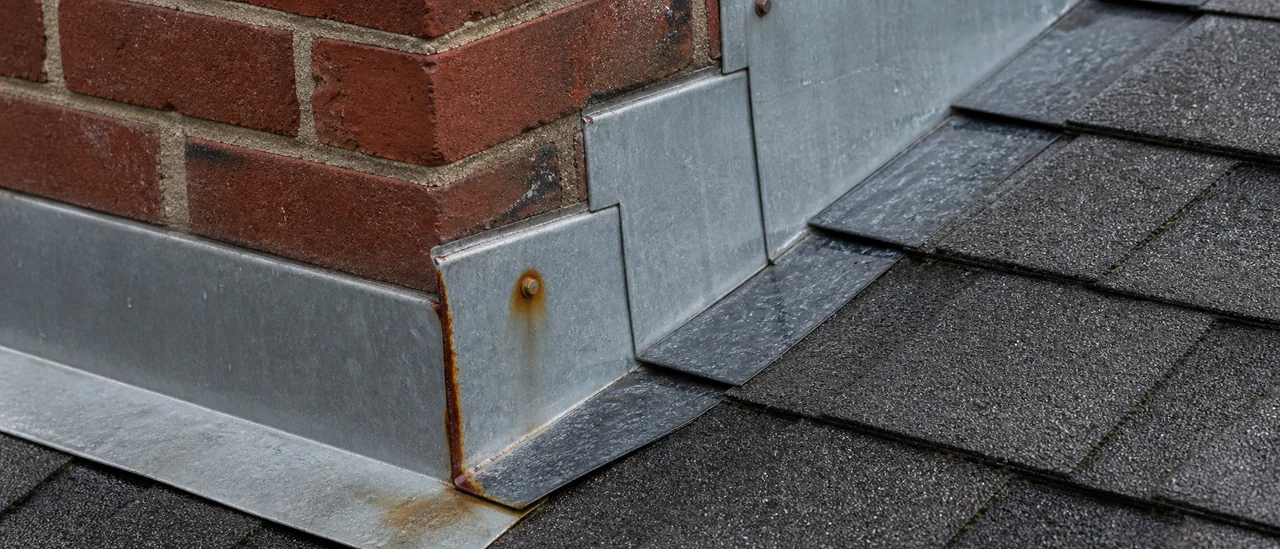
Rusted roof flashing usually means water and oxygen are reaching iron or steel beneath a damaged or worn protective layer. The red-brown material is iron corrosion. Copper, aluminum, and other nonferrous flashing can corrode or discolor, but they do not create iron rust.
Flashing is the material that keeps water moving past roof penetrations, valleys, and roof-to-wall joints. Its location makes repeated wetting normal. Rust becomes more likely when an iron-based flashing or fastener loses the coating that was isolating it from that moisture.
The protective finish may fail through age, abrasion, scratches, sharp bends, cut edges, or work around fastener holes. Plated iron becomes prone to corrosion when scratches or dents expose the underlying metal to moisture.
Conditions that make corrosion worse
Several conditions can start or accelerate the process:
- Water lingers. Debris, poor drainage, open laps, or a badly detailed joint can keep metal wet longer.
- Metals are incompatible. Dissimilar metals can drive galvanic corrosion when rainwater acts as an electrolyte. This can occur at flashing, fasteners, gutters, or nearby roof metal.
- Salt or pollutants collect. Salt, dust, and other contaminants allow corrosion to progress more readily. Coastal spray is one possible salt source.
A rust-colored streak is not a diagnosis
Brown runoff on shingles or masonry may originate uphill at a corroded fastener, chimney cap, gutter, or another metal component. The stained surface may not be the part that is rusting.
How the cause is confirmed
Confirmation starts by tracing the stain to its highest source and identifying the metal. An evaluation should distinguish light surface oxidation from active flaking, pitting, thinning, or a hole. It should also check seams, laps, fasteners, coating loss, and whether debris or drainage concentrates water there.
The roof-facing inspection is only part of the answer. Accessible sheathing or attic areas may show dampness, staining, or deterioration below the same joint. No interior mark does not prove the flashing is sound, because early leakage can remain concealed.
How urgent is rusted flashing?
A small, stable surface spot is not proof of an active leak. It does show that protection has been lost, so the area deserves monitoring and correction before corrosion removes more metal.
Prompt evaluation is appropriate when rust is spreading, powdering, flaking, deeply pitted, or associated with loose metal, open joints, holes, or indoor moisture. Because flashing is part of the roof’s water-control layer, a qualified roof evaluator should determine whether the metal can be restored or must be replaced; appearance alone cannot establish the remaining thickness or watertightness.